
Bull Terriers can be affectionate family dogs in the right experienced home, but daily life with one is louder, stronger, and more hands-on than the clownish image suggests. This article is not another full breed profile. For the broad overview of size, exercise, health, and grooming, see the complete Bull Terrier breed guide. Here the focus is narrower and more practical: what it is genuinely like to live with one of these muscular clowns day to day, whether they fit family and kid life, what the breed’s reputation gets wrong, and whether a Bull Terrier is a smart pick for a first-time owner.

Bull Terrier family life Fit in an Ordinary Week
| Fit Factor | Score | What It Means | |—|—|—| | Apartment Fit | 3/5 | Workable for prepared owners who manage exercise, barking, and routine. | | First-Time Owner Fit | 2/5 | Challenging for new owners unless they have strong support and training plans. | | Family Fit | 3/5 | Can suit the right family when children, space, and routines are managed. | | Exercise Demand | 4/5 | Needs serious daily exercise, training games, and owner consistency. | | Grooming Difficulty | 2/5 | Relatively simple coat care, though nails, ears, teeth, and shedding still matter. | | Training Difficulty | 4/5 | Can be stubborn, intense, or independent; structure matters. |
What Daily Life Actually Looks Like
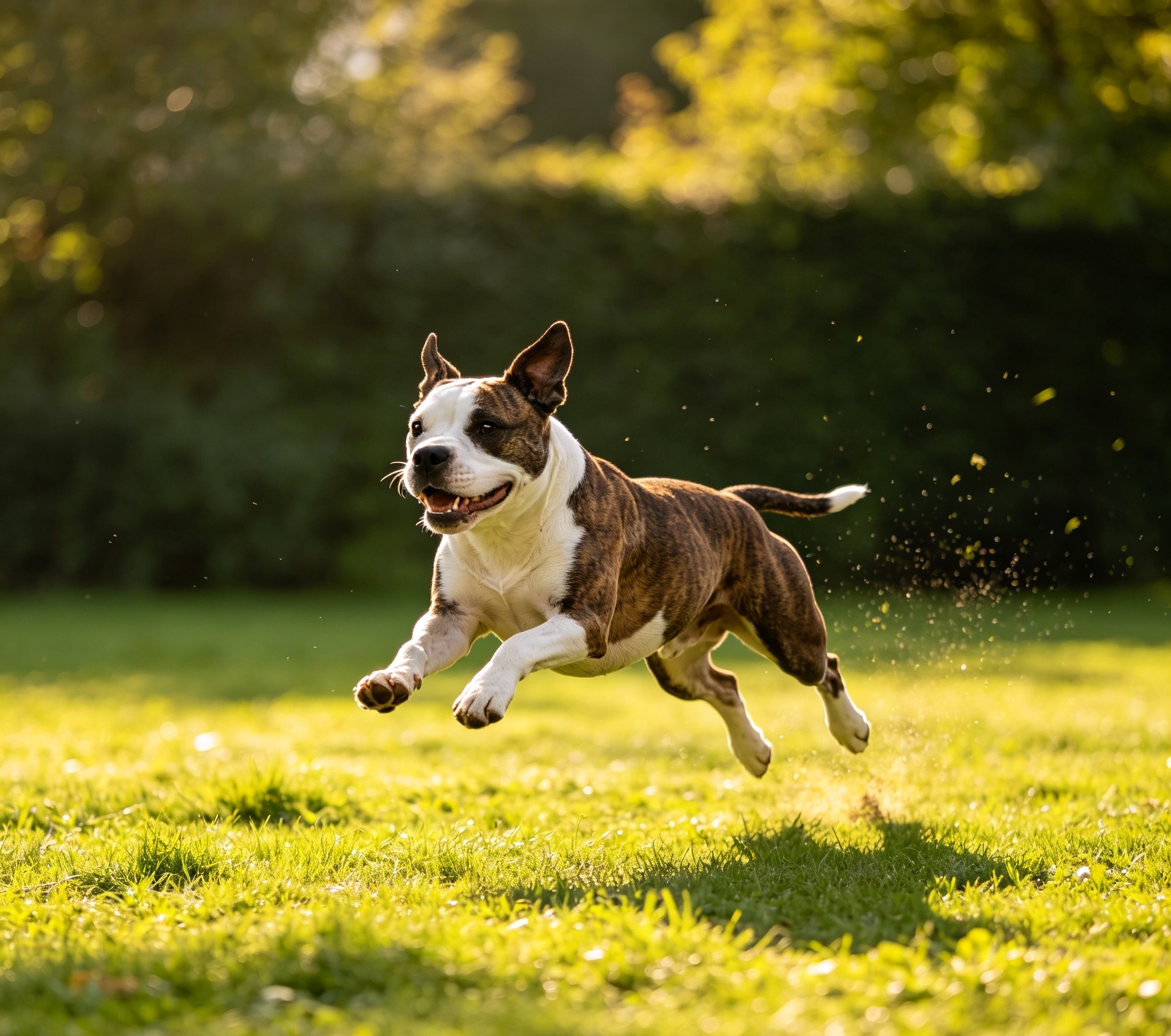
A Bull Terrier in the home is a constant, comical presence. These dogs are famous for “zoomies,” sudden explosive laps around the house, and for an almost cartoonish sense of humor. They lean on you, flop into your lap despite their size, follow you between rooms, and generally treat you as the center of their universe. They are not background dogs content to be left alone in a yard; they want to be in the middle of family life, and they get genuinely unhappy when shut out of it.
That intensity of attachment is the single biggest thing to understand before bringing one home. A Bull Terrier that gets enough company, exercise, and structure is a delight, affectionate, funny, and surprisingly gentle with its people. The same dog, isolated and under-occupied, becomes frustrated and noisy. Expect a dog that is “always on” when awake, then crashes hard for long, contented naps.
Bull Terrier Living Quick Facts
| Daily Reality | What to Expect |
|---|---|
| Companionship | Wants to be with the family almost constantly |
| Energy pattern | Big bursts of play and zoomies, then deep naps |
| Indoors | Playful, leany, mischievous; needs a chew outlet |
| Alone time | Struggles with long isolation; can get destructive |
| With visitors | Enthusiastic, physical greeter; needs manners taught |
| Best home | One with people around, structure, and daily play |
| Worst home | Long workdays, little exercise, no clear rules |
Are Bull Terriers Good Family Dogs?
For the right family, yes, and many Bull Terriers are wonderfully devoted to “their” people, including children they’ve grown up with. They’re sturdy, playful, and tolerant, and a Bull Terrier that’s been raised with respectful kids often becomes their loyal shadow and playmate. The breed’s affection for family is one of its most appealing traits.
The caveats are about physics and supervision, not malice. A Bull Terrier is solid muscle and plays with its whole body, so an excited dog can easily bowl over a toddler or knock a small child down during a zoomie, without any aggressive intent. That makes this a better match for families with older children who can handle a strong, bouncy dog, and it means interactions with little ones should always be supervised. Teaching the dog calm greetings and an “off” cue early pays off enormously here. Households with other pets need care too: many Bull Terriers can live happily with another dog or a cat they’re raised alongside, but the breed’s prey drive and dog-tolerance vary by individual, so honest introductions and supervision matter.
The Breed’s Reputation and Common Myths
Bull Terriers carry a tough-looking image, and a few persistent myths come with it. It’s worth separating reputation from reality.
- “They’re naturally aggressive to people.” Not true of a well-bred, well-socialized Bull Terrier. The breed standard calls for a stable, people-friendly temperament, and most are clowns, not guard dogs. Human aggression is a serious fault, not a feature.
- “The egg head means something is wrong with them.” The distinctive curved profile is simply the breed’s defining, deliberately bred trait, not a defect.
- “They lock their jaws.” This is a myth applied to several bully-type breeds; no dog has a special jaw-locking mechanism.
- “They can’t be trusted around kids.” Reality is more nuanced: temperament is usually good, but their strength and exuberance call for supervision, not avoidance.
What’s fair to say is that this is a powerful, strong-willed breed whose behavior reflects its upbringing. A bored or poorly socialized Bull Terrier can develop problems, which is true of most strong breeds, and is a reason to focus on socialization and structure rather than on the scary stories.
Pros and Cons of Living With a Bull Terrier
| Pros | Cons |
|---|---|
| Affectionate, funny, and deeply attached to family | Too strong and bouncy for some homes with very young children |
| Often people-friendly when well bred and well socialized | Needs steady exercise, chew outlets, and clear household rules |
| Distinctive personality with real comic charm | Can become destructive when bored or left alone too long |
| Short coat is easy to maintain | Not the easiest choice for a casual first-time owner |
Boredom, Energy, and Destructiveness
This is the make-or-break factor in living with a Bull Terrier. The breed combines high energy, real strength, and a low tolerance for boredom, and an under-stimulated Bull Terrier is genuinely destructive. Chewed furniture, dug-up gardens, shredded bedding, and obsessive behaviors like tail-chasing or pacing are classic signs of a dog that isn’t getting enough physical and mental work.
To keep a Bull Terrier happy and your home intact:
- Give substantial daily exercise: brisk walks plus real play sessions, not just a quick stroll.
- Provide tough, durable chew toys, because this breed can demolish flimsy ones in minutes.
- Add mental work, food puzzles, training games, and new challenges to tire the mind.
- Avoid leaving the dog alone for long, unbroken stretches without an outlet.
- Channel the strength constructively with structured play that has clear start and stop rules.
The honest takeaway: a Bull Terrier’s destructiveness is almost always a symptom of unmet needs. Meet the needs, and the destructive behavior usually fades. This is not a dog you can under-exercise and expect to behave.
Is a Bull Terrier a Good First Dog?
This is where many prospective owners need a candid answer. A Bull Terrier can work for a dedicated first-time owner, but it is not an easy beginner breed, and going in unprepared is the most common way these dogs end up surrendered. The combination of physical strength, stubbornness, high energy, and a need for constant company asks more of an owner than a more easygoing breed would.
A Bull Terrier may suit a first-timer who:
- Is home often or can avoid leaving the dog alone all day.
- Is physically able to handle and exercise a strong, determined dog.
- Will commit to early, consistent socialization and training.
- Genuinely wants an involved, hands-on relationship rather than a low-key pet.
It’s the wrong first dog for someone with long workdays, little time for exercise, a houseful of very young children, or an expectation of a calm, independent companion. If that describes you, a gentler breed will make life easier for both of you. To compare what other breeds ask of an owner, see the agile, biddable Papillon, the easygoing Boston Terrier, or the laid-back Basset Hound.
Bull Terrier Living FAQ
Are Bull Terriers good with children?
They can be excellent with older, respectful children they’re raised with, being sturdy and playful. Their strength and exuberance mean supervision is essential, especially around toddlers who could be knocked over during energetic play.
Are Bull Terriers aggressive?
A well-bred, properly socialized Bull Terrier is typically friendly and people-oriented, not aggressive toward humans. The breed’s reputation is largely myth; behavior problems usually trace back to boredom, poor socialization, or lack of structure rather than temperament.
Can a Bull Terrier be left alone all day?
Not happily. The breed bonds tightly and craves company, and long isolation often leads to destructive chewing, digging, or obsessive habits. They suit homes where someone is around much of the day or can break up alone time.
Why is my Bull Terrier so destructive?
Destructiveness almost always means the dog is bored or under-exercised. These strong, high-energy dogs need substantial daily activity, tough chew toys, and mental challenges. Meet those needs and the chewing and digging usually stop.
Is a Bull Terrier a good first dog?
Only for a committed beginner. They’re strong, stubborn, energetic, and need lots of company and training, which overwhelms casual owners. A motivated first-timer who’s home often and ready to put in the work can succeed; others should start with an easier breed.
Do Bull Terriers get along with other pets?
It varies by individual. Many live peacefully with dogs or cats they’re raised with, but the breed can have a notable prey drive and variable dog tolerance, so careful introductions and ongoing supervision are wise.
What Families Notice When the Bull Terrier Gets Excited
Most family Bull Terriers do not struggle with a shortage of affection. The harder question is what a powerful, playful dog does with that affection when children run, guests arrive, or the room becomes noisy. Owners describe bruising enthusiasm, stolen objects, and a dog that needs help coming down from play. Good family life depends on gates, adult supervision, and practiced calm, not a broad label such as friendly or stubborn.
Family Advice Changes With Space and Experience
Close quarters require a settle routine
A Bull Terrier can live in an apartment when exercise and quiet behavior are reliable, but shared hallways compress dog encounters. Create a resting zone, use durable enrichment, and check housing restrictions. Children need a way to play without being chased or body-checked.
More room needs more management points
Use gates around kitchens, playrooms, and visitor entries. A fenced yard supports activity but does not make unsupervised child-dog play safe. Store toys and swallowable household items, and interrupt fence excitement before it becomes a habit.
A first family dog should come with support
Choose stable temperament, involve a qualified trainer, and teach adults and children the same rules. Separate during high-energy gatherings. A beginner should not rely on children to manage the leash or stop rough play.
Experienced owners should plan for maturity
A sociable puppy may become more selective around dogs as it matures. Keep introductions thoughtful and avoid using dog parks as the main exercise outlet. Experienced owners can preserve family fun by protecting recovery and boundaries.
Family Myths About Bull Terriers
A loving Bull Terrier is automatically safe with children
Affection does not prevent accidental injury, guarding, pain reactions, or over-arousal. Adults should supervise, provide escape space, and teach children not to climb, hug, or disturb a resting dog.
Bull Terriers are inevitably aggressive
The label ignores individual temperament, breeding, health, learning, and context. Responsible owners assess the dog in front of them while respecting the breed’s strength and possible dog selectivity.
For a practical planning check, use the dog cost calculator to include training, gates, durable enrichment, skin care, safe boarding, housing checks, and emergency savings. The dog fit score cards can help you compare child ages, other dogs, visitor frequency, apartment rules, adult handling strength, and the family’s willingness to separate and supervise.
The Bull Terrier family life Decision
Living with a Bull Terrier means sharing your home with a powerful, affectionate, perpetually entertaining clown that wants to be part of everything you do. For families with older kids, owners who are home often, and people ready to provide real exercise and structure, that’s a recipe for a deeply rewarding companion who breaks the breed’s intimidating stereotype every single day.
The reality check is just as real: this dog needs company, activity, and clear rules, and it punishes neglect with destruction. It’s not an ideal beginner pet and not a dog to leave alone for long days. Go in clear-eyed about that, and the egg-headed Bull Terrier will reward you with loyalty and comedy in equal measure.