
A Bull Terrier is unmistakable in appearance, but the important ownership question is whether a household can live with its strength and persistence. This athletic terrier needs more than a walk and a toy: it needs structured interaction, safe outlets for powerful play, and rules that remain consistent when the dog tests them.
The breed can be affectionate and entertaining, yet those qualities do not make it a casual family dog. A large, excited adult can overwhelm a small child, a guest, or a quieter dog without intending harm. The best match is an owner who finds training and management satisfying rather than a burden.
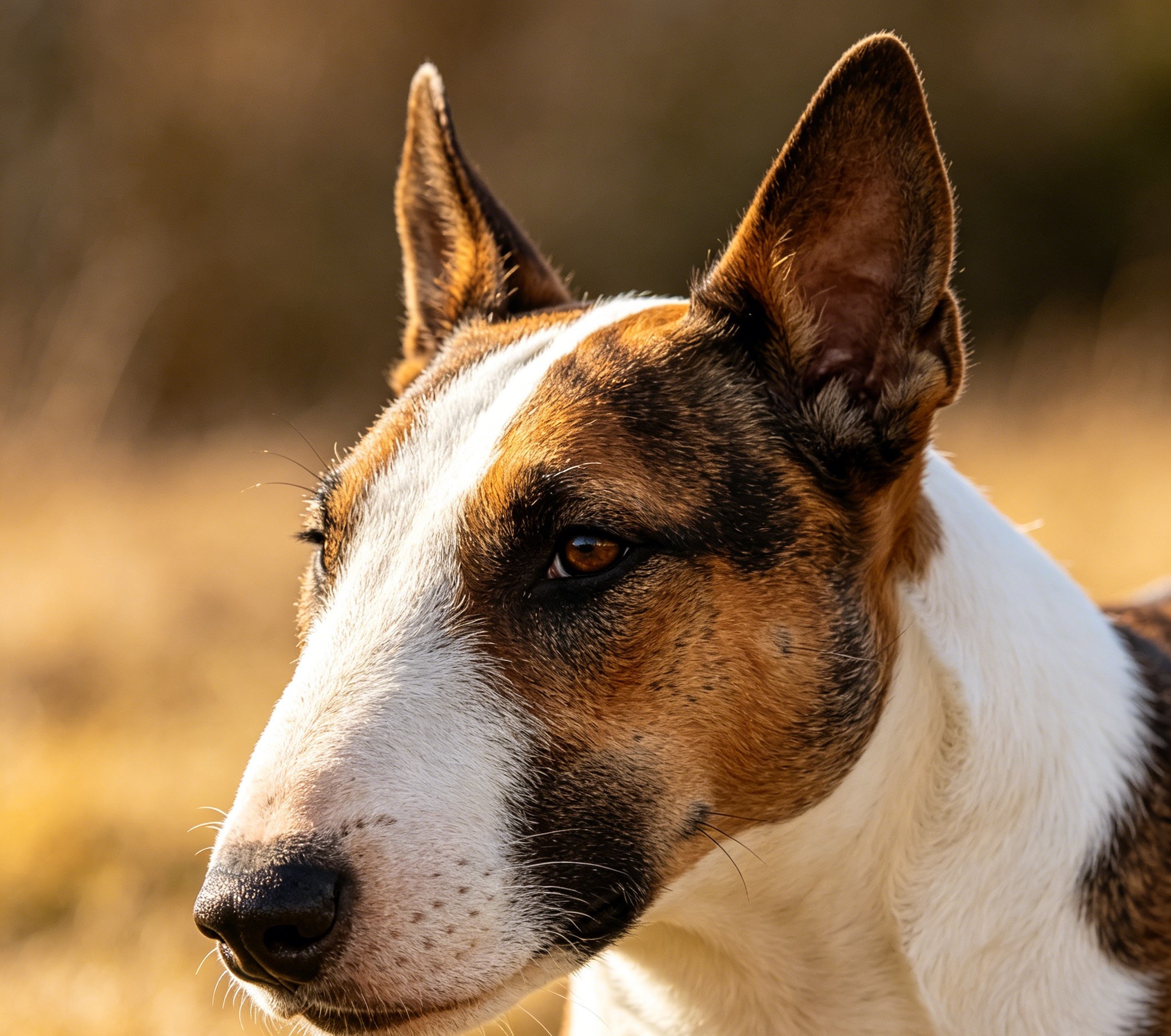
What a Bull Terrier Asks of a Household
| Daily constraint | Score | What it changes | |—|—|—| | Powerful play | 5/5 | Tug, greetings, and rough-and-tumble play need rules because this dog can build momentum quickly. | | Daily engagement | 5/5 | Training and interactive activity are part of behavior management, not optional enrichment. | | Visitor routine | 4/5 | The dog benefits from a practiced settle cue and controlled introductions before guests arrive. | | Alone-time plan | 4/5 | Gradual independence practice is needed; boredom and isolation can become destructive habits. | | Health screening | 4/5 | Hearing, heart, kidney, and skin questions should be discussed before choosing a breeder or adult dog. |
Bull Terrier Quick Facts
| Trait | What to Expect |
|---|---|
| Size | Medium, 21 to 22 inches tall, 50 to 70 pounds, very muscular |
| Temperament | Playful, stubborn, affectionate, and comically goofy |
| Energy level | High; enthusiastic and bouncy |
| Exercise needs | An hour or more daily of walks, play, and training |
| Grooming needs | Low; short coat, easy brushing, modest shedding |
| Apartment friendly | Possible with enough exercise and company |
| Good with families | Good with experienced, consistent, active homes |
| Common concerns | Deafness, skin allergies, heart and kidney disease, OCD behaviors |
| Best for | Owners who want a comedic, devoted, firmly-handled companion |
| Not ideal for | Hands-off owners, very quiet homes, or families with frail pets |
Bull Terrier Temperament
The Bull Terrier is powerfully built while often being playful and deeply involved with its household. That combination can be appealing, but it also means that boredom, isolation, and poorly managed excitement tend to show up as destructive or repetitive behaviours. A calm routine and enough shared work matter more than trying to tire the dog out with unstructured activity.
Alongside the sweetness comes a strong terrier temperament: stubbornness, high energy, and a robust, sometimes pushy playfulness. Bull Terriers can be headstrong and will test boundaries, and without firm, consistent guidance they may become unruly or overbearing. Many have a notable prey drive and can show dog aggression, particularly toward unfamiliar dogs and same-sex dogs, so early socialization is essential. They are not malicious, but they are bold, exuberant, and unaware of their own strength, which is why they suit experienced owners who can provide structure with kindness.
With children in their own family, well-socialized Bull Terriers are often playful and affectionate, but their boisterous, muscular play means close supervision is important, especially around small children.
How a Bull Terrier Uses Its Energy
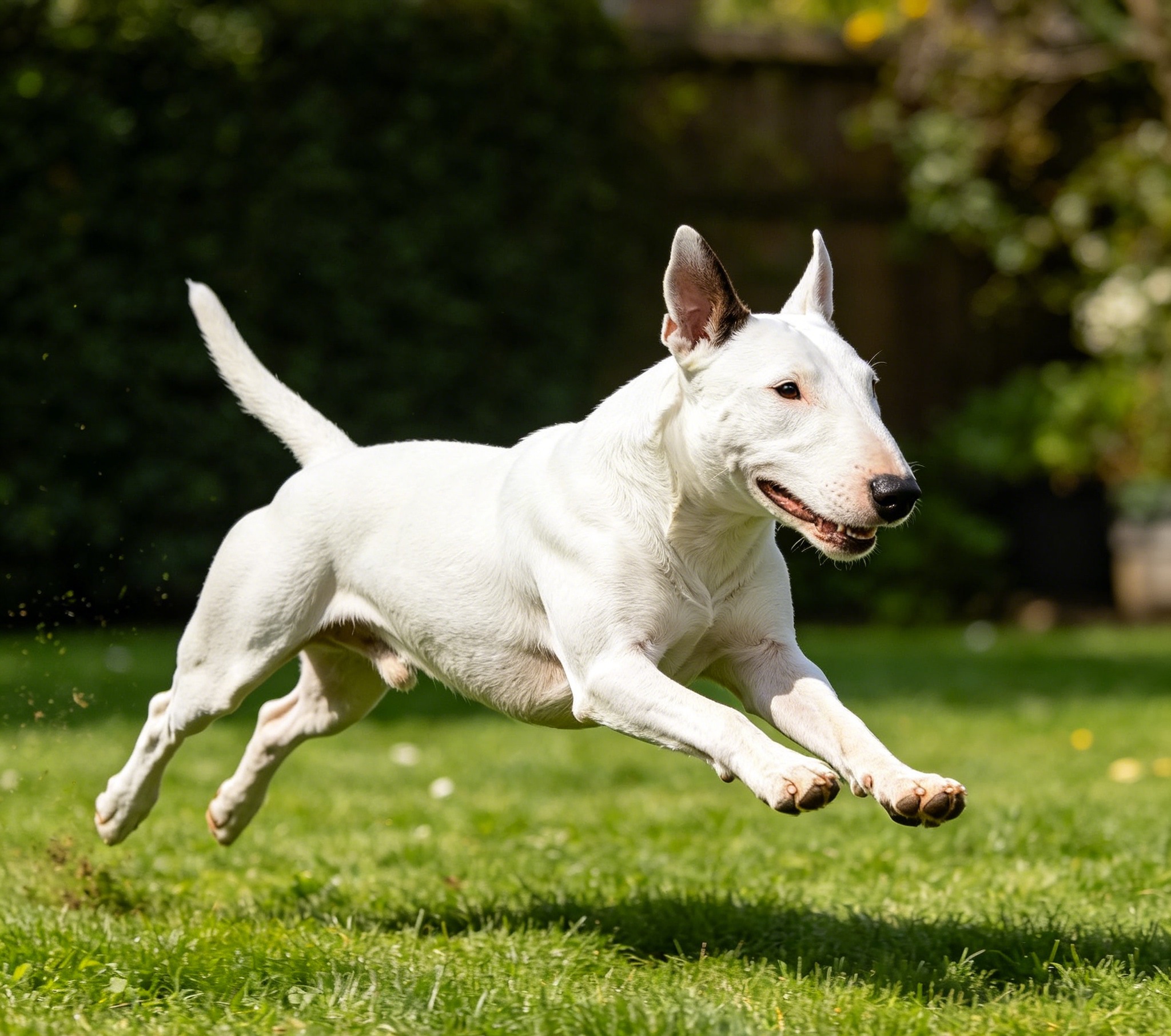
Behind the clowning is an athletic, high-energy dog that needs real daily exercise, an hour or more, to stay balanced and out of trouble. A Bull Terrier with too little outlet for its energy turns that drive toward destruction, digging, and compulsive habits. The breed is strong and enthusiastic, and it enjoys activity that combines physical exertion with the mental engagement and human interaction it craves.
Good outlets for this breed:
- Brisk walks, jogs, and energetic play sessions to burn physical energy.
- Interactive games like fetch and tug, which satisfy the breed’s love of play and its bond with you.
- Training games and trick work that engage the mind and channel the stubborn intelligence.
- Securely fenced play areas, since Bull Terriers are strong and can be determined when motivated.
Two cautions: the breed’s short coat offers little protection, so monitor Bull Terriers in cold weather and in heat, where their effort and muscle mass can lead to overheating. And because of the prey drive and potential dog reactivity, off-leash time is safest in enclosed, controlled spaces. A well-exercised Bull Terrier is markedly calmer and easier to live with than a pent-up one.
Coat Care in a Bull Terrier Home
Grooming is one of the easiest parts of Bull Terrier ownership. The coat is short, flat, harsh, and glossy, requiring only a quick weekly brushing with a soft brush or hound mitt to remove loose hair and keep the coat shining. Bull Terriers shed modestly, with a slightly heavier shed seasonally, and a regular once-over keeps it manageable. They need only occasional baths and are generally clean, low-odor dogs.
The simple grooming routine:
- Brush weekly to remove dead hair and distribute skin oils.
- Bathe occasionally when dirty, using a gentle shampoo, since the breed is prone to skin sensitivities.
- Pay special attention to the skin: Bull Terriers, especially white ones, are prone to allergies and irritation, so check regularly for redness, hot spots, and rashes.
- Keep up with nail trims, ear checks, and dental care.
White Bull Terriers also need sun protection, as their thin coat and pale skin make them susceptible to sunburn and skin damage. Apart from skin care, this is about as low-maintenance a coat as a dog can have.
Common Bull Terrier Health Issues
The Bull Terrier has several breed-specific health concerns owners should know. Congenital deafness is well documented in the breed, particularly in white dogs, and can affect one ear (unilateral) or both (bilateral); responsible breeders BAER-test puppies for hearing. Skin problems are very common, including allergies, contact irritation, and sunburn in white dogs. The breed is predisposed to certain heart conditions, notably mitral valve disease and other defects, so cardiac evaluation matters. Most significantly, Bull Terriers are prone to inherited kidney disease, including hereditary nephritis and polycystic kidney disease, which is why a urine protein-to-creatinine (UPC) ratio test and kidney screening are strongly recommended in the breed. Other concerns include luxating patellas and the obsessive-compulsive tendencies, such as tail-chasing, mentioned earlier.
When choosing a breeder, ask for BAER hearing test results, cardiac clearances, and evidence of kidney screening (UPC testing) in the parents. A breeder who tests for deafness, heart, and kidney issues and discusses them openly is doing right by this breed.
If your Bull Terrier shows increased thirst and urination, persistent skin trouble, exercise intolerance or fainting, or develops obsessive repetitive behaviors, have a veterinarian evaluate it.
Meals and Body Condition for a Bull Terrier
A Bull Terrier should be solid and muscular but never fat; excess weight strains the joints and burdens a breed already at risk for heart issues. Feed a quality diet matched to the dog’s age and activity, divided into two meals. Because skin allergies are common, some Bull Terriers benefit from carefully chosen diets, and any sudden skin flare-up alongside a food change is worth discussing with your vet.
Sensible feeding habits:
- Measure portions and keep this muscular dog lean, feeling for the ribs beneath the muscle.
- Count training treats toward the daily total, which is easy to forget with a food-motivated, trainable dog.
- Introduce new foods gradually and watch for itching or digestive upset, given the breed’s allergy tendencies.
- Avoid rich table scraps that add calories and can aggravate sensitive skin.
Given the kidney concerns in the breed, ask your veterinarian about appropriate diet and hydration, especially as the dog ages.
Teaching a Bull Terrier Useful Habits
Training a Bull Terrier is rewarding and occasionally exasperating. These are intelligent dogs that learn readily, but they are also stubborn, independent, and easily bored, so they need a handler who is patient, consistent, and a little bit clever. Bull Terriers respond poorly to harsh correction and beautifully to positive, upbeat methods that keep the fun in the work. Their strong bond with people is your greatest training tool.
What works with this breed:
- Start socialization early and broadly, exposing the puppy to people, dogs, and situations to temper the prey drive and dog reactivity.
- Keep sessions short, varied, and game-like, since a bored Bull Terrier disengages quickly.
- Establish clear, consistent boundaries kindly but firmly; this breed will exploit wishy-washy rules.
- Use rewards and play, leaning on the breed’s love of food and attention.
- For deaf dogs, train with hand signals and vibration cues; deaf Bull Terriers can live happy, well-trained lives with the right approach.
- Address alone-time gradually to prevent the separation distress and obsessive behaviors the breed is prone to.
Expect a clever, willing, but opinionated student. Firm structure delivered with humor and affection brings out the best in a Bull Terrier.
Pros and Cons of Bull Terriers
| Pros | Cons |
|---|---|
| Affectionate, devoted, hilariously goofy | Stubborn and strong-willed to train |
| Striking, one-of-a-kind appearance | Cannot tolerate being left alone for long |
| Low-maintenance, easy-care coat | Prone to deafness, skin, heart, and kidney issues |
| Athletic and playful companion | High energy and boisterous, unaware of its strength |
| Strong bond with its people | Prey drive and possible dog aggression |
The Bull Terrier Joke Stops Being Funny at Full Strength
Bull Terrier owners love the comedy and often warn that the same persistence becomes exhausting without structure. A puppy that body-slams, grabs clothing, or races through furniture grows into a muscular adult quickly. Skin care, dog selectivity, and long stretches of adolescent impulsiveness can surprise buyers who saw only playful clips. The useful owner skill is interrupting excitement early and giving the dog a clear next behavior, not waiting for exhaustion.
Bull Terrier Advice by Space and Experience
Apartment success depends on arousal control
The coat and size are manageable, but hallway dog encounters and indoor zooming need a plan. Use structured walks, chewing, scent work, and a settle cue. Check building and insurance rules before choosing a breed that may appear on restricted lists.
A house needs durable boundaries
A fenced yard helps with play but can become a place for digging or fence conflict. Store tools, chemicals, and edible objects securely. Indoors, use gates so visitors and children are not hit by an excited dog before greetings are under control.
A beginner should avoid learning through impact
Start reward-based training and impulse control early, and choose a trainer comfortable with powerful terriers. Supervise dog interactions rather than assuming puppy sociability will remain unchanged. Build a veterinary and skin-care reserve into the plan.
Experienced terrier owners can shape recovery
Skill helps channel tug, scent, and play without turning every activity into a wrestling match. Watch how quickly the dog comes down from excitement. Recovery and neutrality are more valuable household skills than another high-energy trick.
Bull Terrier Myths Behind the Head Shape
The breed’s skull shape proves it is aggressive
Head shape does not diagnose temperament. Genetics, early development, health, training, and individual behavior matter. The dog’s power deserves responsible management without using appearance as a behavior test.
A clownish Bull Terrier is an easy family pet
Humor and affection coexist with strength, persistence, and possible dog selectivity. Families need child supervision, durable routines, and a way to separate the dog calmly when excitement rises.
For a practical planning check, use the dog cost calculator to add durable equipment, ongoing classes, skin care, secure fencing, safe boarding, insurance checks, and an emergency reserve for swallowed objects. The dog fit score cards can help you compare other dogs, young children, housing restrictions, arousal tolerance, exercise time, and confidence handling a muscular terrier.
Is a Bull Terrier Right for You?
The Bull Terrier suits an experienced, active, hands-on owner who wants a comedic, deeply affectionate companion and can provide firm structure, plenty of exercise, and lots of company. If you enjoy a dog with big personality, will commit to training and socialization, and can keep your Bull Terrier engaged rather than isolated, the breed rewards you with loyalty, laughter, and an unbreakable bond.
It is a poor fit for hands-off or frequently absent owners, very quiet households that cannot handle a boisterous dog, homes with frail pets the dog might overwhelm, or first-time owners unprepared for a stubborn, powerful terrier. A neglected or under-structured Bull Terrier becomes anxious, destructive, and difficult.
For comparison, read the Labrador Retriever guide, the Alaskan Malamute guide, or the Pug guide. Comparing the Bull Terrier with a retriever and two very different companion breeds clarifies how much structure and engagement this muscular clown actually needs.
The Bull Terrier Decision
The Bull Terrier is one of dogdom’s true originals: a muscular, fearless dog wrapped around the soul of a mischievous, affectionate clown. For an owner who wants a companion with enormous personality and is ready to provide the structure, exercise, socialization, and constant companionship the breed demands, the Bull Terrier is endlessly entertaining and fiercely devoted.
It is not a dog to take on lightly. The stubbornness, the strength, the need for company, and the breed’s real health risks, from deafness to kidney disease, all require a committed, experienced owner. Go in prepared, and you get a loyal, hilarious, one-of-a-kind friend. Go in expecting an easy, independent pet, and that egg-headed tank will quickly show you otherwise.