
The Pug is often sold by its expression: large eyes, wrinkles, comic noises, and a compact body that wants to be close to its people. Those qualities do make it an engaging companion. They also mean the owner has to watch heat, body weight, eyes, skin folds, and breathing function with more care than the small size suggests.
The single most important fact about the breed is that the Pug is brachycephalic, meaning its skull is short and its face is flat. That flat face creates the cute looks and the charming snore, but it also causes real breathing limitations and a dangerous sensitivity to heat that shape nearly every aspect of the dog’s care.
Compare these risks directly in French Bulldog vs Pug, then use the apartment dog guide to separate floor-space needs from climate, noise, and healthcare needs. The small dog breed guide gives lower-risk alternatives when compact size matters more than a particular flat-faced look.
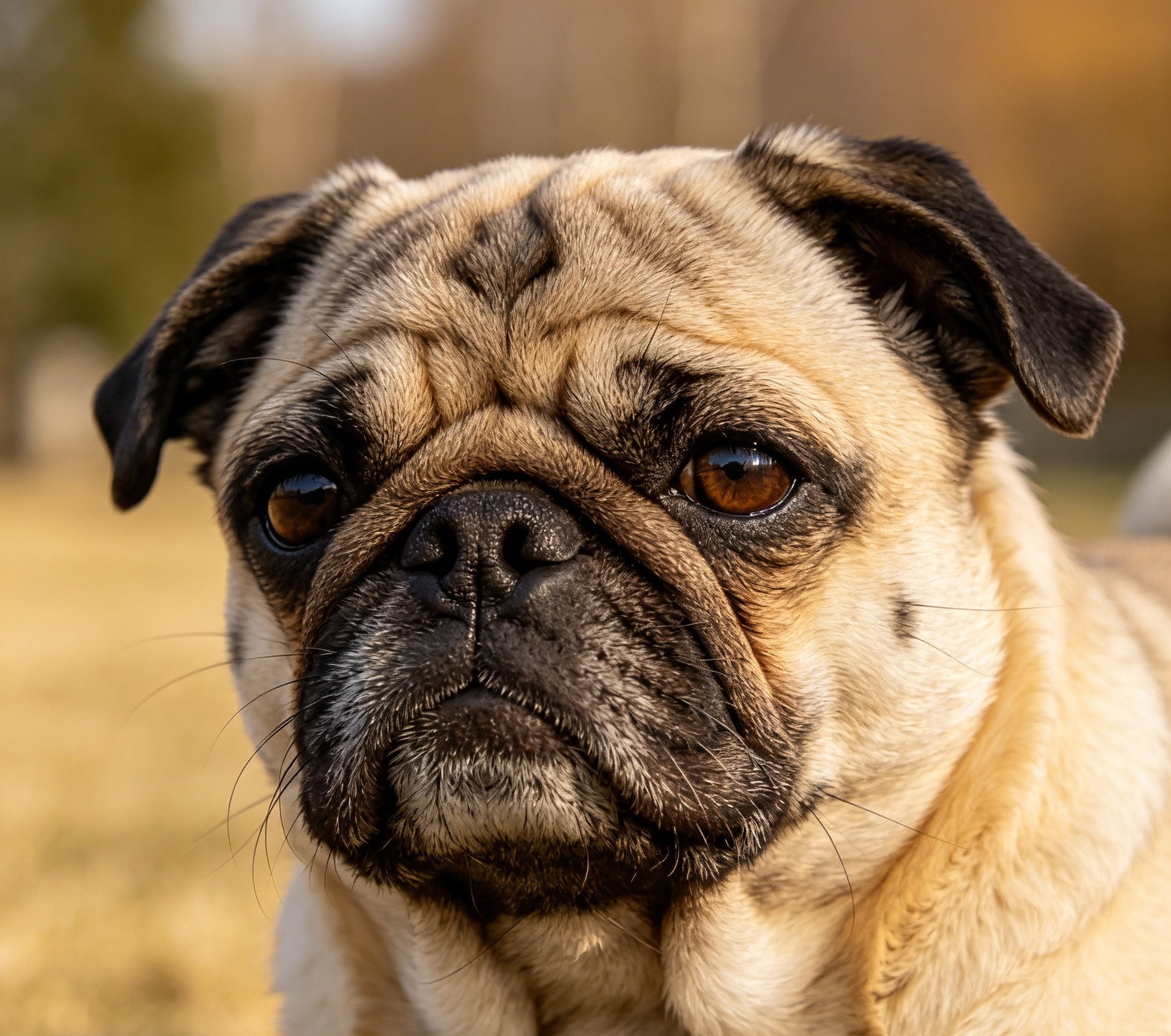
Pug Fit Is Mostly a Climate and Health Question
| Fit Factor | Score | What It Means |
|---|---|---|
| Apartment Fit | 4/5 | Strong small-space candidate when daily care and enrichment are handled. |
| First-Time Owner Fit | 3/5 | Possible for prepared first-time owners who research the breed honestly. |
| Family Fit | 3/5 | Can suit the right family when children, space, and routines are managed. |
| Exercise Demand | 2/5 | Lower exercise needs, but still requires walks, play, weight control, and enrichment. |
| Grooming Difficulty | 3/5 | Moderate grooming or shedding; plan for regular brushing and basic upkeep. |
| Training Difficulty | 3/5 | Needs steady training, socialization, and realistic expectations. |
Pug Quick Facts
| Trait | What to Expect |
|---|---|
| Size | Small, 10 to 13 inches tall, 14 to 18 pounds |
| Temperament | Charming, affectionate, sociable, and comical |
| Energy level | Low to moderate |
| Exercise needs | Short, gentle walks and indoor play, avoiding heat |
| Grooming needs | Low coat care, but daily wrinkle and fold cleaning |
| Apartment friendly | Excellent |
| Good with families | Very good; gentle and people-loving |
| Common concerns | Breathing problems, heat stroke, eye injuries, skin folds, obesity |
| Best for | Owners wanting an affectionate, low-activity indoor companion |
| Not ideal for | Hot climates, jogging partners, or owners who overfeed |
Pug Temperament
Pugs are companion dogs to their core, and their temperament reflects centuries of breeding for human company. They are affectionate, even-tempered, and famously good-natured, getting along with children, strangers, other dogs, and pretty much everyone they meet. The breed’s old Latin motto, “multum in parvo,” meaning “a lot in a little,” captures it perfectly: there is an enormous, comical personality packed into a small body. Pugs are playful and mischievous one moment and content to snooze in your lap the next, and they have a real talent for making people laugh.
The flip side of all this devotion is that Pugs do not like being alone. They thrive on companionship and can develop separation distress when left for long stretches, often becoming clingy “shadow” dogs that follow their owners from room to room. They can also be a touch stubborn, particularly around house-training, which tends to take patience with this breed. But aggression is rare; the Pug’s default setting is friendly, sociable, and eager to please the people it loves.
With children, Pugs are gentle and sturdy enough for family life, though kids should be taught to handle them carefully, especially around the prominent eyes, which are vulnerable to injury.
Safe Movement for a Flat-Faced Dog
Pugs have modest exercise needs, and that is part of their appeal as easygoing indoor companions, but “modest” does not mean “none.” A couple of short, gentle walks a day plus some indoor play keeps a Pug fit, mentally stimulated, and at a healthy weight. The catch is that the Pug’s flat face limits how much it can safely exert itself, and overdoing exercise, particularly in heat, can be genuinely dangerous.
Sensible activity for a Pug:
- Two short, leisurely walks rather than one long, strenuous outing.
- Gentle indoor games, food puzzles, and light fetch to keep the mind busy.
- Plenty of rest, since Pugs tire and overheat faster than most breeds.
The heat rule is critical: because Pugs are brachycephalic, they cannot cool themselves efficiently by panting and are highly prone to overheating and heatstroke. Avoid exercise during the warm parts of the day, keep walks short in summer, provide air conditioning and shade, and never leave a Pug in a warm car or yard. Watch closely for labored breathing or distress, and stop immediately if you see it. A Pug’s exercise should always be moderate and weather-aware.
Wrinkles, Eyes, Nails, and Shedding
The Pug’s grooming needs are an interesting mix of easy and demanding. The short, smooth double coat is simple to brush, but it sheds surprisingly heavily for such a small dog, especially the fawn-colored Pugs, so regular brushing and a good vacuum are part of the deal. Weekly brushing (more during shedding peaks) keeps loose hair under control.
Where the Pug needs special, ongoing attention is the face. Those charming wrinkles trap moisture, dirt, and debris, and if not kept clean they can develop irritation and infection. Routine care includes:
- Cleaning and thoroughly drying the facial folds regularly, even daily, to prevent skin-fold dermatitis.
- Caring for the prominent eyes, which protrude and are prone to dryness, scratches, and ulcers; keep the area clean and watch for any redness or squinting.
- Checking and cleaning the ears, which can be prone to infection.
- Keeping up with nail trims and dental care, the latter important because small flat-faced breeds often have crowded teeth.
So while the Pug’s coat is low-effort, the wrinkles and eyes turn grooming into a daily habit rather than a weekly one.
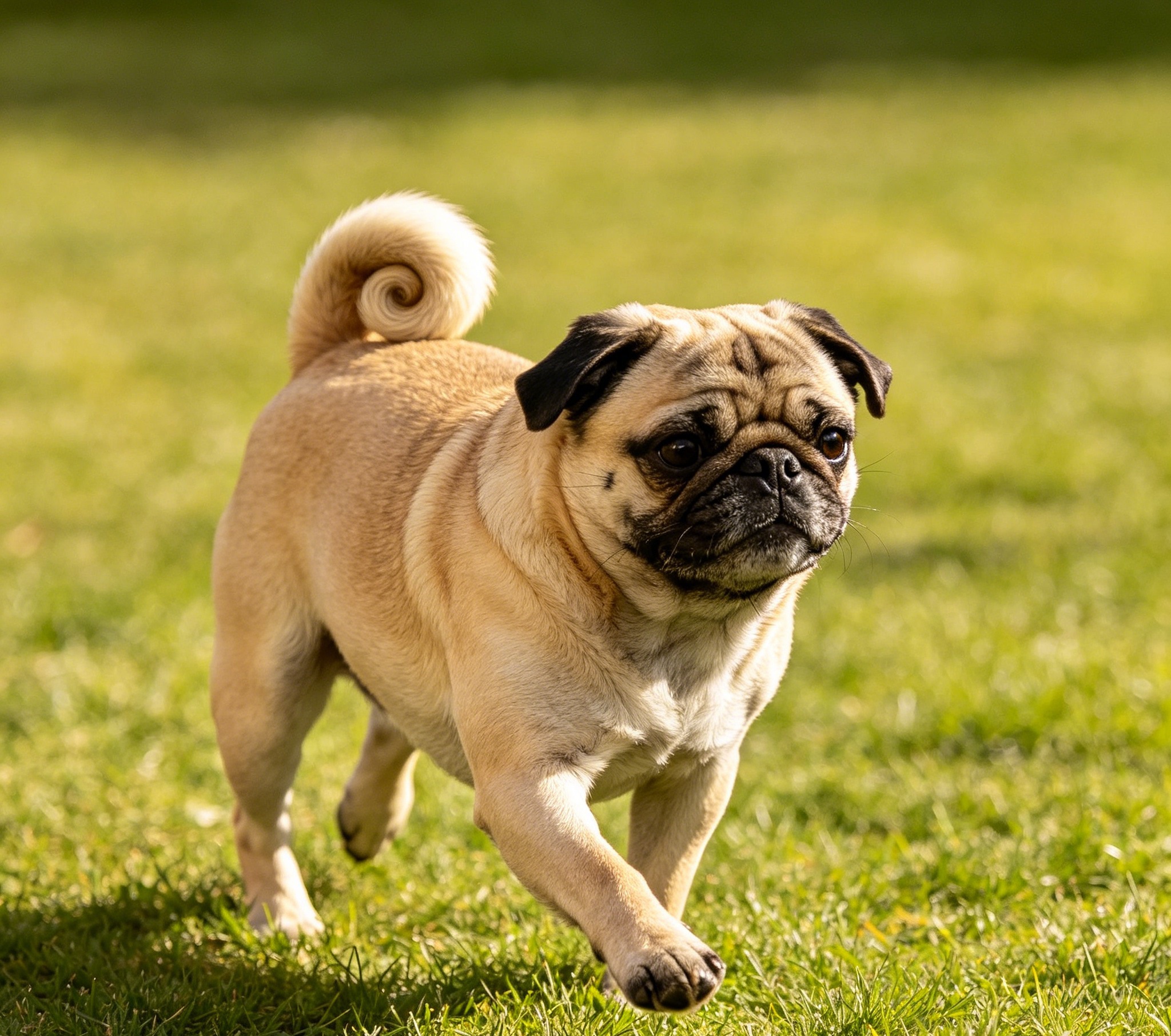
Common Pug Health Issues
This is the part every prospective Pug owner must take seriously. As a brachycephalic breed, the Pug is prone to Brachycephalic Obstructive Airway Syndrome (BOAS), a set of anatomical problems, narrow nostrils, an elongated soft palate, a narrow windpipe, that cause the breed’s characteristic snorting and snoring and can make breathing genuinely difficult; severe cases sometimes require surgery. That same anatomy makes Pugs dangerously heat-intolerant and at high risk of heatstroke. The prominent eyes are vulnerable to corneal ulcers, dry eye, and proptosis (the eye bulging from its socket after trauma). The deep facial folds invite skin-fold dermatitis. Pugs are also strongly prone to obesity, which worsens the breathing problems, and the breed has some risk of a serious spinal condition called Pug Dog Encephalitis, as well as hip issues and a screw-tail that can cause skin problems.
When choosing a breeder, look for one breeding toward more open nostrils and better breathing, and ask about eye and hip evaluations. Be wary of anyone marketing extreme flat faces, since exaggerated features worsen the breed’s health. Adopting from a Pug rescue is another good option.
If your Pug shows severe breathing difficulty, signs of overheating, a suddenly painful, cloudy, or bulging eye, or any neurological signs such as seizures, treat it as an emergency and contact a veterinarian immediately.
Every Extra Pound Makes Breathing Harder
If there is one thing Pug owners must guard against, it is weight gain. Pugs adore food, beg expertly, and pack on pounds easily on their small frames, and obesity is genuinely dangerous in this breed because extra weight makes the already-compromised breathing significantly worse and stresses the joints and spine. A lean Pug is a healthier, more comfortable, longer-lived Pug.
Practical feeding discipline:
- Measure meals carefully; a few extra kibbles a day add up fast on a 16-pound dog.
- Resist the begging, no matter how persuasive those big eyes are, and limit treats, counting them toward the daily total.
- Feel for the ribs and check for a waist regularly; many “normal-looking” Pugs are actually overweight.
- Avoid table scraps and rich human food, which add calories quickly.
Because the breathing and weight problems compound each other, talk with your veterinarian about an ideal body condition for your individual Pug and stick to it.
House Training a Food-Motivated Companion
Pugs are intelligent and people-pleasing, but they have a stubborn streak, so training calls for patience and the right motivation. The good news is that their love of food makes them very responsive to reward-based training; the challenge is keeping their interest and managing a sometimes willful little dog. House-training in particular tends to take longer than average, so consistency and a reliable routine are essential.
Tips that work with this breed:
- Use small, tasty treats and short, upbeat sessions to hold a food-loving Pug’s attention.
- Keep training low-stress and avoid overexerting the dog, since hard physical effort and excitement can strain its breathing.
- Be especially patient and consistent with house-training, and consider crate training to help.
- Socialize early so the Pug’s naturally friendly nature stays confident around people and other dogs.
- Gently build tolerance for alone-time to ease the breed’s tendency toward separation distress.
Pugs are not high-drive working dogs and do not need to be; aim for a polite, sociable companion, and let the breed’s eagerness to please and love of treats carry the training.
Pros and Cons of Pugs
| Pros | Cons |
|---|---|
| Affectionate, friendly, wonderfully comical | Serious brachycephalic breathing problems |
| Excellent apartment and city companion | High heat sensitivity and heatstroke risk |
| Low exercise needs, easygoing indoors | Prominent eyes prone to injury |
| Great with children and other pets | Daily wrinkle care needed to prevent infection |
| Loving, devoted, people-oriented nature | Sheds a lot and gains weight very easily |
Pug Myths That Normalize Discomfort
Pugs are lazy and should avoid exercise
They need controlled daily movement for weight, mobility, and enrichment. The answer is short, temperature-appropriate activity with careful recovery, not complete inactivity or strenuous heat exposure.
Snorting and snoring are always harmless
Some noise is common, but struggling, poor sleep, collapse, blue or pale gums, and slow recovery require veterinary attention. Familiar sounds should not replace a functional breathing assessment.
Build a Pug estimate in the dog cost calculator around insurance or medical savings, eye and skin-fold care, dental work, cooling, weight management, and safe travel. The dog fit score cards put apartment appeal in perspective by weighing climate, veterinary access, stairs, child handling, and the household’s ability to live responsibly with health uncertainty.
Is a Pug Right for You?
A Pug is a delightful choice for someone who wants an affectionate, low-activity indoor companion and is ready to manage the breed’s real health needs. If you live in an apartment or a cooler climate, are home often enough to keep a companion-loving dog company, will commit to daily wrinkle and eye care, and can keep your Pug lean, the breed rewards you with constant affection, comedy, and devotion.
It is the wrong dog for a hot climate without air conditioning, for someone wanting a jogging or hiking partner, or for an owner unwilling to manage the breathing risks, the daily fold cleaning, and strict weight control. Anyone bothered by snoring, snorting, and shedding should also think twice.
For comparison, read the Alaskan Malamute guide, the Bull Terrier guide, or the Miniature Schnauzer guide. Setting the easygoing Pug beside an arctic worker and two terriers makes its low-exercise, high-care-needs profile especially clear.
Cute Habits Need Firm Limits
Build the early routine around measured food, breathing observations, and weather limits. Learn the dog’s normal sound and recovery time in cool conditions. Heavy panting, a sudden slowdown, or distress in heat means activity stops; concerning symptoms require veterinary guidance rather than another lap around the block.
The Pug’s comic personality can make genuine warning signs look like part of the act. Snoring, snorting, begging, and skin folds all need context and management. Clean the folds, watch the eyes, prevent overheating, and keep the cheerful appetite from turning into extra respiratory load.
Apartment Size Is Not the Limiting Factor
Can a Pug live in an apartment?
Yes, a Pug is often a strong apartment candidate. The breed is small, people-focused, and usually content with short walks and indoor play. The apartment needs to be cool, safe, and easy to navigate. Heat, stairs, and weight gain matter more than floor space. A Pug in a hot apartment or a building with many stairs may struggle.
Are Pugs expensive to own?
They can be more expensive than their size suggests. Food costs are modest, but breathing concerns, eye injuries, skin folds, dental care, weight control, and heat-related emergencies can raise the budget. Owners should plan for insurance or savings and talk with a veterinarian about body condition before the dog becomes overweight.
Are Pugs good family dogs with children?
Often, yes, especially in gentle homes. Pugs tend to be affectionate and sturdy for their size, but their eyes and breathing make rough handling risky. Children should learn not to squeeze, chase in hot weather, or feed extra snacks. The best family routine keeps the Pug involved without turning the dog into a toy.
Heat, Weight, and Daily Pug Comfort
The weather forecast sets the walk
Pug exercise belongs in cool conditions. On hot or humid days, use brief toilet trips and indoor games rather than trying to complete a normal route. Heavy panting, noisy distress, a change in gum color, weakness, or collapse needs immediate veterinary attention. Owners should know the nearest emergency clinic before the first hot spell arrives.
A few extra pounds matter
The Pug’s square outline can hide gradual weight gain. Measure meals, use very small training rewards, and ask a veterinarian to show you how to assess body condition. A leaner dog carries less load on its joints and has less tissue adding pressure around an already restricted airway. Family members need one feeding plan so snacks do not multiply unnoticed.
Face and eye checks take minutes
Wipe and dry facial folds as advised for the individual dog, then look at the eyes for redness, squinting, cloudiness, or discharge. Pugs have prominent eyes that can be injured during rough play or contact with shrubs. A harness reduces pressure on the neck, and smooth walking routes are safer than charging through thorny ground.
Who Can Give a Pug a Safe Daily Life
The Pug is a loving, comical, and endearing companion that has charmed people for centuries, and for the right home it is a wonderful little dog: affectionate, adaptable, low on exercise demands, and perfectly suited to apartment and city life. Its devotion and sense of humor are genuinely hard to resist.
But the flat face that makes the Pug so cute also brings real responsibilities, breathing limitations, heat sensitivity, vulnerable eyes, fragile skin folds, and a strong tendency toward obesity, that a committed owner must manage every day. If you understand those needs and embrace them, a Pug will fill your home with affection and laughter. If you cannot provide a cool environment, daily care, and disciplined feeding, this charming little companion deserves an owner who can.