
A Labrador Retriever can make a busy family feel more active and more organized, or make the kitchen, car, and entryway feel permanently chaotic. The breed’s friendliness and trainability are genuine, yet the same dog may raid food, drag in water, pull hard as an adolescent, and stay energetic long after the puppy stage. A good Labrador plan covers portion control and manners as deliberately as fetch.
The common myth is that a Lab is automatically a calm, low-effort family dog. The truth is that Labs are wonderful family dogs only when their substantial exercise and training needs are met; an under-exercised young Lab is a bouncing, mouthy, counter-surfing handful.
Read Labrador vs Golden Retriever if both retrievers are on the shortlist; their coat care, social style, and adolescent workload are not identical. The Best Family Dogs and Best Dogs for First-Time Owners guides add the child-supervision, schedule, and beginner questions that a breed profile cannot answer alone.

Labrador Retriever Quick Facts
| Trait | What to Expect |
|---|---|
| Size | Large, 21.5 to 24.5 inches tall, 55 to 80 pounds |
| Temperament | Friendly, outgoing, eager to please, food-driven |
| Energy level | High, especially the first two to three years |
| Exercise needs | An hour or more daily; loves swimming and fetch |
| Grooming needs | Moderate; heavy shedder with seasonal coat blows |
| Apartment friendly | Possible with serious daily exercise, but a tight fit |
| Good with families | Excellent; one of the best all-around family dogs |
| Common concerns | Obesity, hip and elbow dysplasia, ear infections, bloat |
| Best for | Active families and owners who enjoy training and exercise |
| Not ideal for | Sedentary homes or owners who overfeed and skip exercise |
Labrador Fit Changes During Adolescence
Before deciding which age to bring home, use our puppy or adult dog workday comparison to check daytime supervision, care handoffs, and what you need to learn about an adult dog’s existing routine.
| Fit Factor | Score | What It Means |
|---|---|---|
| Apartment Fit | 3/5 | Possible with serious exercise, but easier with outdoor access. |
| First-Time Owner Fit | 4/5 | Friendly and trainable, though adolescent energy can surprise owners. |
| Family Fit | 5/5 | Excellent for active families that can handle size, fur, and excitement. |
| Exercise Demand | 4/5 | Needs daily movement, fetch, swimming, and training. |
| Grooming Difficulty | 3/5 | Coat is simple but sheds heavily year-round. |
| Training Difficulty | 2/5 | Highly trainable, with impulse control and food manners as priorities. |
Labrador Retriever Temperament
The Labrador’s temperament is the heart of its popularity. These are genuinely friendly, social dogs that love nearly everyone, people, children, other dogs, often even the mail carrier, which makes them poor guard dogs but superb companions. They are people-oriented to the core, eager to please, and happiest when included in whatever the family is doing. That affable nature, combined with high intelligence and trainability, is why Labs dominate service, guide, and detection work.
What new owners must reckon with is the energy and the slow maturity. Labs stay puppyish well into their third year, full of bounce, enthusiasm, and a tendency to mouth, jump, and grab. They are also famously food-motivated, an asset for training and a liability at the dinner table, where a Lab will happily eat anything within reach. Bored or under-exercised, a young Lab becomes destructive, chewing furniture, digging, and finding endless mischief. Channel that energy and you have a delightful, biddable companion; ignore it and you have chaos.
With children, Labs are about as good as it gets: patient, gentle, sturdy, and playful. Their size and exuberance mean supervision with toddlers is wise, simply because a happy Lab can knock a small child over by accident.
Before adding a dog to your Labrador’s household, work through our second-dog readiness checklist. Check the space, individual care, and backup arrangements for both dogs before assuming they can share a routine.
Retrieving, Swimming, and Joint-Safe Activity
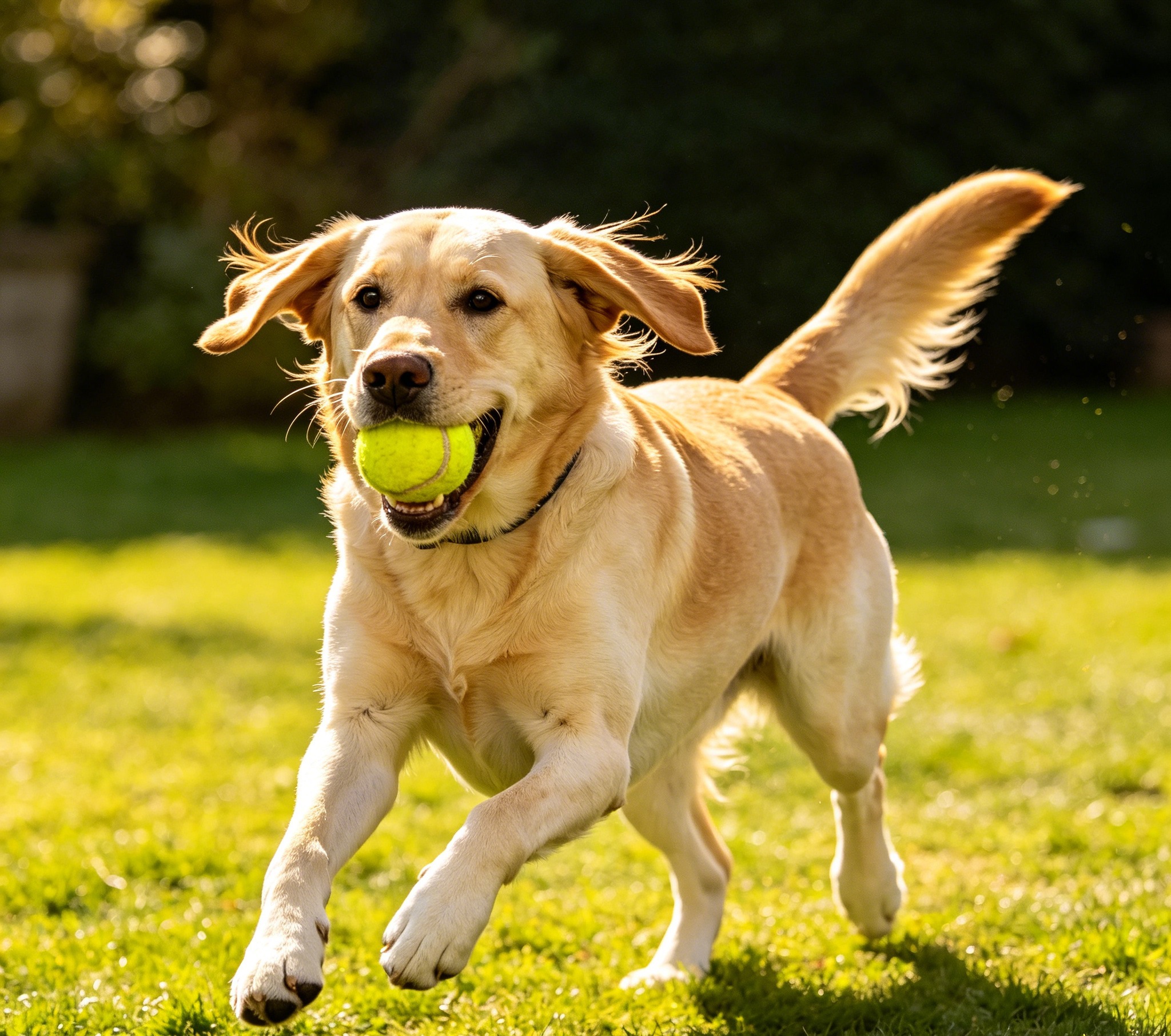
Make no mistake, the Labrador is a sporting dog bred for a full day’s work, and it needs serious daily exercise: at least an hour, and considerably more for a young, fit dog. A Lab that gets only a short stroll around the block is an unhappy, often badly behaved Lab. Both body and mind need work, and this breed thrives when given a purpose.
Excellent outlets for a Lab include:
- Fetch, which most Labs would happily do until your arm gives out.
- Swimming, a near-universal Lab passion thanks to the breed’s webbed feet and water-repellent coat.
- Long walks, jogs, hikes, and bike runs once the dog is mature.
- Dog sports such as dock diving, retrieving trials, obedience, and agility.
- Mental work like scent games and training, which a clever Lab eats up.
Two cautions: Labs love water but should be supervised and introduced to it safely, and exercise should be moderated in heat and during the growth period to protect developing joints. A tired Lab is a good Lab, and most behavior problems in the breed trace straight back to insufficient exercise.
The Short Coat Still Fills a Vacuum
The Labrador’s coat is low-maintenance to groom but high-volume in shedding, a trade-off many new owners underestimate. The breed has a short, dense, double coat that is water-repellent and weather-resistant, perfect for cold-water retrieving but designed to shed steadily year-round, with two heavier “coat blow” periods in spring and fall when the undercoat comes out in earnest. If you keep a Lab, you will find hair on your floors, clothes, and furniture, no matter how diligent you are.
Practical grooming routine:
- Brush weekly most of the year and daily during seasonal sheds, using an undercoat rake or deshedding tool to keep loose hair under control.
- Bathe only occasionally; over-bathing strips the coat’s protective oils.
- Check and dry the ears regularly, since Labs’ love of water plus their drop ears makes ear infections common.
- Keep up with nail trims and dental care.
Beyond the shedding, the Lab is genuinely easy to groom; there is no clipping or stripping involved. Just buy a good vacuum and a lint roller.
Common Labrador Retriever Health Issues
Labs are generally robust, but the breed carries several well-documented concerns. The single biggest day-to-day risk is obesity; Labs are exceptionally food-driven, and many carry a genetic variant (in the POMC gene) that increases appetite, so they gain weight easily and that excess weight worsens nearly every other problem. Orthopedically, hip and elbow dysplasia are prevalent, which is why responsible breeders screen breeding stock with hip and elbow evaluations. The breed is also prone to exercise-induced collapse (EIC), an inherited condition with a DNA test, as well as certain eye disorders such as progressive retinal atrophy, and as a large, deep-chested dog it has some risk of bloat (gastric dilatation-volvulus). Chronic ear infections round out the common complaints.
When choosing a breeder, ask to see hip and elbow clearances, eye certifications, and EIC and PRA test results on the parents. A breeder who screens for these and discusses them openly is doing the breed a real service.
If your Lab shows lameness, a distended or painful abdomen, sudden hind-end weakness during exercise, repeated ear trouble, or rapid weight gain, see your veterinarian.
A Labrador Kitchen Needs Rules
Feeding discipline matters more for the Labrador than for almost any other breed. This is a dog hardwired to eat, and studies have linked a common Lab gene to increased food obsession, so the begging, the counter-surfing, and the bottomless appetite are partly biological. Owners who feed by the begging eyes rather than by measured portions almost inevitably end up with an overweight Lab, and obesity in this breed accelerates hip and elbow problems and shortens lifespan.
Defensive feeding strategies:
- Feed precisely measured meals and resist topping up the bowl, no matter how convincing the pleading.
- Subtract training treats from the daily ration, since a food-driven Lab earns plenty of them.
- Run your hands over the ribs and check for a waist regularly; a fit Lab is leaner than most people expect.
- Secure trash, counters, and food storage, because a determined Lab will help itself.
Keeping your Lab lean is one of the most effective things you can do for its joints and longevity.
Build Manners Before Adult Strength Arrives
Labs are a joy to train, which is exactly why they excel at guide, service, and field work. They are intelligent, biddable, and intensely motivated by food and praise, so basic obedience usually comes quickly. The challenges are managing youthful exuberance, mouthiness, and a tendency to jump on people, all rooted in enthusiasm rather than defiance.
What works with this breed:
- Start early and use that food drive to your advantage with reward-based methods.
- Teach impulse control deliberately, since an excited Lab jumps, mouths, and grabs without meaning harm.
- Channel the retrieving instinct into fetch-based games and training rather than fighting it.
- Provide plenty of exercise before training; a wound-up Lab cannot concentrate.
- Socialize broadly so the breed’s natural friendliness stays confident and well-mannered.
Because Labs mature slowly, patience through the long adolescence pays off. Keep training upbeat and consistent, and you will have a willing, capable partner.
Make object release part of your play routine with our step-by-step drop-it guide. It separates an easy toy trade from collecting the toy and explains when home practice should stop.
Pros and Cons of Labrador Retrievers
| Pros | Cons |
|---|---|
| Friendly, gentle, superb with children | High energy, needs an hour or more of daily exercise |
| Highly intelligent and easy to train | Heavy, year-round shedding |
| Loves water and outdoor activity | Strongly prone to obesity and overeating |
| Versatile in sports and working roles | Hip and elbow dysplasia risk |
| Sociable and adaptable companion | Slow to mature; long, mouthy adolescence |
Labrador Myths Created by Their Popularity
Labs are born trained family dogs
They often bring social motivation and trainability, not finished manners. Mouthing, jumping, pulling, stealing, and destructive chewing are ordinary adolescent problems that require supervision and practice.
A heavy Labrador is naturally broad and healthy
Body type varies, but excess weight still stresses joints and health. Feel the ribs, look for a waist, measure meals, and ask a veterinarian to score body condition rather than using other Labradors as the benchmark.
Use the dog cost calculator to test a Labrador’s actual routine: large-dog food, training after puppy class, walking help, durable gear, swimming or activity access, and savings for health or household damage. The dog fit score cards help separate a fondness for Labs from readiness for food control, wet coats, shedding, alone hours, child supervision, and adult strength on the leash.
Is a Labrador Retriever Right for You?
A Lab is an excellent choice for an active individual or family that genuinely enjoys exercise and the outdoors. If you can commit to an hour or more of daily activity, will keep meals measured and the dog lean, and do not mind a house full of dog hair, the Labrador rewards you with loyalty, trainability, and one of the best temperaments in the dog world.
It is a poor fit for a sedentary lifestyle, for owners who cannot resist overfeeding, or for anyone expecting a calm, low-energy companion during the dog’s first couple of years. A Lab denied exercise and structure becomes a large, bored, destructive dog quickly.
For comparison, read the Standard Schnauzer guide, the Beagle guide, or the Alaskan Malamute guide. Comparing the Lab with another high-energy worker and a food-driven hound helps clarify which exercise and shedding demands you are truly signing up for.
Food Drive Shapes the Household
Set one food system before the Labrador learns several competing ones. Decide who measures meals, how training treats reduce the daily ration, where food is stored, and what the dog does while people cook. Kitchen manners are easier to teach before stealing and swallowing objects become rehearsed skills.
Adolescent Labs rarely become orderly through waiting alone. The dog may be friendly while still being strong, impulsive, and hungry enough to swallow unsafe objects. Use food drive for training, provide steady activity, and limit uncontrolled high-impact repetition while joints are developing.
A Labrador Needs More Than a Yard
Can a Labrador Retriever live in an apartment?
Possible, but not effortless. A Lab is a large, athletic dog with a busy tail, strong food drive, and real exercise needs. Apartment life works best when the owner has reliable outdoor access, structured walks, training games, and a plan for rainy days. Without that routine, the dog may become mouthy, noisy, destructive, or overweight.
How much does a Labrador cost to own?
Plan for a moderate-to-high budget. Labs eat more than small breeds, need sturdy gear, may require training help during adolescence, and often need veterinary attention for ears, joints, weight, or injuries from enthusiastic play. Food and preventive care are the predictable costs; emergency savings and weight management are the costs many owners overlook.
Are Labrador Retrievers good family dogs?
Yes, for active families that can handle size and excitement. Labs are usually friendly, forgiving, and eager to join everything. The family challenge is not temperament; it is impulse control. A young Lab may jump, steal food, chew toys, and barrel into toddlers. Families that train calm greetings early usually get the classic Labrador sweetness.
The Labrador Mess and Manners Check
Food management starts in the kitchen
Many Labs treat an unattended sandwich, open trash can, or bag of dog food as an invitation. Use closed storage, a secure bin, and a family rule against feeding from the table. Training treats should come out of the daily food allowance. These small habits matter because extra weight adds pressure to hips and elbows and can creep up quickly under a dense coat.
Water follows the dog indoors
Swimming is excellent exercise for many Labradors, but the owner gets the wet collar, muddy tail, and damp car. Keep towels and a washable mat by the entry, dry the ears after water play, and check local water conditions before letting the dog swim. The short coat is simple to brush; the cleanup after a happy retriever is the larger job.
Adolescent strength needs early rules
A friendly Lab can still pull someone over, knock down a child, or launch at a guest. Loose-leash walking, four paws on the floor, trading objects, and settling on a mat should begin while the puppy is easy to move. Waiting for maturity rarely fixes rude enthusiasm. Consistent practice gives the adult dog room to be social without turning every greeting into a wrestling match.
The Family Routine That Suits a Labrador
The Labrador Retriever earns its place atop the popularity charts: it is friendly, smart, trainable, and devoted, a dog that fits naturally into an active family’s life and excels at almost anything you ask of it. The price of admission is real exercise, steady grooming for the shedding, and disciplined feeding to keep a food-obsessed dog from getting heavy.
Meet those needs and the Lab is hard to beat as an all-around companion and working partner. Skip the exercise and overfeed the begging eyes, and you will end up with an overweight, restless dog that is harder to live with than its sunny reputation suggests. Go in with clear eyes about the work involved, and a Lab will repay it with years of loyal, joyful company.