
A Beagle’s nose changes the ordinary household decisions that a companion-dog buyer may never consider. Food cannot be left on a counter, a gate cannot be treated casually, and a walk needs time for safe sniffing instead of a rushed march around the block. The breed is cheerful, social, and often excellent with families, but its scent hound brain is not waiting for permission to follow an interesting smell.
The most important thing to understand before you bring one home is that a Beagle’s nose runs the show. When a scent catches its attention, your voice essentially disappears, which shapes everything from training to where this dog can safely be off-leash.

Beagle Fit Depends on Noise and Nose Management
| Fit Factor | Score | What It Means |
|---|---|---|
| Apartment Fit | 2/5 | Possible only with committed exercise, training, and careful neighbor management. |
| First-Time Owner Fit | 2/5 | Challenging for new owners unless they have strong support and training plans. |
| Family Fit | 3/5 | Can suit the right family when children, space, and routines are managed. |
| Exercise Demand | 5/5 | High-drive breed; under-exercise can quickly create behavior problems. |
| Grooming Difficulty | 3/5 | Moderate grooming or shedding; plan for regular brushing and basic upkeep. |
| Training Difficulty | 4/5 | Can be stubborn, intense, or independent; structure matters. |
Beagle Quick Facts
| Trait | What to Expect |
|---|---|
| Size | Small to medium, 13 to 15 inches tall, 20 to 30 pounds |
| Temperament | Friendly, curious, merry, and determined |
| Energy level | Moderate to high, with hound stamina |
| Exercise needs | An hour daily of walks and secure sniffing time |
| Grooming needs | Low; weekly brushing, but a steady shedder |
| Apartment friendly | Possible if exercise and baying are managed |
| Good with families | Excellent; one of the best with children |
| Common concerns | Obesity, ear infections, escaping, baying, IVDD, epilepsy |
| Best for | Active families who want a sociable, leash-walked companion |
| Not ideal for | Owners needing quiet, off-leash reliability, or a tidy yard |
Beagle Temperament
Beagles earned their old breed-standard description as “merry” for a reason. They are happy, outgoing, people-loving dogs that get along famously with children, strangers, and other dogs, a legacy of their pack-hunting heritage. A Beagle rarely meets a creature it does not want to befriend, which makes it a delightful family pet but a poor guard dog. This is a dog that wants company, human or canine, and tends to suffer when left alone too much; separation distress and the lonely, mournful howl that follows are common in isolated Beagles.
The flip side of that sweet nature is a powerful independent streak driven entirely by the nose. A Beagle on a scent is not being disobedient out of spite; it is doing exactly what it was bred to do, and the trail simply outranks you. This makes for a dog that is loving and biddable around the house yet maddeningly single-minded outdoors. Beagles are also vocal in a way few breeds are, capable of a distinctive baying howl that carries a remarkable distance, plus an assortment of barks and grumbles.
With kids, Beagles are genuinely excellent: patient, playful, sturdy enough for rough-and-tumble, and endlessly tolerant. Their food obsession means kids should be taught not to tease with snacks.
Let the Nose Work Safely
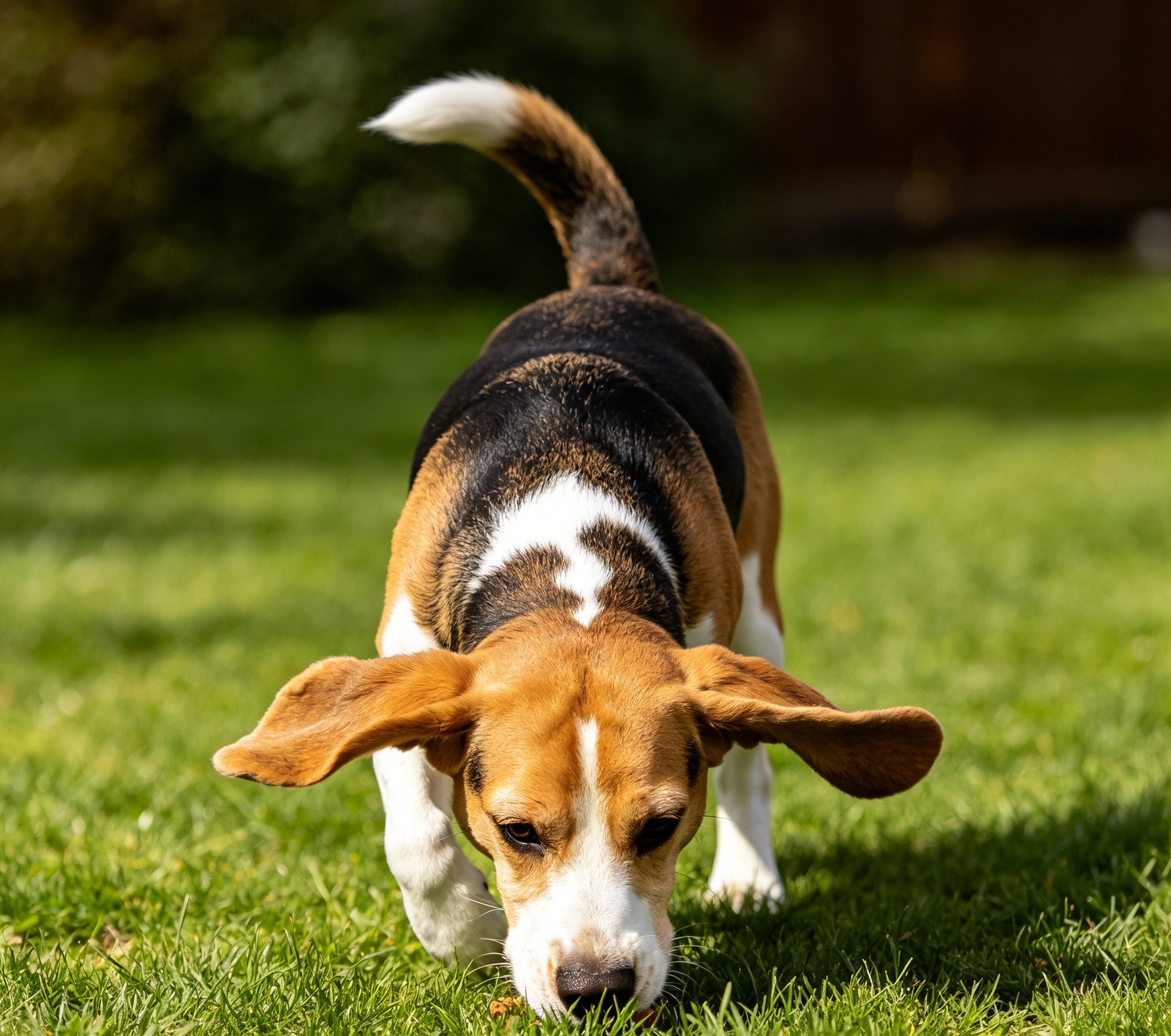
Beagles are hunting hounds with real stamina, and they need about an hour of activity a day to stay happy and out of mischief. An under-exercised Beagle channels its energy into howling, digging, chewing, and escape attempts, so daily exercise is not optional. The catch is that almost all of it must happen on leash or inside secure fencing, because a Beagle that catches an interesting scent will follow it over the horizon without a backward glance.
Good outlets for this breed include:
- Long, leashed “sniffari” walks where the dog is allowed to track and explore at its own pace.
- Securely fenced yard time, ideally with fencing dug deep, since Beagles are champion diggers and escape artists.
- Scent games and nose work, which tap the breed’s deepest instinct and tire it mentally.
- Hide-and-seek with treats or toys around the house on rainy days.
Recall is famously unreliable in this breed; even a well-trained Beagle may ignore you completely once its nose engages. Off-leash freedom belongs only in fully enclosed spaces. A long training line offers a safer middle ground for giving the dog room to roam.
Easy Coat, High-Inspection Ears
Grooming a Beagle is mercifully simple. The short, dense, weather-resistant coat needs only a weekly brushing with a rubber curry or hound mitt to remove loose hair and keep it healthy. Beagles do shed, more than their short coats suggest, with a heavier seasonal shed, so brushing helps keep the fur off your furniture. They are naturally clean dogs and need only occasional baths unless they roll in something, which scent hounds love to do.
The real grooming attention goes to two spots:
- The ears: those long, floppy hound ears trap moisture and limit airflow, making ear infections one of the breed’s most common problems. Check and gently clean the ears regularly and watch for odor, redness, or head-shaking.
- The nails and teeth: routine nail trims and consistent dental care round out the basics, as small breeds are prone to dental disease.
Beyond that, the Beagle is genuinely low-maintenance in the grooming department, one of the breed’s real advantages for busy households.
Common Beagle Health Issues
Beagles are generally hardy and long-lived, but a handful of concerns deserve attention. The most pervasive is obesity: this breed is relentlessly food-motivated, will eat well past the point of fullness, and gains weight with startling ease, which in turn worsens joint and back problems. Chronic ear infections are common thanks to those floppy ears. The breed can be affected by intervertebral disc disease (IVDD) given its long back, as well as hip dysplasia and luxating patellas. Beagles also have a recognized predisposition to epilepsy, and a serious inherited condition called Musladin-Lueke syndrome (MLS) appears in some lines, which conscientious breeders test for. Hypothyroidism and certain eye conditions round out the list.
When contacting a breeder, ask about hip and eye evaluations and whether epilepsy or MLS has shown up in their dogs. A breeder who is candid about the breed’s specific risks is the one to trust.
If your Beagle shows signs of back pain or wobbliness, a seizure, persistent ear trouble, or sudden weight changes, consult your veterinarian rather than waiting.
Food Security Is Part of Weight Control
If there is one daily discipline every Beagle owner must master, it is portion control. This breed’s appetite is legendary; a Beagle will counter-surf, raid the trash, open low cupboards, and beg with Oscar-worthy commitment, and it genuinely does not know when to stop. Left to its own devices, a Beagle becomes overweight, and the extra pounds press hard on a long back prone to disc problems.
Practical defenses against the Beagle waistline:
- Feed measured meals on a set schedule rather than leaving food out.
- Keep counters, trash cans, and pantry doors Beagle-proofed, because this dog will find and eat anything edible.
- Use the dog’s food motivation to your advantage in training, but subtract those treats from the daily total.
- Check the ribs and waist by hand often; the begging eyes will lie to you about whether the dog is truly hungry.
Channeling that food drive into training and puzzle feeders is far healthier than giving in to the begging.
Training With Scent Instead of Against It
Beagles are intelligent but selectively deaf, and that combination frustrates owners who expect quick obedience. The good news is that the breed’s bottomless love of food makes it highly motivated; the challenge is competing with the nose. Successful Beagle training leans hard on rewards, patience, and realistic expectations, and accepts that a scent will sometimes win no matter how good your training is.
Tips that work with this breed:
- Use high-value treats and lots of them; a Beagle works enthusiastically for food.
- Drill recall relentlessly, but never trust it fully off-leash in open areas; manage the environment instead.
- Crate train early and address alone-time gradually, since Beagles are prone to separation distress and the howling that comes with it.
- Be patient with house-training, which often takes longer in this breed.
- Redirect digging and chewing toward acceptable outlets rather than punishing the instinct.
A Beagle will never be a precision obedience dog, and that is fine. Aim for a happy, well-mannered companion and use the nose, in games and scent work, as a training ally rather than fighting it.
Pros and Cons of Beagles
| Pros | Cons |
|---|---|
| Friendly, merry, wonderful with children | Strong nose makes recall unreliable |
| Sociable with people and other dogs | Loud baying and howling can disturb neighbors |
| Compact, sturdy, and low-grooming | Food-obsessed and prone to obesity |
| Generally healthy and long-lived | Determined escape artist and digger |
| Affordable, easygoing family companion | Stubborn to train and slow to house-train |
Beagle Myths That Let the Nose Win
A trained Beagle should be trustworthy off leash
Some individuals develop good recalls, yet scent can overwhelm practiced behavior. Long lines and secure areas provide exploration without treating a road or open gate as a test of training.
Beagles are easy couch dogs because they are friendly
Friendliness helps family life but does not satisfy exercise, scent work, food management, or alone-time needs. An underoccupied Beagle often becomes louder and more inventive, not simply sleepier.
The dog cost calculator is most useful for a Beagle when it includes food security, enrichment, ear care, safe gates, training, walking support, boarding, and a repair buffer for preventable raids. Use the dog fit score cards to ask whether your household can live with hound noise, managed off-leash freedom, locked food, secure fencing, and walks built around scent work.
Is a Beagle Right for You?
If a Dachshund is also on your shortlist, our Beagle vs Dachshund comparison helps you weigh scent-led walks, barking, coat care, and the access route from your home to the street.
A Beagle is a superb choice for an active, sociable household that wants a friendly, kid-friendly dog and is realistic about the breed’s hound nature. If you enjoy long sniffing walks, can secure your yard, will manage portions strictly, and can tolerate some vocalizing, a Beagle rewards you with affection, good humor, and a remarkably easy-care coat.
It is the wrong dog for someone who needs reliable off-leash freedom, expects quick obedience, lives somewhere with strict noise rules and no patience for howling, or cannot resist overfeeding. Leaving a Beagle alone for long workdays is also a recipe for a noisy, unhappy dog.
For comparison, read the Scottish Terrier guide, the Standard Schnauzer guide, or the Labrador Retriever guide. Setting a scent hound beside a working breed and a retriever clarifies how differently these dogs handle recall, food, and training.
The Nose Runs the Calendar
Start with two house systems: leash control and food security. Secure trash, close pantry doors, inspect the yard, and give sniffing a legitimate place in walks and games. A Beagle whose nose has structured outlets is easier to live with than one asked to ignore scent all day.
Friendliness does not predict recall. A Beagle may greet every person in the park and still disappear after a scent trail, which is why fencing and long-line practice matter. Weight, ear condition, and access to safe sniffing deserve more attention than drilling the same cue after the nose has already taken over.
Shared Walls, Secure Food, and Family Routines
Can a Beagle live in an apartment?
Yes, but barking and scent drive are the two pressure points. Beagles are a manageable size and often friendly with neighbors, yet their baying voice carries. Apartment owners need daily sniff walks, food security, leash discipline, and a plan for alone time. If the building has strict noise rules, a quieter companion breed may be easier.
Are Beagles expensive to own?
Usually moderate, with food management as the hidden issue. Beagles are not giant dogs and do not need fancy grooming, but they gain weight easily and may need vet care for ears, skin, back issues, or injuries from following their nose into trouble. Secure trash, measured meals, and preventive ear care can save money later.
Are Beagles good family dogs?
Often, yes. Beagles are cheerful, sturdy, social, and usually enjoy family activity. The family needs to manage food stealing, door-dashing, and noise. Children can help with games and gentle training, but adults should handle leash walks and supervise food, gates, and small pets.
Living With a Nose That Makes Decisions
Walk equipment deserves a backup
A Beagle following a fresh scent may lean into the leash, reverse out of a loose collar, or ignore a familiar cue. A well-fitted harness, secure identification, and a long line for sniffing sessions give the owner more margin. Check gates and fence bottoms as carefully as the top. Once the nose switches on, traffic awareness and household boundaries carry little weight.
Noise travels through shared buildings
Beagles can bark, bay, and howl with a volume that surprises people who chose a medium-small dog. Practice calm departures, reduce window triggers, and avoid leaving the dog under-exercised before a long meeting or shift. Apartment living can work when the schedule is stable, but owners should take neighbor complaints seriously before the pattern becomes established.
Food storage needs hound-level security
Use latching bins for food and trash, keep counters clear, and close bags inside cabinets. Beagles can learn household manners, yet access keeps rewarding the behavior faster than training can compete. Measured meals and tiny training rewards help with weight control. If a dog swallows packaging, bones, medication, or an unknown item, contact a veterinarian promptly.
The Home That Makes Beagle Life Work
The Beagle is a merry, affectionate, low-grooming hound that fits beautifully into active family life, provided you embrace the package its nose comes in. This is a dog that will charm everyone it meets, play tirelessly with the kids, and ask very little in the way of grooming, while also testing your patience with selective hearing, a powerful appetite, and an impressive set of lungs.
If you can keep a Beagle leashed, fed in measured portions, exercised daily, and rarely lonely, you will find few friendlier or more cheerful companions. If you wanted a quiet, off-leash-reliable, easily trained dog, the scent hound’s instincts will work against you, and another breed may suit you better.