
A Scottish Terrier is a compact dog with a working terrier’s priorities. Its short legs do not cancel the urge to investigate, dig, chase, and announce unfamiliar activity. The breed can suit an apartment or a house, but the household needs a safe outlet for prey drive, clear visitor rules, and a grooming plan before the distinctive silhouette becomes the main consideration.
The Scottie is affectionate without being endlessly compliant. It often prefers a predictable relationship to constant handling and may negotiate a cue it finds uninteresting. Owners who enjoy an independent dog and can keep rules consistent usually get more from the breed than owners looking for a small, eager-to-please lapdog.
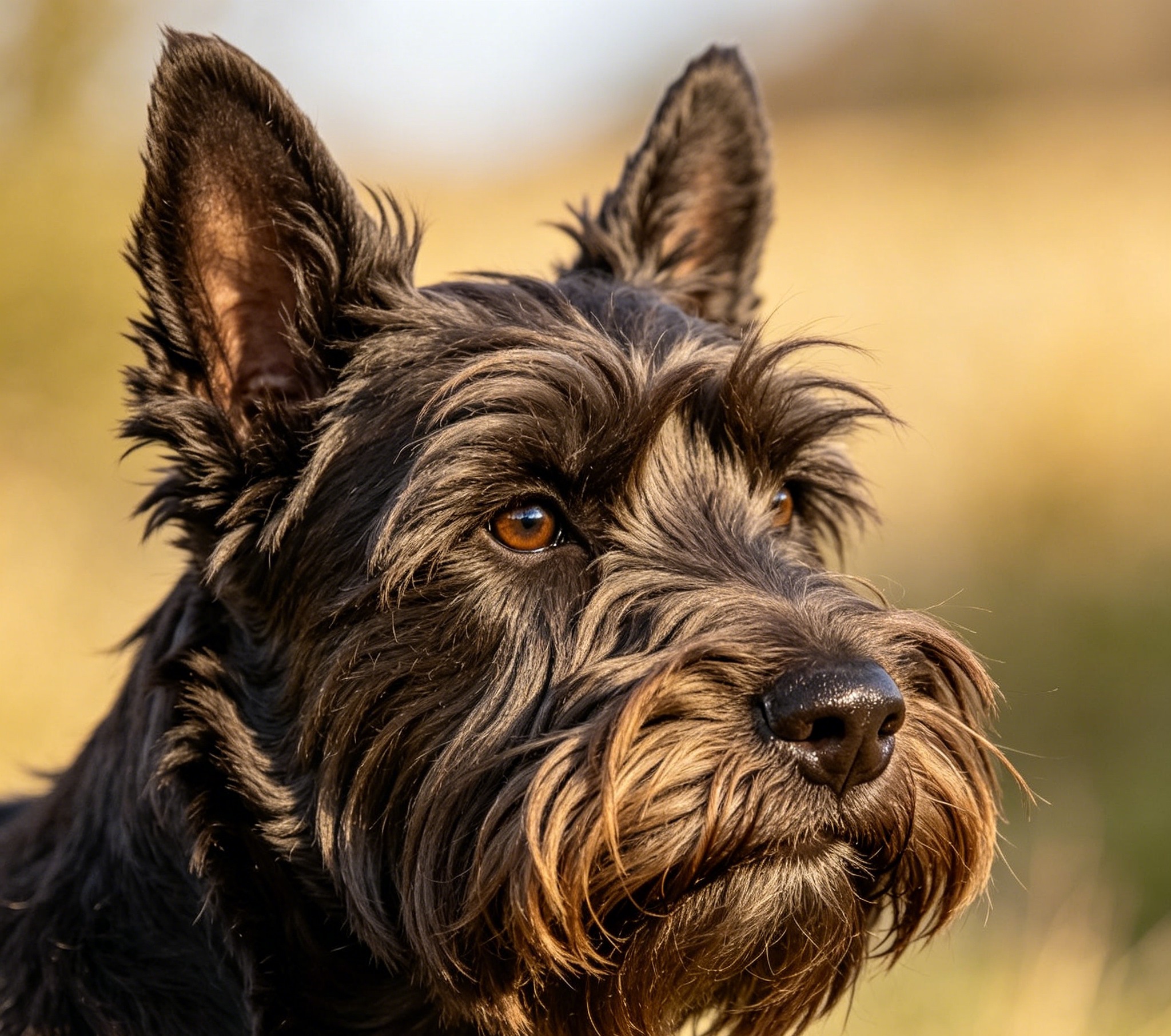
What a Scottish Terrier Asks of a Household
| Daily constraint | Score | What it changes | |—|—|—| | Prey-drive management | 5/5 | Squirrels, cats, and small pets require fencing, leash habits, and realistic recall expectations. | | Visitor and noise plan | 4/5 | A territorial terrier needs a taught response to doors, windows, and unfamiliar dogs. | | Coat method | 4/5 | Hand-stripping preserves a harsher jacket; clipping is simpler but still requires a regular groomer. | | Family handling | 4/5 | Older, respectful children are usually easier to match than toddlers who cannot read a dog’s boundaries. | | First-dog margin | 3/5 | Training is possible for a beginner, but independence and persistence punish inconsistent rules. |
Scottish Terrier Quick Facts
| Trait | What to Expect |
|---|---|
| Size | Small and compact, about 10 inches tall, 18 to 22 pounds |
| Temperament | Bold, independent, loyal, and dignified |
| Energy level | Moderate, with bursts of terrier intensity |
| Exercise needs | Two brisk walks plus digging and sniffing outlets |
| Grooming needs | High; hand-stripping or regular clipping plus weekly brushing |
| Apartment friendly | Yes, with daily walks and barking managed |
| Good with families | Best with older, respectful kids |
| Common concerns | Scottie cramp, von Willebrand disease, bladder cancer, jaw issues |
| Best for | Owners who admire an opinionated, low-fuss small dog |
| Not ideal for | People wanting a cuddly, eager-to-please lapdog |
Scottish Terrier Temperament
If you want a dog that thinks for itself, the Scottie delivers. It can be deeply attached to its household while remaining reserved with visitors and unwilling to perform affection on demand. That is not the same as a dog that cannot bond; it is a dog whose trust is usually built through predictable handling and shared routines.
That independence comes with a strong sense of self-importance. Scotties can be territorial, quick to sound the alarm at the door, and feisty toward strange dogs, especially dogs of the same sex. The prey drive that once made them efficient ratters never fully switched off, so squirrels, cats, and rabbits will trigger an instant chase. Early, ongoing socialization softens the edges, but you should never expect a Scottie to be the friendly dog-park type. It is a serious little dog with serious opinions, and most owners come to love it precisely for that.
With children, supervision matters. A Scottie usually tolerates respectful older kids well but has little patience for grabbing, rough handling, or teasing, and it will let a pushy toddler know when enough is enough.
How a Scottish Terrier Uses Its Energy
People underestimate how much a Scottie needs to move. The breed is moderate in energy, not lazy, and a bored Scottie quickly becomes a digging, barking, baseboard-chewing problem. Two solid walks a day, plus time to sniff and investigate, usually keeps one content. Because the prey drive is strong and the recall is unreliable, off-leash freedom in open areas is risky; a securely fenced yard or a long line is the safer choice.
Good outlets for this breed include:
- Brisk leashed walks where the dog gets to read the neighborhood with its nose.
- A digging pit or sandbox where digging is allowed, sparing your garden beds.
- Earthdog trials or barn-hunt games that tap the original ratting instinct.
- Short, upbeat training sessions framed as a game rather than a drill.
Watch the heat. The Scottie’s dense black coat absorbs sunlight, so summer exercise belongs in the cool of early morning or evening. If your dog slows, pants heavily, or refuses to continue, head home and offer water.
Coat Care in a Scottish Terrier Home
This is where many new owners get a surprise. The Scottish Terrier is often called low-shedding, but that comes at the price of real grooming labor. The coat is double: a soft, dense undercoat beneath a hard, wiry topcoat. Left alone it mats, fluffs out, and loses its crisp texture. To keep the proper harsh jacket, show dogs are hand-stripped, a process of plucking out dead hair by hand every few weeks. Most pet owners instead clip the coat every six to eight weeks, which is easier but softens the texture and can fade the rich black to a grayish cast over time.
Between professional appointments, plan on:
- Brushing and combing two or three times a week to prevent mats, especially in the long “furnishings” on the legs and belly.
- Keeping the beard and leg hair clean, since they pick up food, mud, and debris.
- Checking the ears, which can collect wax and moisture under the folded leather.
- Routine nail trims and dental care, as small breeds are prone to tartar.
Budget for a groomer, or be ready to learn clipping and stripping yourself. The “wash and wear” Scottie is a myth.
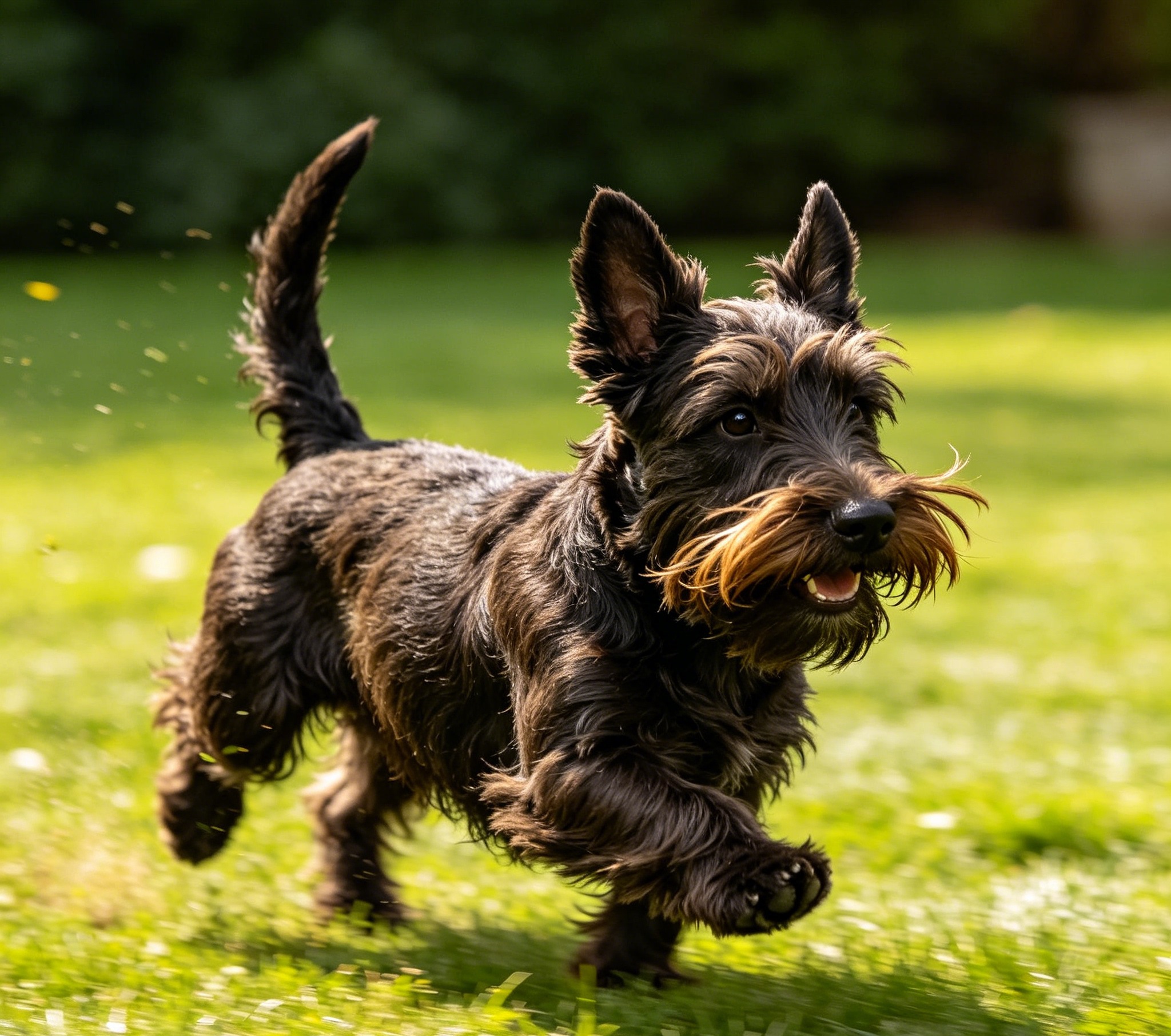
Common Scottish Terrier Health Issues
The Scottie is generally sturdy but carries a few notable breed predispositions. The most talked-about is “Scottie cramp,” a harmless inherited movement disorder where excitement or hard exercise causes a temporary stiffening or goose-stepping gait; the dog recovers fully within minutes. More serious is von Willebrand disease, an inherited bleeding disorder that responsible breeders screen for. The breed also has an unusually high rate of transitional cell carcinoma, a bladder cancer, so any persistent straining, blood in the urine, or frequent accidents deserves prompt veterinary attention. Owners may also encounter craniomandibular osteopathy (“Scottie jaw”), a painful jawbone condition seen in puppies, plus the usual small-breed concerns of luxating patellas and dental disease.
When you contact a breeder, ask specifically about von Willebrand testing in the parents and whether bladder cancer or jaw problems have appeared in their lines. A breeder who knows the Scottie’s particular risks and tests for them is worth seeking out.
This section is for education, not diagnosis. If your Scottie shows blood in the urine, repeated straining, sudden weakness, uncontrolled bleeding, or a noticeable change in behavior, see your veterinarian rather than waiting it out.
Meals and Body Condition for a Scottish Terrier
A Scottie’s stocky frame hides weight gain easily, and the short legs mean excess pounds press hard on the spine and joints. Because the breed has a meaningful cancer risk, keeping a lean body condition through adulthood is one of the kindest things you can do. Feed a measured amount of a quality food split into two meals, and resist the begging eyes that come standard with this breed.
A few practical pointers:
- Use a measuring cup or kitchen scale; eyeballing portions leads to slow, invisible weight creep.
- Account for training treats in the daily total, and break them into tiny pieces.
- Run your hands along the ribs weekly; you should feel them under a thin layer, not have to press through fat.
- Skip rich table scraps, which add calories fast on a dog this size.
If your Scottie is gaining despite careful feeding, talk to your vet before assuming it is just diet, since thyroid issues can play a role in some dogs.
Teaching a Scottish Terrier Useful Habits
Training a Scottie is an exercise in negotiation, not obedience. This is a smart dog that learns quickly but sees little reason to repeat a command just because you asked. Harsh corrections backfire badly; a Scottie that feels bullied digs in and shuts down. What works is short, motivating sessions, genuinely good rewards, and a sense of humor about the breed’s stubbornness.
Useful approaches with this breed:
- Keep sessions brief and end on a win, before the dog decides it is bored.
- Pay well with high-value food, since a Scottie weighs whether the effort is worth it.
- Prioritize a reliable recall and a “leave it,” both of which can prevent disaster given the prey drive.
- Socialize early and often with calm dogs and varied people to temper the breed’s natural wariness.
- Manage, do not punish, the barking; redirect and reward quiet rather than scolding.
Accept that an honest Scottie will never be a robotic responder. Aim for a polite, well-mannered companion rather than a competition-obedience star.
Pros and Cons of Scottish Terriers
| Pros | Cons |
|---|---|
| Bold, dignified, instantly recognizable | Stubborn and independent by nature |
| Deeply loyal to its chosen people | Reserved or aloof with strangers and other dogs |
| Compact and apartment-capable | High grooming demands, not low-maintenance |
| Low shedding when properly groomed | Strong prey drive and unreliable off-leash |
| Alert, effective little watchdog | Can be a determined barker and digger |
Scottie Owners Learn to Negotiate With a Terrier
A Scottish Terrier can be devoted without being eager to obey for applause. The daily work is building cooperation for grooming, recall, and visitors while respecting a fairly private temperament. Prey drive can appear suddenly around squirrels or small pets, and the low body does not make the dog fragile in spirit. Repeating cues louder usually gets less than making the reward and boundary clear.
Scottie Life in Compact and Spacious Homes
Compact body, audible watchdog
Exercise needs can fit an apartment, but alert barking and narrow encounters need training. Use sniff-heavy walks and avoid relying on dog parks for activity. A mat away from the entry helps the dog disengage from every sound in the hall.
A garden is both enrichment and temptation
Scotties enjoy investigating ground and may dig or pursue wildlife. Secure the fence at the bottom and protect plants or chemicals from access. Supervised yard time is useful, while regular neighborhood walks keep the dog comfortable beyond its own boundary.
A first terrier owner should shorten the argument
Use brief reward-based sessions, a long line for recall practice, and early cooperative grooming. Do not expect retriever-style repetition. A first-time owner should also discuss household rules so one person does not reward barking or table demands that another person tries to stop.
Experienced owners can read independence accurately
Terrier experience helps distinguish stubbornness from low motivation, stress, or an unclear task. It also helps with prey management. Even so, avoid assuming an older Scottie will tolerate every dog; calm parallel walking may be more useful than crowded social events.
Scottish Terrier Myths That Miss the Point
Scotties are grumpy dogs that do not bond closely
Many are deeply attached but restrained in how they show it. Reserve is not the same as lack of affection. Give the dog choice and predictable routines rather than demanding constant social performance.
A low, small dog can exercise itself in the yard
A yard offers smells, but walking and shared activity provide mental variety and maintain public manners. Weight control also matters, so food and exercise should be measured rather than assumed.
For a practical planning check, use the dog cost calculator to include clipping or hand stripping choices, dental care, training, secure fencing, walking support, and a medical reserve appropriate for the breed. The dog fit score cards can help you compare prey animals, visitor expectations, grooming patience, shared-wall noise, and whether an independent temperament feels appealing rather than frustrating.
Is a Scottish Terrier Right for You?
A Scottie suits an owner who genuinely enjoys an independent, opinionated dog and does not need constant cuddles or instant obedience to feel loved. If you appreciate a dog with strong character, can commit to regular grooming, and will keep your terrier leashed or fenced, the breed rewards you with fierce loyalty and endless personality.
It is a poor match for someone hoping for a soft, biddable lapdog, a reliable off-leash hiking partner, or a dog that warmly greets every stranger. It also frustrates owners who dislike grooming bills or expect a small dog to be effortless.
For comparison, read the Siberian Husky guide, the Doberman Pinscher guide, or the Standard Schnauzer guide. Looking at several terrier-adjacent breeds side by side makes the Scottie’s particular mix of independence, grooming load, and prey drive easier to judge.
The Scottish Terrier Decision
The Scottish Terrier is a dog of strong character: dignified, brave, loyal, and stubborn in equal measure. It will not flatter you with obedience or smother you with affection, but it will bond hard, guard its home with conviction, and bring decades of personality into a compact, dapper package. The catch is the grooming commitment and the independent mind, both of which demand a patient, realistic owner.
If a clever, self-assured little Scotsman who does things his own way sounds like a companion you would treasure, the Scottie is a wonderful match. If you wanted an easygoing, eager pleaser, keep looking, because this breed will happily out-stubborn you.