
The Siberian Husky is easy to admire from a distance and difficult to improvise around at home. A secure fence, a long-term exercise plan, tolerance for vocalizing, and realistic off-leash expectations matter more than blue eyes or a wolf-like coat. The right Husky home is prepared for a dog that keeps moving, thinking, and testing the weak point in a routine.
Bred by the Chukchi people of Siberia to pull light loads over vast frozen distances on minimal food, the Husky is athletic, friendly, and astonishingly enduring. They are wonderful dogs for the right, very committed owner, and a common sight in shelters precisely because so many owners underestimate them. Knowing the real breed is the whole game.
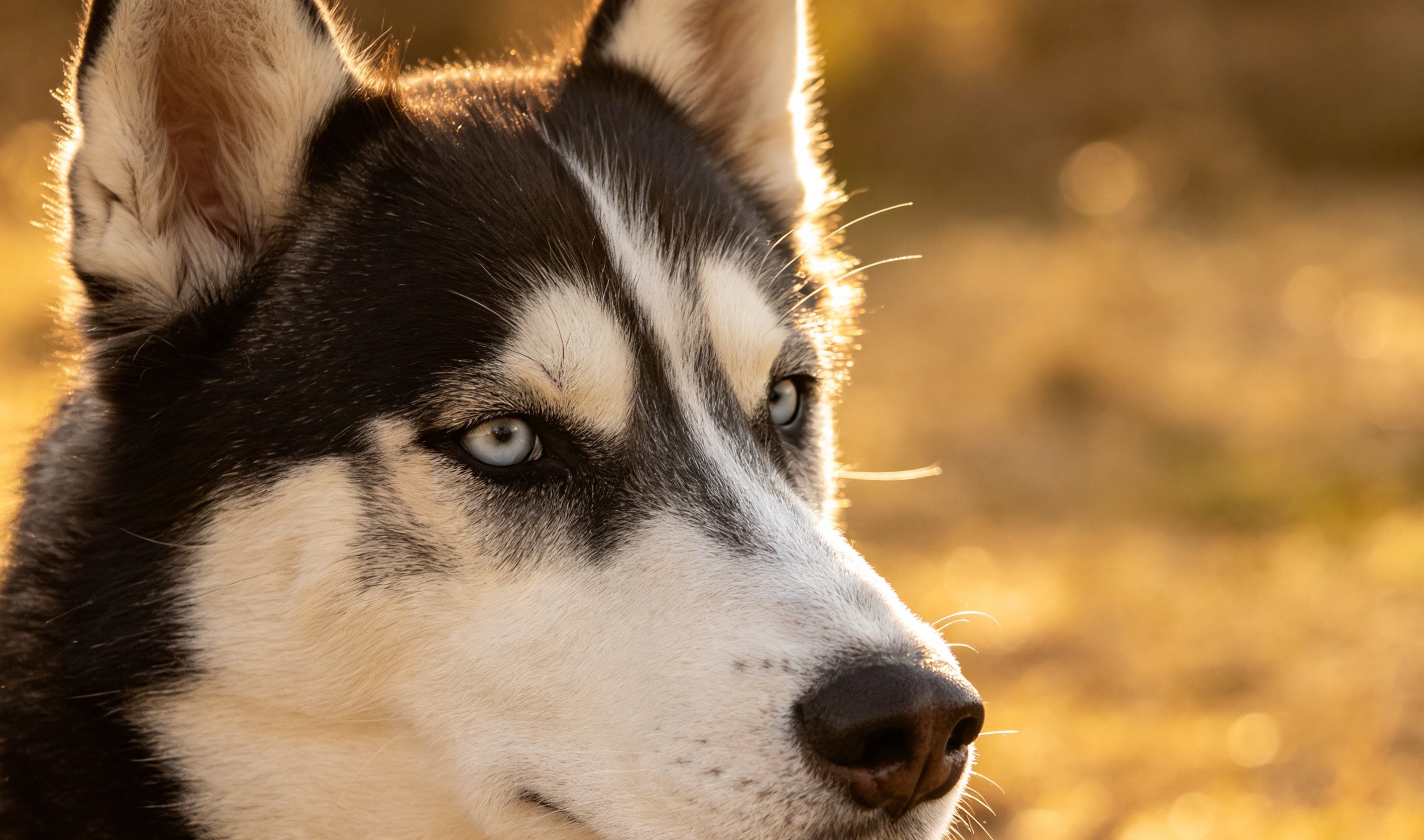
A Husky Fit Test Starts With the Fence
| Fit Factor | Score | What It Means |
|---|---|---|
| Apartment Fit | 2/5 | Possible only with committed exercise, training, and careful neighbor management. |
| First-Time Owner Fit | 2/5 | Challenging for new owners unless they have strong support and training plans. |
| Family Fit | 3/5 | Can suit the right family when children, space, and routines are managed. |
| Exercise Demand | 5/5 | High-drive breed; under-exercise can quickly create behavior problems. |
| Grooming Difficulty | 3/5 | Moderate grooming or shedding; plan for regular brushing and basic upkeep. |
| Training Difficulty | 4/5 | Can be stubborn, intense, or independent; structure matters. |
Siberian Husky Quick Facts
| Trait | What to Expect |
|---|---|
| Size | Medium working sled dog, about 20-23.5 inches tall |
| Weight | Roughly 35-60 lbs (females smaller than males) |
| Temperament | Friendly, outgoing, mischievous, vocal, and independent |
| Energy level | Very high; a born endurance athlete |
| Exercise needs | Vigorous daily running, hiking, or pulling, plus enrichment |
| Grooming needs | Brush weekly; massive twice-yearly coat blows |
| Lifespan | About 12-14 years |
| Apartment friendly | Difficult; needs intense exercise and an escape-proof setup |
| Good with families | Good; social and friendly, even with strangers |
| Common concerns | Escape and roaming, high prey drive, heat sensitivity, eye disease |
| Best for | Very active owners with secure, fenced spaces |
| Not ideal for | Sedentary homes, open yards, or first-time owners |
Siberian Husky Temperament
Huskies are friendly to a fault. They’re outgoing, pack-oriented dogs that typically love everyone, including strangers, which makes them lousy guard dogs but delightful, sociable companions. They’re playful, often comically goofy, and famously “talkative,” using a wide range of howls, whines, and dramatic “woo-woo” vocalizations instead of much barking. Many owners hold full conversations with their argumentative Husky.
That said, the breed is independent and mischievous, a thinking dog bred to make its own decisions on the trail. They get bored easily, and a bored Husky is a destructive one: digging up the yard, chewing furniture, and howling are classic signs of an under-stimulated dog. They generally do well with other dogs, having been bred to work in teams, but small pets are another matter.
The prey drive is real and strong. Huskies were known to hunt for their own food, and many will chase, and potentially harm, cats, rabbits, and other small animals. Caution around small pets is essential.
Daily Distance, Weather, and Mental Work
This is where most Husky ownership succeeds or fails. The breed was built to run for miles, day after day, and an adult Husky needs vigorous daily exercise, not just a walk around the block. Without it, that endless energy turns into escaping, howling, and demolition.
Plan for serious activity:
- Long daily runs, hikes, or bike outings; many Huskies happily go for an hour or more.
- Heritage-style work in cool weather: pulling, skijoring, canicross, or sledding.
- Mental enrichment through puzzle toys, training games, and varied environments.
- Companionship, since this pack animal does poorly left alone for long stretches.
Two big caveats. First, heat: the dense coat makes Huskies prone to overheating, so exercise hard only in cool conditions and ease off in summer. Second, leashes and fences: a Husky off-leash in an open area is likely to run, and run far, because the urge to roam and chase overrides recall. Hard exercise should happen in secure, contained settings or under harness.
Living Through a Husky Coat Blow
The Husky’s coat is gorgeous and surprisingly low-fuss most of the year, but the seasonal shedding is legendary. It’s a dense double coat with a thick undercoat, naturally clean and nearly odor-free, needing only a weekly brush for much of the year. Then, twice a year, the Husky “blows” its entire undercoat in a spectacular shed that produces drifts of fur for weeks.
A practical plan:
- Brush weekly normally, and daily during the heavy seasonal blows.
- Use an undercoat rake and slicker brush to clear the loosening undercoat.
- Bathe only occasionally; the coat stays clean on its own.
- Keep nails trimmed and check ears and feet, especially after outdoor work.
- Never shave the double coat; it insulates against both cold and heat.
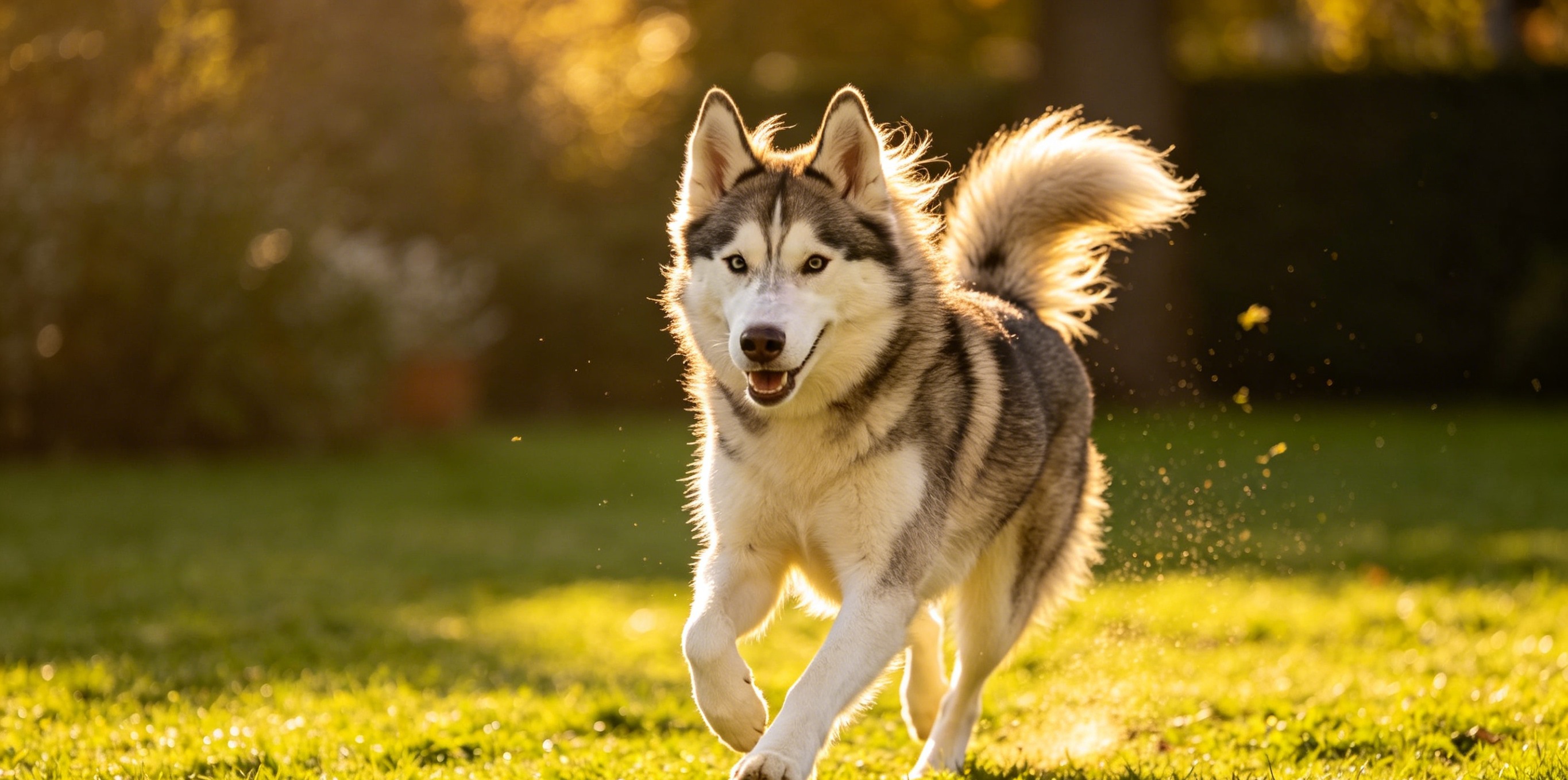
Common Siberian Husky Health Issues
Compared with many purebreds, Siberian Huskies are relatively healthy and hardy, a legacy of generations bred for hard work and survival. Their most notable inherited concerns are eye conditions: the breed is predisposed to juvenile cataracts, progressive retinal atrophy, and corneal dystrophy, so eye exams of breeding dogs matter. Hip dysplasia occurs but is less common than in many large breeds.
Just as important from an owner’s standpoint are the breed-typical risks tied to behavior and physiology: heat sensitivity that can lead to overheating, and the escape-and-roam tendency that gets loose Huskies hit by cars or lost. These aren’t diseases, but they cause real harm, which is why secure containment and heat awareness are part of responsible Husky care. Ask breeders about eye and hip clearances.
This information is meant to help you ask good questions, not to diagnose your dog; your veterinarian is the right source for medical decisions. Get prompt care for cloudy or painful eyes, vision changes, signs of heat distress, or sudden behavioral or appetite changes.
Fueling Activity Without Adding Weight
Huskies are remarkably “easy keepers.” Bred to work long distances on little food, they have efficient metabolisms and often need less food than their size suggests, which means it’s surprisingly easy to overfeed one. Keeping a Husky lean and athletic suits the breed’s purpose and protects its joints. You should readily feel the ribs and see a clear waist.
Feeding pointers:
- Feed measured, quality meals and don’t be alarmed if your Husky needs less than expected.
- Adjust portions up during heavy cold-weather work and down during quieter periods.
- Count treats toward the daily total, since a calorie-efficient dog gains easily.
- Don’t mistake their occasional finicky, self-regulating eating for a problem; many Huskies eat only what they need.
Watch the body condition rather than the bowl. A Husky that’s working hard in winter and one lounging through a hot summer have very different needs.
Recall Management, Not Wishful Thinking
Training a Husky humbles a lot of owners. They’re intelligent but highly independent, bred to think and make decisions without human direction, so they are not naturally obedient and can be downright stubborn. Reward-based, engaging, consistent training works; repetition and force do not, as a bored or pressured Husky simply checks out.
Key priorities:
- Socialize early and keep training fun, varied, and rewarding.
- Accept that recall is unreliable in this breed; manage with leashes and fencing rather than trusting off-leash freedom.
- Invest heavily in an escape-proof yard: tall fences, dig barriers, and secure gates, because Huskies climb, jump, and tunnel out.
- Channel the working drive into jobs and sports to reduce boredom-driven misbehavior.
- Teach a “leave it” and practice impulse control around small animals.
The honest truth is that you manage a Husky as much as you train it. Smart containment and ample exercise prevent far more problems than obedience drills ever will.
Pros and Cons of Siberian Huskies
| Pros | Cons |
|---|---|
| Striking looks and a friendly, social nature | Enormous exercise needs; bores destructively |
| Generally healthy, hardy, and athletic | Master escape artist; demands secure fencing |
| Clean, nearly odor-free coat most of the year | Massive seasonal shedding twice a year |
| Playful, goofy, and good with other dogs | Strong prey drive; risky around small pets |
| Often good with kids and strangers alike | Independent and stubborn; unreliable off-leash |
Husky Myths That Open Gates
Enough running will stop every behavior problem
Exercise helps, but it can also create a stronger athlete. Huskies need containment, training, sleep, social contact, and mental outlets. Destruction or howling may also reflect separation distress that mileage alone will not solve.
Huskies cannot live in warm climates
Some live in warm regions with rigorous cooling and schedule changes, but the climate adds risk and limits activity. Air conditioning, early outings, surface-temperature checks, and conservative judgment are required; appearance does not prove comfort.
Start the dog cost calculator with containment before treats: fencing, gates, running or pulling equipment, training, coat tools, cooling, backup exercise, boarding, and the repairs ordinary estimates miss. The dog fit score cards are a useful reality check for shared-wall noise, local climate, prey animals, time alone, and whether the exercise plan survives a busy week rather than only a perfect weekend.
Is a Siberian Husky Right for You?
A Husky belongs with a highly active owner who can provide hours of vigorous exercise, a securely fenced space, cooler-climate sensibility, and the patience for an independent, sometimes exasperating dog. People who run, hike, bike, or do sled sports, and who treat exercise and containment as non-negotiable, find the Husky an exuberant and beautiful partner.
It’s the wrong dog for a sedentary household, an open or unfenced yard, a hot climate without precautions, or a first-time owner expecting easy obedience. Huskies fill shelters precisely because so many people choose them for their looks and aren’t ready for the athlete and escape artist underneath.
If you’re considering high-drive or escape-prone breeds, compare the Husky with the equally fluffy Samoyed, the smaller but similarly independent Shiba Inu, or the more handler-focused Doberman Pinscher. The differences in trainability and containment needs are dramatic.
Freedom Has to Be Designed
Walk the fence line before the Husky explores it. Check latches, gaps, dig points, leash storage, and the path from the house to the car. One weekend hike will not balance five idle weekdays; safe movement and mental work have to appear throughout the normal schedule.
The striking coat and comic voice sell the breed more easily than the daily logistics do. Huskies need containment, planned exercise, prey-drive management, heat-aware routines, and tolerance for heavy shedding. Off-leash reliability in an unfenced area is a poor assumption to build a household around.
A Husky Home Is Built Around Containment
Can a Siberian Husky live in an apartment?
Sometimes, but it is a demanding setup. A Husky needs serious exercise, secure handling, and an owner who can tolerate vocal behavior and shedding. Apartment life is hardest when neighbors are noise-sensitive or the dog is left bored. A tired, trained Husky can nap indoors; an underworked Husky may howl, dig, chew, and look for exits.
How expensive is a Husky to own?
Costs are moderate to high depending on lifestyle. Food, strong gear, secure fencing or safe exercise options, grooming tools, and possible dog-walking help can add up. The coat does not need professional trimming, but seasonal shedding is intense. Owners should also budget for escape prevention rather than treating it as optional.
Are Siberian Huskies good family dogs?
They can be playful and affectionate family dogs for active homes. The caution is that they are independent, energetic, and often high prey drive. Families need rules around doors, gates, small pets, and exercise. A Husky is usually better for families that enjoy outdoor activity than for families wanting a calm backyard ornament.
Building a Husky-Safe Routine
Inspect the fence from the dog’s point of view
Loose boards, a soft patch of soil, or a low object beside the fence can become an exit route. Huskies may dig, climb, squeeze, or wait for a gate to be left open. Walk the boundary regularly, secure latches, and supervise yard time until the individual dog has shown reliable habits. A long line adds control in open spaces without pretending the recall is finished.
Exercise changes with the weather
Cold weather often brings out a Husky’s stamina. Summer requires shorter sessions, cooler hours, shade, and close attention to recovery. Replace hard running with training games or scent work when heat makes endurance work unsafe. The coat should not be shaved as a shortcut for summer management; ask a veterinarian or experienced groomer about coat care.
Alone time needs a realistic setup
A bored Husky can dismantle soft furnishings, test doors, and rehearse vocal complaints. Start with short departures, use a secure area the dog has learned to relax in, and arrange exercise before a longer absence. Some adults settle well after training. Puppies and newly adopted dogs often need midday help and far less freedom than owners expect.
The Owner Who Can Keep a Husky Safe
The Siberian Husky is a magnificent, athletic, sociable dog, friendly, funny, hardy, and built for adventure. For the committed owner with the energy, the secure space, and the patience to meet its needs, a Husky is an exhilarating companion and a genuine partner on the trail.
For nearly everyone else, the gap between the wolfish fantasy and the demanding reality is exactly why this breed ends up rehomed so often. If you can honestly provide the exercise, the containment, and the management this sled dog requires, the Husky will reward you spectacularly. If you can’t, choosing a more suitable breed is the kindest decision you can make for both of you.