
The Doberman Pinscher is a powerful, alert dog that notices a great deal about its home and the people moving through it. The short coat and polished outline can make ownership look simple. It is not. A Doberman needs calm handling, early social exposure, clear visitor rules, and enough shared work to stay settled at home.
The difficult part is not finding activities. It is teaching an intelligent guardian when nothing needs to happen. A Doberman that practises quiet recovery, polite greetings, and time alone is far easier to live with than one trained only to stay busy. The breed also deserves serious pre-purchase health questions, including family history and cardiac screening.
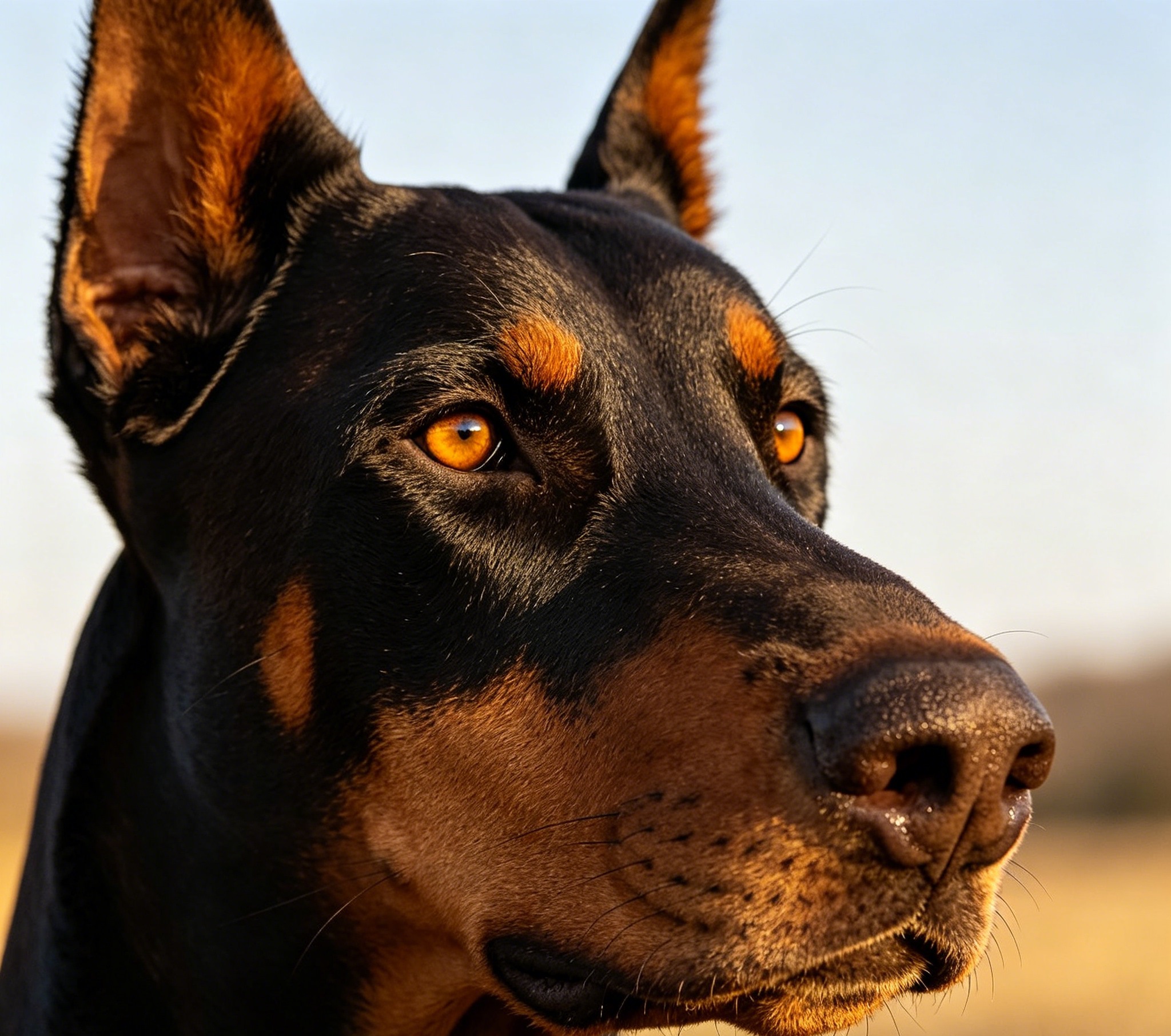
Before a Doberman Comes Home: Structure Beats a Big Yard
| Daily constraint | Score | What it changes | |—|—|—| | Visitor management | 5/5 | The household needs a repeatable plan for doors, guests, tradespeople, and children visiting. | | Time with people | 5/5 | This close-bonded breed does poorly as a detached backyard guard dog. | | Training judgment | 5/5 | Strength and sensitivity make inconsistent rules more costly than with an easygoing companion breed. | | Exercise outlet | 4/5 | Purposeful walks, obedience, and controlled play matter more than simply adding distance. | | Health preparation | 5/5 | Cardiac questions, insurance or savings, and a relationship with a veterinarian belong in the first-year budget. |
Doberman Pinscher Quick Facts
| Trait | What to Expect |
|---|---|
| Size | Large working dog, about 24-28 inches tall |
| Weight | Roughly 60-100 lbs (females lighter than males) |
| Temperament | Loyal, alert, intelligent, sensitive, and affectionate with family |
| Energy level | High; an athletic, driven working breed |
| Exercise needs | Vigorous daily exercise plus mental work and training |
| Grooming needs | Minimal; short coat, weekly brush, sheds modestly |
| Lifespan | About 10-12 years |
| Apartment friendly | Possible with serious daily exercise and training |
| Good with families | Excellent with experienced, committed families |
| Common concerns | Dilated cardiomyopathy (heart), von Willebrand’s disease, wobbler syndrome, bloat |
| Best for | Active owners who want a trainable guardian companion |
| Not ideal for | Hands-off owners or homes with no time for training |
Doberman Pinscher Temperament
The defining surprise of the breed is how soft Dobermans are with their own people. They bond intensely and are often called “velcro dogs” for their need to be physically near their humans, leaning, following, and even trying to be lap dogs despite their size. They are sensitive, emotionally attuned, and genuinely thrive on companionship; a Doberman shut out of family life is a miserable, often problematic dog.
That devotion pairs with natural alertness and protectiveness. A Doberman is watchful and will guard its family, but a well-bred, well-socialized one is not indiscriminately aggressive; it’s discerning, confident, and stable. Modern Dobermans are typically far more even-tempered than their movie-villain image suggests.
They are also extremely intelligent and somewhat sensitive to their handler’s mood and methods. This combination means they read you constantly and respond beautifully to fair leadership, but they can become anxious or pushy without it. Early socialization shapes whether all that drive becomes confidence or reactivity.
How a Doberman Pinscher Uses Its Energy
Dobermans are athletes, and they need real exercise to stay balanced in body and mind. A bored, under-exercised Doberman channels its considerable energy and intelligence into trouble: pacing, destruction, anxiety, and pushiness. Plan for vigorous daily activity plus mental challenges.
A solid routine includes:
- A brisk run, jog, long walk, or active play session every day.
- Training-based exercise, since this breed loves having a job and a purpose.
- Dog sports that suit the breed: obedience, agility, tracking, rally, or protection work.
- Plenty of together-time, because a velcro dog exercised alone still misses its person.
Protect young Dobermans from overdoing high-impact exercise while their joints and growth plates are still developing, and given the breed’s heart predisposition, discuss appropriate exercise levels with your vet, especially as the dog ages. A Doberman that tires unusually fast, coughs, or seems weak during activity should be evaluated rather than pushed.
Coat Care in a Doberman Pinscher Home
Grooming is the easy part of Doberman ownership. The short, sleek, single-layer coat needs little more than a weekly once-over with a grooming mitt or soft brush to keep it glossy and manage the modest, steady shedding. There’s no undercoat to blow and no mats to fight.
A simple routine covers it:
- A quick weekly brush to remove loose hair and distribute skin oils.
- Occasional baths when the dog is dirty; the coat cleans up easily.
- Regular nail trims, since active dogs still need maintained feet.
- Routine ear checks and dental care.
- Cold-weather awareness: that thin coat offers little insulation, so many Dobermans need a coat in winter and shouldn’t live outdoors.
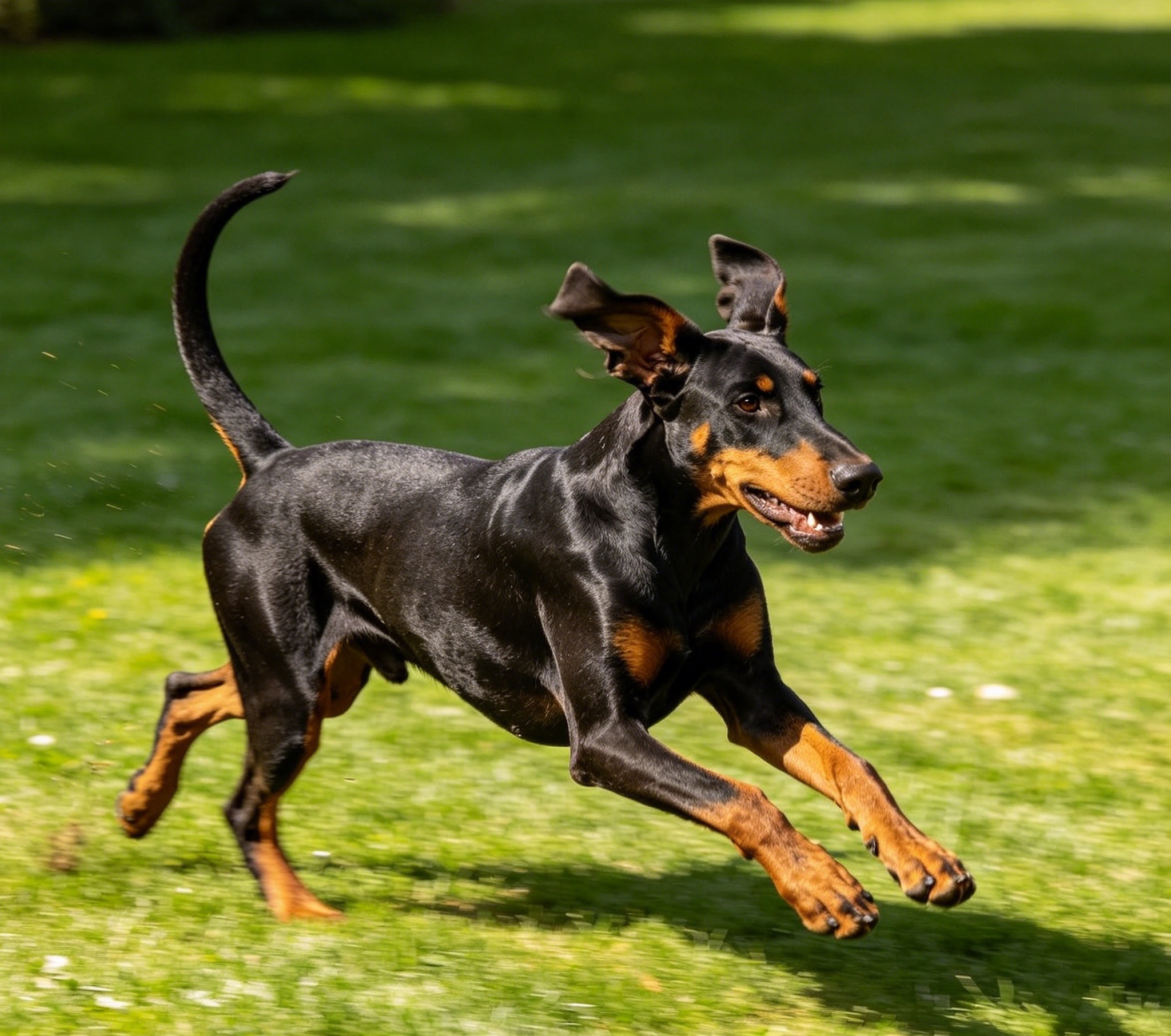
Common Doberman Pinscher Health Issues
Here is the part prospective owners must take seriously: the Doberman faces some significant inherited health risks, and the standout is the heart. The breed has a high incidence of dilated cardiomyopathy (DCM), a condition in which the heart enlarges and weakens, and it can strike even seemingly healthy dogs, sometimes causing sudden collapse. Responsible breeders screen breeding dogs with regular cardiac testing (echocardiograms and Holter monitors), and this is the single most important question to ask any breeder.
Beyond the heart, the breed is predisposed to von Willebrand’s disease (an inherited bleeding disorder with a DNA test available), cervical vertebral instability or “wobbler syndrome” affecting the neck and gait, hip dysplasia, hypothyroidism, and, as a deep-chested large breed, gastric dilatation-volvulus (bloat), a sudden life-threatening emergency. Choosing a breeder who tests hearts, thyroid, vWD, and hips is genuinely the best protection you have.
Your vet should guide screening, diagnosis, and treatment. Because heart disease and bloat can be sudden and fatal, get emergency help immediately if your Doberman collapses, struggles to breathe, has a swollen or hard abdomen with unproductive retching, or shows sudden weakness.
Meals and Body Condition for a Doberman Pinscher
A lean, muscular body suits the Doberman and reduces strain on the heart and joints, so keeping the dog at a healthy weight is part of caring for an at-risk breed. You should be able to feel the ribs and see the athletic, tucked-up outline the breed is known for. As a large, deep-chested dog, the Doberman also benefits from feeding practices aimed at reducing bloat risk.
Helpful feeding habits:
- Feed measured, quality meals matched to a large, active dog’s needs.
- Split the daily ration into two meals rather than one large one, and avoid heavy exercise right around mealtimes to lower bloat risk.
- Count treats toward daily calories, especially with a food-motivated training dog.
- Talk to your vet about diet and any heart-supportive nutritional considerations for the breed.
Keeping a Doberman trim isn’t about appearance; for a breed predisposed to cardiac disease, every pound off the heart’s workload matters.
Teaching a Doberman Pinscher Useful Habits
If you want a dog that learns fast, the Doberman delivers; it’s among the most intelligent and trainable breeds in existence. That brilliance cuts both ways: a Doberman learns bad habits as quickly as good ones and will exploit an inconsistent owner. They are sensitive dogs that respond superbly to confident, fair, reward-based training and shut down or grow anxious under harshness.
Priorities for this breed:
- Begin socialization and obedience early and intensively; it’s the foundation of a stable adult guardian.
- Use positive, consistent methods and clear leadership the dog can trust.
- Give the working brain a job through advanced obedience, sports, or structured tasks.
- Build calm independence gradually to temper the velcro tendency and prevent separation anxiety.
- Be a confident, fair handler, since this perceptive breed mirrors your consistency and emotional steadiness.
The breed’s combination of intelligence, drive, and sensitivity is why experienced guidance matters. A well-trained Doberman is a joy and a genuine partner; a poorly guided one becomes more dog than many owners can manage.
Pros and Cons of Doberman Pinschers
| Pros | Cons |
|---|---|
| Exceptionally intelligent and trainable | Significant heart-disease (DCM) risk in the breed |
| Deeply loyal and affectionate with family | Needs vigorous daily exercise and mental work |
| Naturally alert and protective | Demands experienced, consistent training |
| Low-maintenance short coat | Velcro nature; dislikes being left alone |
| Athletic and versatile in dog sports | Thin coat; intolerant of cold, not an outdoor dog |
Doberman Ownership Is Closer Than the Guard-Dog Image Suggests
A Doberman often follows ordinary family life more closely than the guard-dog image suggests. Owners prepare for protection and discover a sensitive shadow who notices tension, follows room to room, and may struggle when left without preparation. Public manners, visitor routines, and health planning carry more weight than teaching intimidating behavior. A well-run home spends far more time on neutrality and rest than on guarding.
Doberman Advice by Property and Experience
Possible in space, demanding in schedule
A trained adult can settle in an apartment after exercise and mental work, but elevators and narrow halls require excellent leash control. Long alone days are a poor fit. Check landlord and insurance rules before committing, not after the dog is grown.
A house needs visitor choreography
A secure yard supports play but can encourage fence running and territorial rehearsal. Teach a station away from the door, use barriers during deliveries, and decide how guests enter. The dog should not be left outside to make independent security decisions.
A first owner needs qualified guidance early
Choose stable temperament and documented health work, then find a reward-based trainer familiar with large working dogs. Socialization should build calm neutrality, not force the puppy to greet everyone. Review housing, insurance, and local rules before pickup.
Experienced handlers should avoid protection shortcuts
Skill can produce impressive obedience, but informal protection work can create liability and confusion. Focus on control, recovery, handling, and confidence in public. Owners interested in protection sports should use established clubs and qualified instruction.
Doberman Myths That Distort the Real Work
A Doberman is naturally a finished protection dog
Breed traits do not replace stable genetics, socialization, control, or professional training. Encouraging suspicion in a household pet can create fear and liability rather than reliable protection.
The short coat makes the breed low maintenance
Coat work is easy, but exercise, training, cold-weather protection, companionship, and cardiac health planning are not. Maintenance should be measured across the whole dog, not by brushing time.
For a practical planning check, use the dog cost calculator to include advanced classes, secure equipment, insurance or medical savings, cardiac monitoring discussions, cold-weather gear, and dependable care during travel. The dog fit score cards can help you compare time alone, housing rules, visitor traffic, exercise, public handling skill, and comfort managing a large dog with a watchful reputation.
Is a Doberman Pinscher Right for You?
A Doberman fits an active, committed owner who wants an intelligent, devoted guardian and will invest in training, exercise, socialization, and companionship. People who enjoy dog sports, value a deeply bonded protector, and can be present enough to satisfy a velcro dog tend to find the Doberman extraordinarily rewarding. Crucially, the right owner also goes in eyes-open about the breed’s heart risk and the cost of cardiac monitoring.
It’s a poor choice for a hands-off household, an owner with no time for training, or anyone away from home for long stretches, since a neglected Doberman’s intelligence and need for connection curdle into anxiety and problem behavior. It’s also not a dog to leave outdoors or treat as mere yard security.
If you’re comparing guardian and high-drive breeds, set the Doberman beside the independent, spirited Shiba Inu, the high-energy Siberian Husky, or the feisty small Scottish Terrier. The contrasts in trainability and temperament are striking.
The Doberman Pinscher Decision
The Doberman Pinscher is a remarkable dog: brilliant, athletic, loyal, and far more tender-hearted with its family than its guard-dog image suggests. For an active, experienced owner ready to provide training, exercise, companionship, and proper veterinary screening, a Doberman is a devoted partner and an impressive working companion.
The commitment is real, though, especially the breed’s serious heart-health risk and its deep need for connection and structure. Go in prepared to train consistently, stay present, and budget for cardiac monitoring, and the Doberman rewards you with intelligence and loyalty few breeds can match. If that level of involvement isn’t realistic for you, it’s wiser to choose a breed whose needs better fit the life you can actually offer.