
The Boston Terrier often fits the city-dog picture: compact, social, short-coated, and happy to be near its people. The part that deserves just as much attention is its flat-faced anatomy. A Boston can be keen to play long after heat or breathing make continued activity a poor choice.
That changes the home routine. Reliable cooling, short walks at sensible times, careful weight management, and quick attention to eye discomfort are part of responsible ownership. The breed can be a warm, comic companion, but it should never be selected on the assumption that a small dog is automatically an easy dog.
Boston Terrier Fit: Climate Is Part of the Floor Plan
| Daily constraint | Score | What it changes |
|---|---|---|
| Cooling plan | 5/5 | Air conditioning, shade, and flexible walk times are basic equipment in a warm climate. |
| Activity recovery | 5/5 | Owners need to stop play before breathing becomes strained, not wait for the dog to choose. |
| Eye awareness | 4/5 | Prominent eyes make sudden squinting, rubbing, or injury worth prompt veterinary attention. |
| Apartment routine | 4/5 | Compact size helps, while stairs, hot corridors, and noisy greetings still need management. |
| First-dog margin | 3/5 | A prepared beginner can do well with clear health expectations and veterinary support. |
Boston Terrier Quick Facts
| Trait | What to Expect |
|---|---|
| Size | Small, ~12–25 lb, 15–17 in tall |
| Temperament | Friendly, lively, comic, affectionate, gentle |
| Energy level | Moderate; playful bursts then happy to relax |
| Exercise needs | Short walks and play, avoiding heat |
| Grooming needs | Low; short single coat, minimal shedding |
| Apartment friendly | Excellent |
| Good with families | Very good; one of the better small family dogs |
| Common concerns | Breathing limits, heat sensitivity, eye injuries, allergies |
| Best for | City dwellers and families wanting an easy small dog |
| Not ideal for | Hot climates or hard endurance exercise |
Boston Terrier Temperament
Bostons are people-loving, good-natured dogs with a real flair for comedy. They’re known for an expressive, almost human face and a habit of clowning around to get a laugh, paired with a gentle, affectionate streak that makes them excellent companions. Most are friendly toward strangers and other animals, and they’re typically calmer and less yappy than many small breeds, which is part of why they fit apartment living so well.
While the terrier name suggests feistiness, today’s Boston is bred primarily as a companion and tends to be adaptable and eager to please. They do best with plenty of human company and can get attached, so they’re happiest in homes where they aren’t left alone for long stretches. Their playful, sturdy nature also makes them one of the more child-friendly small breeds when interactions are supervised.
How a Boston Terrier Uses Its Energy
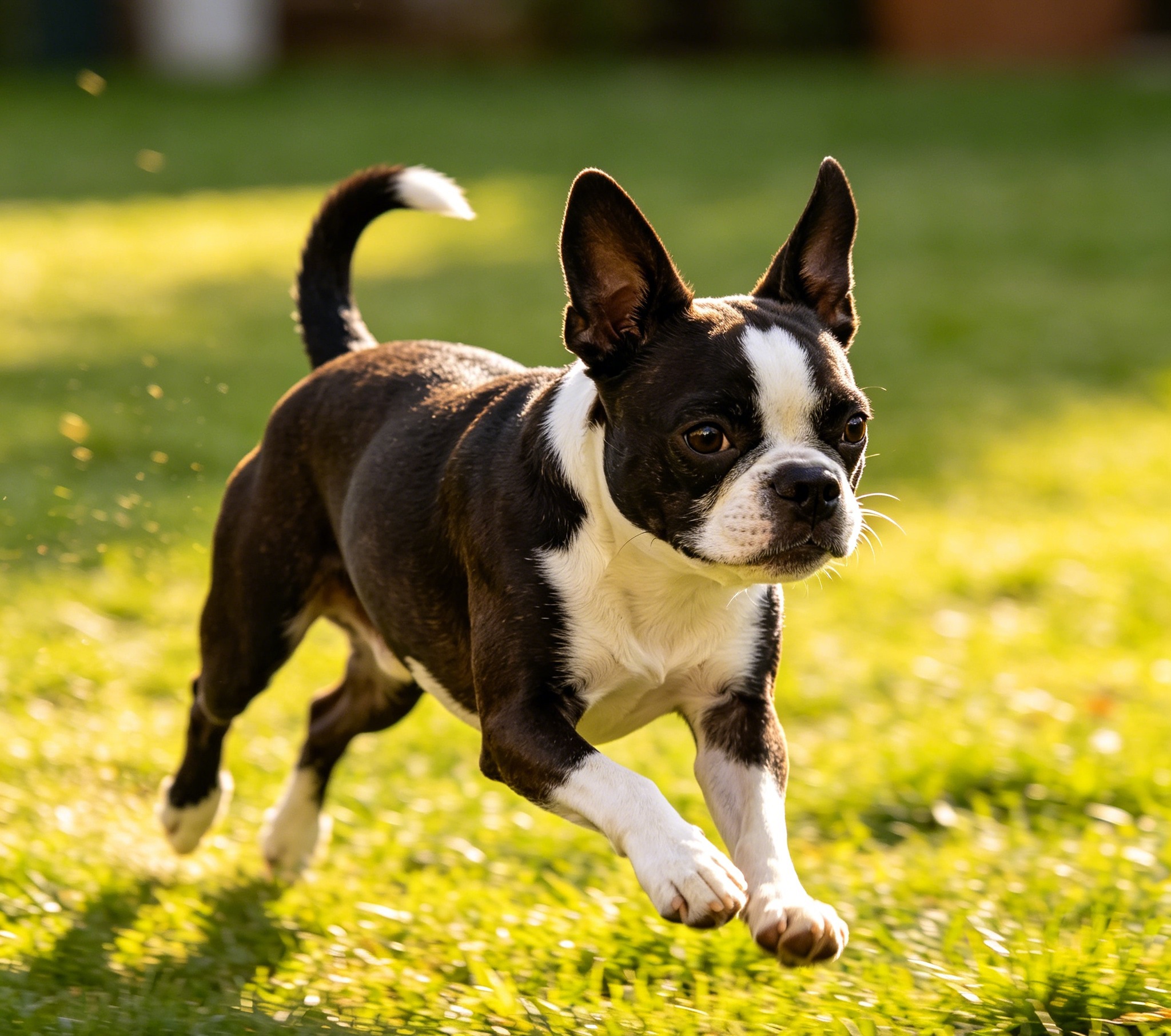
Bostons have a moderate energy level: enthusiastic bursts of play followed by contented napping. A couple of short daily walks plus some indoor play or a game of fetch keep most individuals happy and fit. They don’t need the marathon exercise of a working breed, which suits busy or apartment-based owners well.
A sensible routine looks like:
- Two short, relaxed walks a day.
- Indoor play, fetch, or gentle tug to burn energy.
- A few minutes of training games, since Bostons enjoy learning.
- Calm time with the family, which this companion breed values highly.
The key caveat is the flat face. A Boston can’t cool itself efficiently or breathe as freely as a long-nosed dog, so keep exercise gentle, avoid the hottest part of the day, and never push a panting Boston. Watch for noisy, labored breathing as a signal to stop and rest.
Coat Care in a Boston Terrier Home
Grooming is one of the easiest parts of Boston ownership. The short, smooth single coat sheds minimally and needs only a weekly brush to look its best and keep loose hair down. There’s no clipping, stripping, or professional grooming to budget for.
Where the routine does need attention is the face and skin folds:
- Wipe the facial wrinkles and around the eyes to prevent moisture buildup and irritation.
- Clean the prominent eyes gently and watch for redness or discharge.
- Bathe occasionally; the breed can be prone to skin allergies.
- Check and clean the ears, and keep nails trimmed.
- Brush teeth regularly, as small flat-faced breeds crowd their teeth.
Because Bostons have sensitive skin, avoid over-bathing and harsh products that can trigger flare-ups.
Common Boston Terrier Health Issues
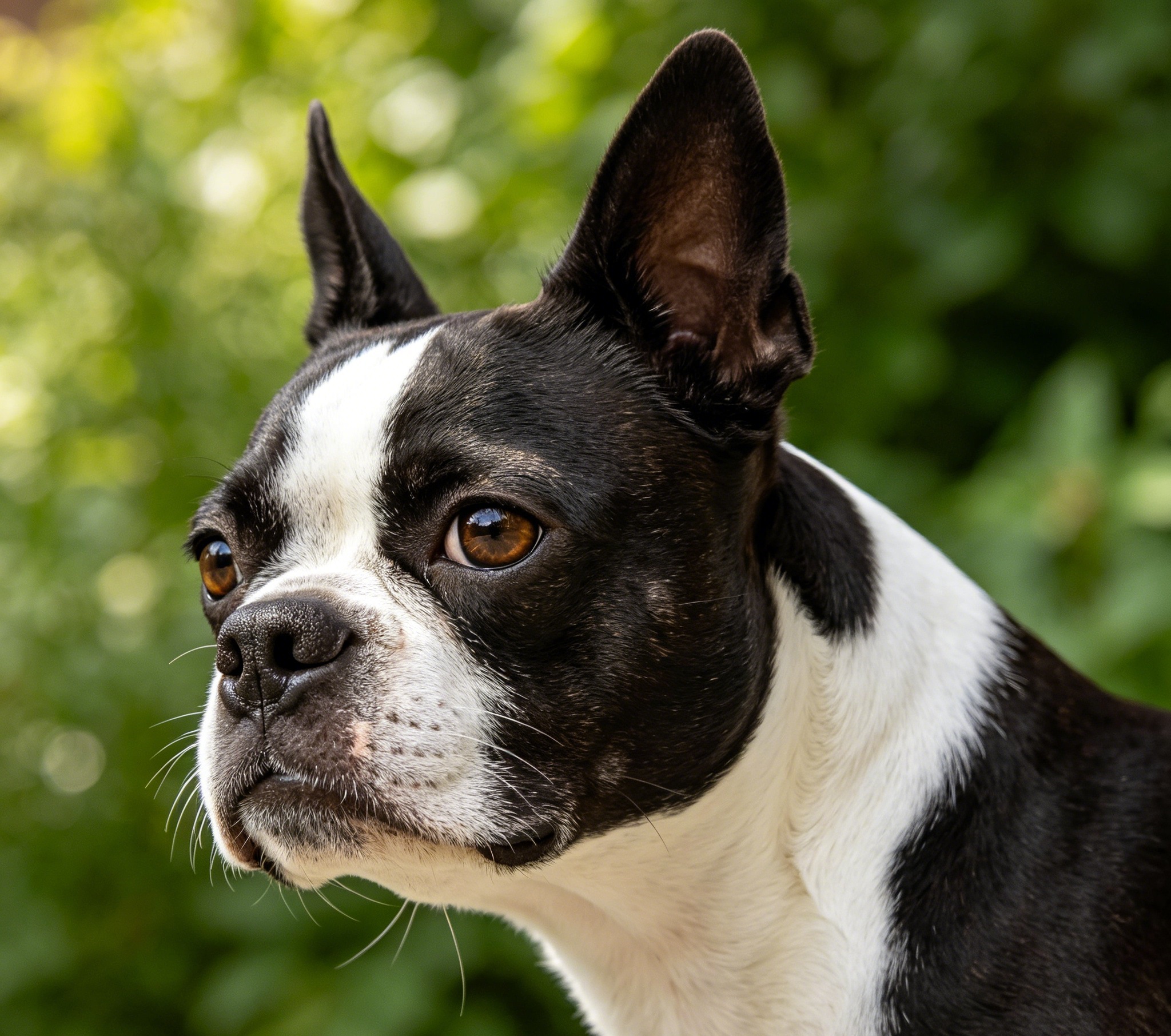
As a brachycephalic (flat-faced) breed, the Boston Terrier’s main health themes center on its short skull. Brachycephalic airway syndrome means some Bostons have narrowed nostrils and airways that make breathing harder, especially in heat or during exertion, and that same anatomy makes them genuinely heat-sensitive and at risk of overheating. Those big, slightly protruding eyes are also exposed and prone to injury, ulcers, and conditions like cherry eye and corneal damage.
Other concerns owners should know:
- Skin allergies and sensitivities, common in the breed.
- Patellar luxation (slipping kneecaps) and some inherited eye diseases.
- Deafness, which occurs in a portion of the breed, sometimes in one ear.
- Sensitivity to anesthesia, which a vet experienced with flat-faced dogs will account for.
Given the breathing and heat risks, treat heavy or distressed panting, blue-tinged gums, or signs of overheating as urgent, get the dog cool and to a vet, and have any eye injury or sudden squinting examined quickly.
Meals and Body Condition for a Boston Terrier
Keeping a Boston lean is especially important because excess weight worsens breathing difficulty and adds strain to a small, compact body. These dogs can put on pounds easily if overfed, so portion control and limited treats go a long way.
Helpful feeding habits:
- Feed measured meals suited to a small dog’s modest calorie needs.
- Keep the dog trim; you should feel the ribs without a thick fat layer.
- Some Bostons are gassy, so a quality, digestible diet and slow feeding help.
- Count treats toward the daily total, since small dogs need very little extra.
If your Boston tends toward a sensitive stomach or flatulence, talk to your vet about a diet that suits the breed’s digestion.
Teaching a Boston Terrier Useful Habits
Bostons are intelligent and eager to please, which makes them quite trainable, though they can have a stubborn moment or two. They respond best to upbeat, reward-based sessions and don’t take well to harsh handling. Their love of attention means praise and treats are powerful motivators.
Practical pointers:
- Start house-training early and stay consistent; some Bostons take a while to be fully reliable.
- Socialize as a puppy so the friendly nature stays confident and easygoing.
- Teach basic manners and a few tricks; they enjoy the mental engagement.
- Work on calm alone-time gradually, since the breed bonds closely and dislikes isolation.
- Keep sessions short and fun to match their playful attention span.
Because they aim to please, most Bostons make satisfying students for first-time owners willing to be consistent.
Pros and Cons of Boston Terriers
| Pros | Cons |
|---|---|
| Friendly, gentle, and great with families | Flat face limits breathing and heat tolerance |
| Low-shedding, low-maintenance coat | Prominent eyes are injury-prone |
| Compact and ideal for apartments | Prone to skin allergies and some flatulence |
| Comical, affectionate companion | Can struggle with long alone time |
| Relatively calm and quiet for a small breed | Not suited to hard exercise or hot climates |
Boston Terrier Owners Watch Recovery, Not Just Energy
A Boston Terrier may play harder than its breathing and heat tolerance suggest. The useful skill is ending activity before the dog decides to stop. Eyes sit exposed, flatulence can turn diet changes into a household discussion, and enthusiasm around visitors still needs manners. A compact, cheerful dog can be an excellent city companion, but the routine should be built around comfort rather than comparing it with another flat-faced breed.
Boston Terrier Advice in Four Home Situations
A city fit with warm-weather limits
The size and social nature often work well, but hot corridors, long stair climbs, and elevator failures need a plan. Use short walks in safe temperatures, train calm greetings, and keep indoor cooling reliable.
A yard does not make heat safer
Supervise outdoor play, block unsupervised pool access, and provide shade. A fenced yard helps toilet training, while walks and gentle training still supply variety. Repeated jumping from furniture can be reduced with layout changes.
A beginner should learn the dog’s recovery pattern
Watch breathing, gum color, gait, and how quickly the dog settles after play. Keep weight controlled and ask a veterinarian about changes. Friendly behavior should not replace leash and greeting practice.
Experience should prevent comparison shortcuts
Do not assume a Boston is automatically healthier or less limited than another flat-faced breed. Judge the individual through function, health information, and veterinary guidance. Use the dog’s enthusiasm without turning every session into sprinting.
Boston Terrier Myths Behind the Tuxedo
Bostons are athletic enough to ignore flat-face risks
Many are lively, but enthusiasm does not remove airway or heat concerns. Exercise should match temperature and recovery, and signs of distress need prompt veterinary attention.
A friendly Boston needs almost no training
Jumping, pulling, rough greetings, house training, and alone-time skills still require practice. Social interest becomes easier to live with when the dog can greet or disengage on cue.
For a practical planning check, use the dog cost calculator to add medical savings or insurance, eye and dental care, cooling, diet trials if needed, training, and safe travel equipment. The dog fit score cards can help you compare climate, stairs, exercise style, veterinary access, time alone, and willingness to monitor a flat-faced dog’s function.
Is a Boston Terrier Right for You?
A Boston Terrier is a great choice for city dwellers, families, and first-time owners who want a friendly, easygoing small dog without heavy grooming or exercise demands. If you can keep one cool, watch the breathing, protect those eyes, and offer plenty of companionship, you’ll have a cheerful, devoted little gentleman that fits almost any living situation.
It’s less suitable if you live somewhere hot, want a jogging partner, or are away from home for long days. To weigh it against other small companions, look at the athletic, sporty Papillon, the working-minded German Shepherd, or read about living day-to-day with a Bull Terrier.
Before You Add a Boston to Your Shortlist
- Use the French Bulldog vs Boston Terrier workday checklist to name who will cover each part of the day and what happens if the usual arrangement fails.
- Read the Boston Terrier field evidence and limits before relying on its exercise, grooming, health, or cost labels. These are editorial planning categories and are not professionally reviewed.
- Select Boston Terrier and your other candidate in the Dog Breed Selector, compare their cautions, and take the unanswered questions to the breeder or rescue and a licensed veterinarian. Use local quotes to replace the cost calculator’s assumptions.
The Boston Terrier Decision
The Boston Terrier is a charming, adaptable companion that earns its “American Gentleman” reputation: friendly, funny, low-shedding, and right at home in a city apartment or a family living room. For low grooming and moderate exercise, you get a genuinely delightful little dog.
The trade-offs come from that signature flat face. You’ll need to respect the breathing and heat limits and stay watchful of those big eyes. Accept those responsibilities, and the tuxedoed Boston makes one of the easiest and most endearing small dogs you can bring home.