
Getting a second dog makes sense when you want to care for another individual and can meet both dogs’ needs, including time apart. Picture the ordinary evening: one dog needs a walk, the other needs rest, and someone is carrying dinner through the hallway. A second bed is easy to buy. A workable plan for that hallway takes more thought. Start with your current dog’s comfort and the care you can provide before choosing a companion.
Second-Dog Quick Facts
| Decision | What to check first |
|---|---|
| Why another dog? | You want and can support a second individual, without depending on a particular friendship |
| Is your current dog comfortable? | Health, behavior history, and response to dogs in different settings |
| What space is needed? | Separate places to eat, drink, rest, and spend time with a person |
| What changes in the diary? | Individual care as well as any activities the dogs can eventually share |
| What belongs in the budget? | Each dog’s routine expenses plus arrangements for separate care |
| What is a reason to pause? | Unresolved safety concerns or no workable way to keep the dogs apart |
Start With the Dog Already Living With You
A friendly greeting on a walk is useful information, but it does not answer every question about sharing a home. Write down what you actually know: which dogs your dog has spent time with, where, for how long, and what happened around rest or resources. Leave unknowns blank instead of filling them with optimism.
VCA’s second-dog guidance asks owners to consider space, individual attention, physical ability, size, and added expense. Use those questions when speaking with the rescue or breeder. Describe your dog’s ordinary day and limitations, not just the breed or a friendly label.
Check with your veterinarian about pain, mobility changes, or other health concerns that could affect a new arrangement. A dog who needs quiet recovery should not have to negotiate with an energetic newcomer. If there is fear or aggression around other dogs, seek qualified behavior advice before arranging a meeting. AKC’s readiness checklist specifically cautions against acquiring another dog to solve the first dog’s fear or aggression.
Ask yourself a separate question: would you still want this dog if the pair preferred separate walks and never chose to cuddle? That answer helps distinguish wanting a second dog from wanting a particular photograph.
Match Two Individuals, Not Two Breed Labels
Compare how the dogs spend their time. Does one seek sustained play while the other usually moves away? Can their exercise and rest needs fit the same household, even if they need different outings? Ask the current carer for examples rather than accepting “good with dogs” as a complete history.
PDSA’s matching advice highlights activity and physical ability, and notes that a lively puppy may be a poor companion for a quieter dog. An adult dog can offer useful observed history; a puppy brings additional teaching and supervision. Neither is a guaranteed fit. Our puppy-or-adult decision guide covers that age choice in more detail.
If retrievers are on your shortlist, read the Golden Retriever guide and Labrador Retriever guide for their care demands. Their popularity as family dogs is not evidence that any particular pair will live comfortably together.
Before a visit, send the carer three questions: What interactions have you observed? What has not been tested? What support is available if problems appear at home? Honest gaps are useful; they tell you what still needs professional assessment.
The Two-Space Test: Walk Through Your Actual Home
Battersea’s preparation guide recommends separate feeding areas, resting options, managed toys, and individual attention. It also warns that a meeting on neutral ground is different from sharing a home.
Use the following original household worksheet to turn that advice into practical questions. It is a planning aid, not a validated compatibility or welfare score. Walk through it with every adult who will provide care.
| Place or task | Write down a concrete arrangement | If you cannot answer yet |
|---|---|---|
| Meal preparation | Where each dog waits while one person carries bowls | Rehearse the route with empty bowls before any new arrival |
| Rest | Which separate comfortable area belongs to each dog | Work out whether separation leaves either dog in an unsuitable passageway |
| Water access | Where water remains available in each area | Check the layout with doors in their intended positions |
| Front door | Who handles each dog when a visitor arrives | Assign the job before the doorbell becomes a rehearsal |
| Toilet trips | How one dog gets outside without releasing the other | Review doors, latches, and the route to the garden or street |
| Transport | How both dogs travel securely and separately when needed | Confirm space and equipment before collection day |
| Human attention | Where one dog spends time while the other has individual care | Identify a second adult or another workable arrangement |
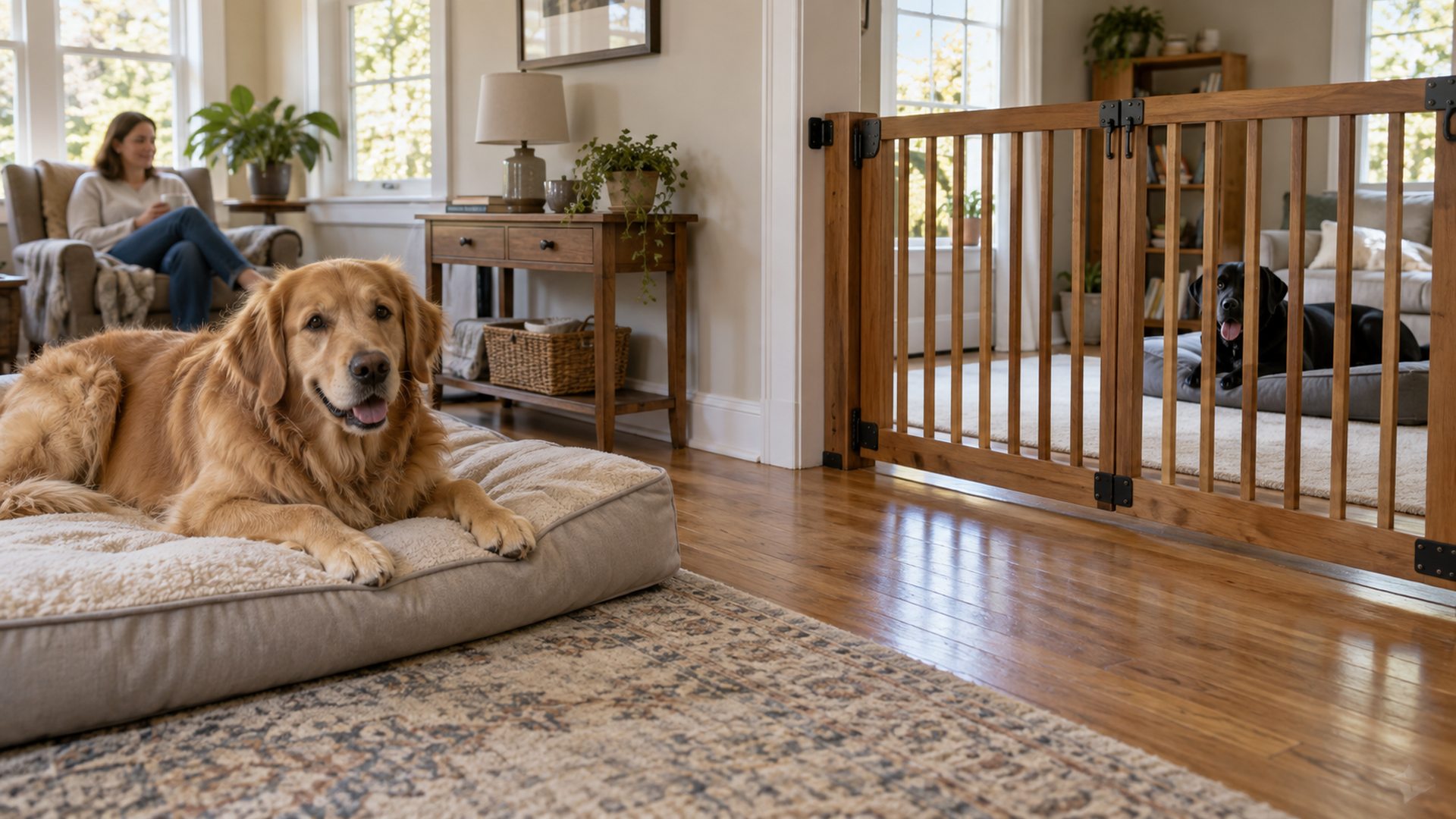
A gate can help during supervised periods, but it is not automatically secure for every dog. Battersea advises supervision around gates because dogs may jump them or bother each other through them. Plan suitable closed-room separation when supervision is unavailable, with guidance for dogs who struggle with separation or barriers. Do not assume the arrangement works simply because the furniture fits.
Rehearse the Evening When Only One Adult Is Home
Consider this fictional planning example. Two adults normally share dog care, but on Wednesday one works late. The resident dog needs an outing; the prospective dog would need a different outing and separate feeding. The adults have not yet decided who remains with either dog if being left alone is difficult.
The useful discovery is the missing care arrangement. Write a Wednesday plan before making the commitment:
- Put the household’s fixed commitments on a page: work, school collection, travel, and appointments.
- Add the current dog’s actual care, using your recent diary rather than an ideal day.
- Add the proposed dog’s needs, as described by their carer, in a different color.
- Mark tasks that require separate time. Do not count a shared walk until it is an appropriate option for both dogs.
- Name the person who covers each overlap and the backup if that person cancels.
Repeat the exercise for a veterinary appointment, a weekend away, and a day when you are unwell. Ask the sitter whether they can care for dogs who must remain apart. Confirm the practical details with them; a general offer to “help with the dogs” may not cover two separate routines.
Save this page with your adoption notes. Revisit it when you learn something new about the prospective dog. A changed answer is a reason to adjust the plan, not to defend the original decision.
Price the Care You Cannot Share
Build a separate estimate for each dog using the Dog Cost Calculator, then review the combined household total. Treat the output as a starting worksheet and replace assumptions with quotes. The second dog’s food, veterinary needs, grooming, and paid support may differ from the first dog’s.
Ask providers specific questions. Does the walker accept both dogs if they need separate outings? Can the boarding service offer separate accommodation? What would two grooming appointments cost, and can you transport the dogs safely? Record what the quote includes and whether the provider has assessed the actual dogs.
Do not rely on a multi-pet discount to make the decision affordable. Keep one-time setup purchases separate from recurring care, and check what your emergency arrangements would cover for each dog. If the numbers only work when both dogs share every service, the budget is not ready for a less convenient outcome.
Use the Dog Fit Score Cards to compare care demands on your shortlist. Those cards do not test whether two particular dogs are compatible; the meeting, history, and professional advice still matter.
Plan a Meeting Without Turning It Into a Test to Pass
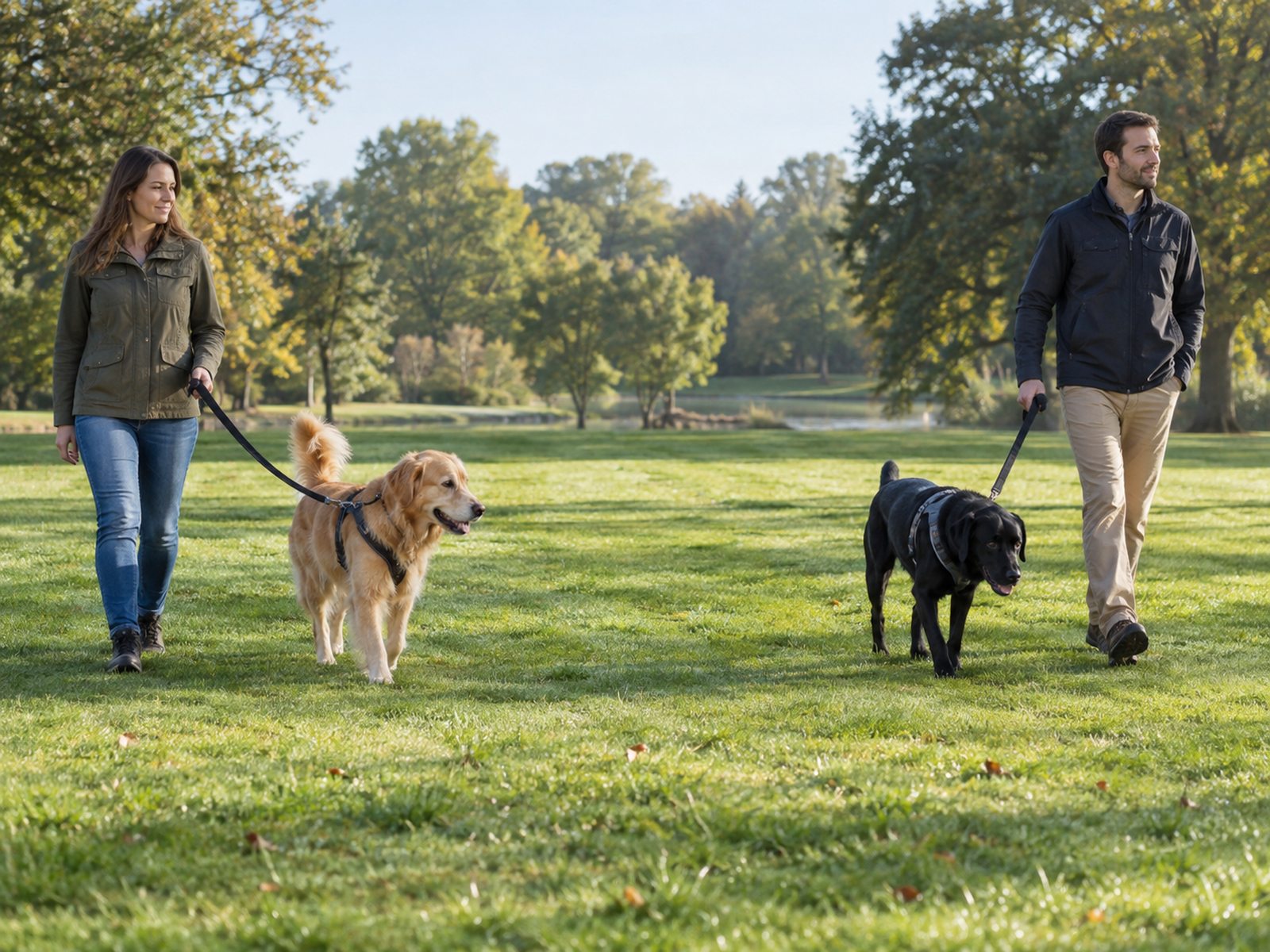
For adult dogs, Dogs Trust’s introduction guidance begins outside the home, with a handler for each dog and enough distance to remain comfortable. Let the rescue or qualified trainer help plan the meeting. Ask your veterinarian about vaccination status and an appropriate setting, especially when a puppy is involved.
Do not force a greeting or decide in advance that the dogs must travel home together. Arrange a way to finish the visit and discuss what you observed. Calm coexistence deserves attention too; an exciting play session is not the only useful information.
After arrival, continue supervision and provide time apart. There is no deadline that proves the dogs are ready for unrestricted access to one another. Record what happened in context: location, activity, distance, and what helped each dog settle. Persistent difficulty needs qualified support rather than progressively harder introductions.
Know When to Pause the Plan
Stiffening around possessions, growling, or blocking access deserves attention. Dogs Trust’s resource-guarding advice explains that valued resources can include food, toys, rest spots, and people. A dog may guard from other dogs even if that behavior has not appeared with humans.
Avoid punishment or taking valued items away to test a reaction. Give space, manage access safely, and seek veterinary and qualified behavior advice. New guarding can have a medical contribution. If introductions involve lunging, snapping, or injury, stop further meetings and get professional guidance; injuries need veterinary attention. Do not place your hands between fighting dogs.
Pros and Cons of Adding a Second Dog
| Possible benefit | Responsibility or limitation that comes with it |
|---|---|
| Enjoying another dog’s personality | Building an individual relationship and routine |
| Companionship for dogs who enjoy one another | Accepting that friendship cannot be promised |
| Some shared outings or activities | Maintaining separate options when needs differ |
| Offering another dog a suitable home | Funding and supporting both dogs through change |
This choice fits households that want two dogs and can support them separately. It is a poor next step when existing safety concerns remain unresolved, adults disagree about care, or the plan depends on the newcomer fixing a problem.
Make the Decision Before Collection Day
Keep three things together: the current dog’s care record, the proposed match’s known history, and your two-dog household worksheet. Take unanswered questions to the rescue, breeder, veterinarian, or qualified trainer. If the space, time, or support is missing, waiting protects the dog you have and the dog you might welcome later. A successful decision can be a carefully prepared yes or a well-considered not yet.