
An adult dog with a well-understood home routine may fit a working household more readily than a young puppy. A puppy needs frequent, responsive care while learning everyday habits; an adult still needs a supported move and a care plan suited to that individual. The useful question is who can meet those needs when your calendar is full.
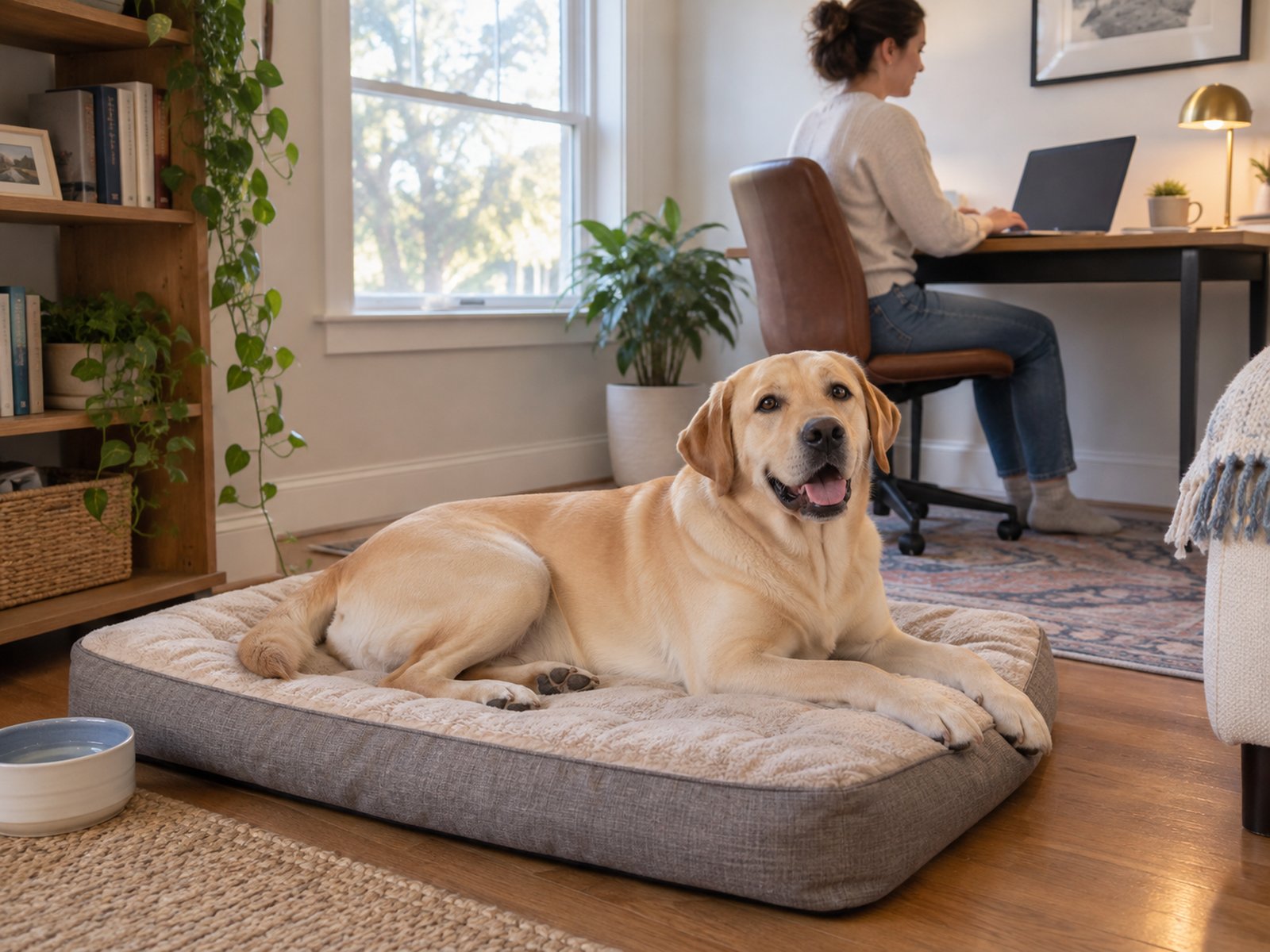
Picture the moment a morning meeting starts just as the puppy wakes up. Being in the same building helps only if someone can pause and respond. Before choosing between a puppy and an adult dog, check those small collisions across a whole workday. They reveal more than a photograph of a sleeping dog beside a laptop.

Puppy or Adult Dog Quick Facts
| Decision point | Young puppy | Adult dog |
|---|---|---|
| Toilet routine | Frequent opportunities and close observation | Ask what is established; support the routine after moving |
| What you can know | Early background and current behavior | Potentially more information about daily habits in a home |
| Main time commitment | Supervision, early learning, socialization, and care | Transition, exercise, companionship, and any individual support needs |
| Workday uncertainty | Needs can interrupt planned work blocks | Prior alone-time experience may not transfer immediately |
| Training | Starts with everyday foundations | Builds on known skills and addresses gaps |
| Best evidence | Care records and an informed discussion with the caregiver | Specific observations, health records, and a realistic matching conversation |
Age labels need context. A young adolescent and a settled adult can require very different arrangements, and adult status does not promise low energy or good manners. Ask about the dog in front of you.
A Puppy’s Needs Arrive Between Meetings
Puppy care cannot all be saved for the evening. VCA’s housetraining guidance identifies waking, eating, drinking, and active play as times when toilet opportunities matter. That makes a day organized around just breakfast, lunch, and dinner an incomplete care plan.
For your schedule, the consequence is practical: someone must notice what the puppy is doing. A person behind a closed office door may be available in an emergency but unavailable for routine care. Write down which meetings allow interruptions and which require a second caregiver. Include cleanup and getting back to work; the outdoor trip is only part of the interruption.
Early learning also needs room in the day. Dogs Trust’s socialization guidance describes gradual, positive introductions to everyday experiences, stopping when the puppy becomes worried. A crowded weekend outing cannot stand in for thoughtful preparation. Discuss safe exposure and vaccination timing with your veterinarian, and ask a qualified reward-based trainer for help planning suitable activities.
Choose puppyhood because you can make space for that work and want to do it. If the appeal depends on the puppy sleeping through every call, revise the plan before committing.
What an Adult Dog Can Make Easier
An adult may come with useful information: where they sleep, how walks go, whether they have lived with children, and what happens when the household leaves. Blue Cross’s choosing-a-dog guidance (PDF) explains that adults may already have house training and established habits, while emphasizing history and support from the people who know them.
That information can help you rule out an unsuitable arrangement early. A dog described as needing someone home most of the time is a poor candidate for a plan built around long absences. A missing history is an unknown to discuss, not proof of a problem or reassurance that everything will be easy.
Ask where observations were made. A foster home’s routine, a kennel assessment, and a previous owner’s account provide different kinds of information. None can promise identical behavior after a move. Keep initial arrangements flexible enough to learn what your new dog actually needs.
The Workday Handoff Audit
Use this editorial worksheet before contacting a breeder or rescue. It is a planning exercise, not a tested welfare score or a recommended alone-time schedule. Put a named person beside each care block. An empty box means a practical arrangement still needs making.
| Part of your day | Puppy plan to confirm | Adult-dog plan to confirm | Question for the household |
|---|---|---|---|
| Before the first work block | Who handles waking, toileting, meals, and supervision? | Who provides the agreed morning care and activity? | What changes if the first meeting moves earlier? |
| Meetings and focused work | Who can respond when the puppy wakes or needs a break? | What company or care is needed while you are unavailable? | Is the backup person actually free? |
| Leaving for an office day | Arrange suitable care during the absence | Match support to this dog’s demonstrated needs | Does the plan include the commute both ways? |
| Midday handoff | Share meals, toilet trips, rest, and anything unusual | Share the walk, toilet, and comfort observations | How will the next caregiver know what happened? |
| Late finish | Extend care before a gap develops | Confirm the backup can arrive or stay | Who makes the call if a meeting overruns? |
| Evening and overnight | Allow for supervision, learning, rest, and possible toilet trips | Follow the individual routine and monitor adjustment | Who covers if the usual caregiver is exhausted? |
Now test one failure. Suppose Tuesday is an office day and the person covering care cancels that morning. Would you work at home, take leave, or use a previously arranged sitter? Write a real option with contact details. A promise to work something out later does not fill that gap.
For a puppy, one midday visit should not be treated as coverage for the rest of a long day. For an adult, a walk booking does not establish comfort during all the hours around it. Ask the caregiver what service they can provide, and compare that with the actual support needed.
Alone Time Needs Its Own Decision
The RSPCA advises leaving dogs alone for no more than four hours, with the appropriate duration depending on the individual. This is a welfare recommendation, not proof that every dog can manage four hours. A newly arrived or distressed dog may need much shorter periods and more company.
The same guidance recommends gradual practice and checking recordings for less obvious distress. Persistent pacing, whining, or difficulty settling warrants attention. Contact your veterinarian, who may recommend a behavior specialist; avoid punishment or extending absences to force adjustment.
For this decision, budget for flexibility beyond your initial days off. A calendar date cannot establish readiness. If your employer requires an immediate return to long office days, arrange continuing care before bringing either age home.
Ask for Observations, Not Labels
Bring these questions to the person responsible for the dog. Record what is known separately from what still needs checking.
- Instead of “Is the dog easy?” Ask for a description of yesterday, from waking to bedtime.
- Instead of “Can the dog be left?” Ask what departures have been observed, in which setting, and how the dog behaved.
- Instead of “Good with children?” Ask about the ages, circumstances, and any restrictions on the proposed match.
- Instead of “Fully trained?” Ask about toilet routines, handling, walks, rest, and situations that still need help.
- Instead of “Healthy?” Request veterinary records and discuss current care requirements with a veterinarian.
- Instead of “What if it goes wrong?” Ask exactly who provides support after collection and how to contact them.
These questions give you material to compare with the handoff audit. For example, if a dog currently relies on a caregiver being nearby during the day, mark that need explicitly. Do not replace it with the hours you hope the dog will eventually tolerate.
Children and Other Commitments Change the Answer
A puppy is not automatically an easier family match. Dogs Trust’s family guidance emphasizes individual needs, adult supervision, and an undisturbed resting place. Those responsibilities apply to adults too.
Add school pickup, bedtime, visiting children, and existing pets to your worksheet. If one adult is expected to supervise a dog-child interaction while also joining a work call, the plan has two jobs assigned to one unavailable person. Arrange separation and support before that situation occurs. Ask the rescue or a qualified trainer about appropriate introductions for the specific household.
Compare breed demands separately from age. Our Labrador Retriever guide and Whippet guide explain different activity and home-management considerations. Neither breed name settles the puppy-versus-adult decision.
Pros and Cons of Each Starting Point
| Choice | Potential advantage | Trade-off to accept | A poor fit when… |
|---|---|---|---|
| Puppy | You can participate in early learning and establish household routines | Frequent interruptions and substantial supervision accompany that opportunity | Nobody can provide responsive daytime care |
| Adult with useful home observations | You can compare known habits with your life before deciding | Moving may reveal new needs; previous habits need support | You expect immediate independence without adjustment |
| Adult with limited history | A careful matching process can still identify possibilities | More questions may remain open at collection | Your schedule has no flexibility for uncertainty |
| Wait and prepare | You can secure care, money, and household agreement first | You postpone bringing a dog home | There is pressure to decide before the care gaps are resolved |
For a budget check, use the Dog Cost Calculator and add local quotes for the help your audit requires. Count recurring care separately from initial supplies. Ask what happens to the bill when a workday runs late or additional visits are needed; do not assume adult adoption removes care costs.
Use the Dog Fit Score Cards to compare broader breed trade-offs, then return to the individual dog’s records. The tools organize questions; they cannot certify a match.
Make the Decision From the Care You Can Provide
A puppy may suit a household with responsive daytime coverage and a real interest in raising a young dog. An adult may suit someone who wants more information about existing habits and can support a transition. Either choice is premature when it relies on an unconfirmed sitter, uninterrupted sleep during meetings, or a dog learning to cope by a deadline.
Save your completed workday audit and bring it to the matching conversation. Once the people, times, and backup arrangements are concrete, it becomes much easier to say which dog you can responsibly welcome home.