
Choosing a Golden Retriever means choosing a large sporting dog that expects to be included in the day. It will notice the leash, the tennis ball, the lake, the kitchen counter, and the person who has been gone too long. The cheerful face is real, but so are the wet towels, adolescent jumping, and golden fur in places no vacuum seems to reach.
Goldens routinely land near the top of America’s most-popular-breed lists, and that popularity is earned. But “popular” and “easy” are not the same thing. A Golden is a big, athletic, mouthy, shedding sporting dog that needs hours of engagement a week. Knowing that before you fall for the puppy photos is the difference between a great match and a frustrated one.
If the shortlist includes another retriever, start with Labrador vs Golden Retriever instead of treating the breeds as interchangeable. Families should also compare the supervision and workload questions in Best Family Dogs and the beginner-specific trade-offs in Best Dogs for First-Time Owners.
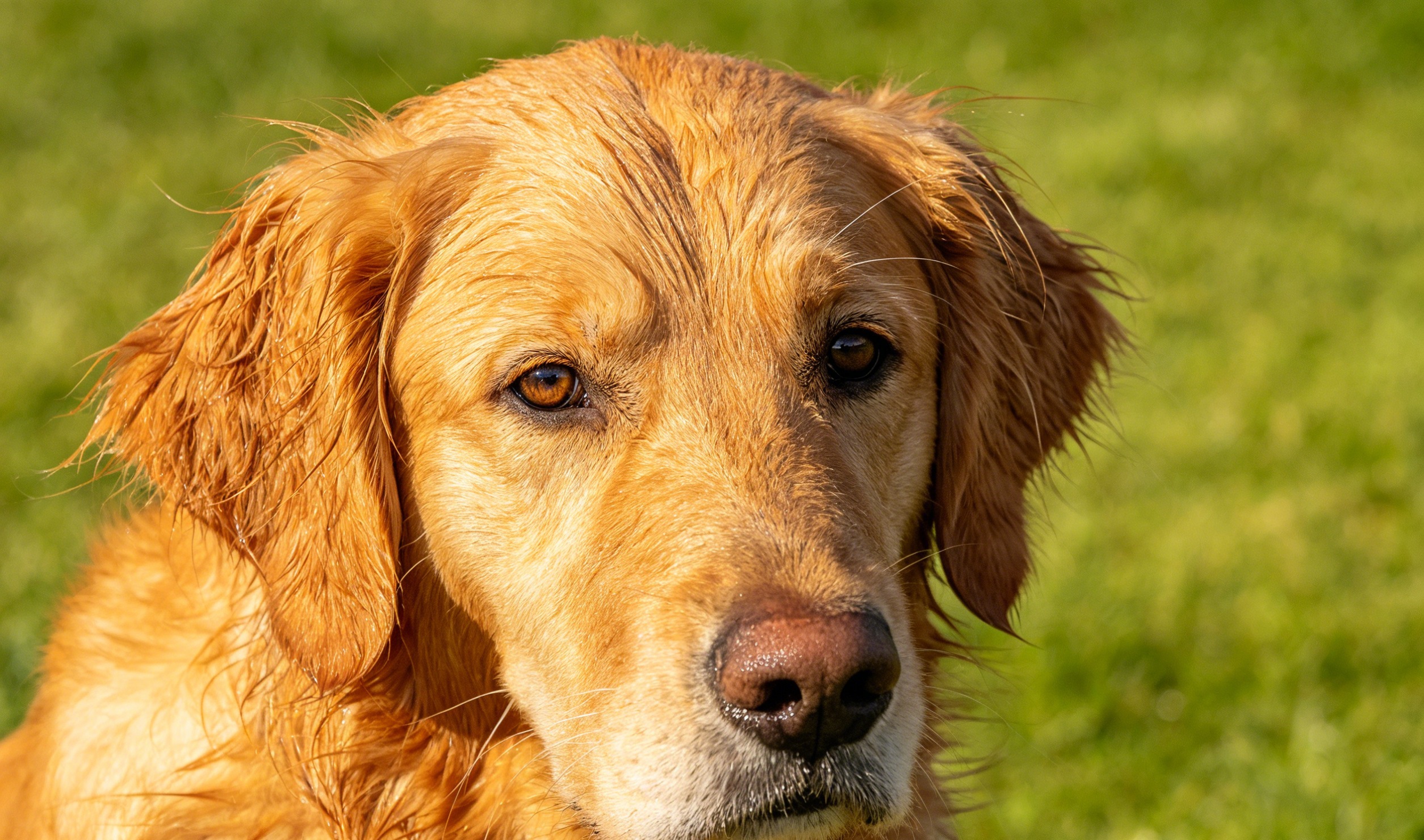
Golden Retriever Quick Facts
| Trait | What to Expect |
|---|---|
| Size | Large sporting dog, roughly 21.5-24 inches tall |
| Weight | About 55-75 lbs (females lighter, males heavier) |
| Temperament | Friendly, eager to please, gentle-mouthed, people-focused |
| Energy level | High, especially in the first three to four years |
| Exercise needs | An hour or more daily: fetch, swimming, hikes, training |
| Grooming needs | Weekly brushing, with heavy “coat blow” in spring and fall |
| Lifespan | Typically 10-12 years |
| Apartment friendly | Workable if you commit to daily outdoor exercise |
| Good with families | Outstanding; famously patient with children |
| Common concerns | Hip and elbow dysplasia, several cancers, ear infections, skin allergies |
| Best for | Active households that want a trainable, affectionate companion |
| Not ideal for | People who hate fur or rarely leave the couch |
The Golden Retriever’s Weekly Workload
| Fit Factor | Score | What It Means |
|---|---|---|
| Apartment Fit | 3/5 | Workable with real exercise, but easier in homes with outdoor access. |
| First-Time Owner Fit | 4/5 | Forgiving and trainable when owners can meet exercise and grooming needs. |
| Family Fit | 5/5 | One of the strongest family fits for active, engaged households. |
| Exercise Demand | 4/5 | Needs daily activity, retrieving, swimming, hiking, or training games. |
| Grooming Difficulty | 4/5 | Heavy shedding and feathered coat need steady brushing. |
| Training Difficulty | 2/5 | Eager to learn, but mouthiness and adolescence need structure. |
Golden Retriever Temperament
The Golden’s defining trait is sociability that borders on incapable of holding a grudge. This is a dog that tends to greet the mail carrier, the vet, and a burglar with the same wagging optimism, which is exactly why they make poor guard dogs and wonderful therapy and service animals. That openness extends to children and other pets; most Goldens tolerate ear-tugs and chaos with remarkable grace, though no large dog should ever be left unsupervised with toddlers.
What surprises new owners is the mouthiness. Retrievers were built to carry things gently, so a Golden will often greet you holding a shoe, a sock, or a toy, and puppies go through a phase of carrying and chewing nearly everything. Give them an appropriate object to hold and the behavior becomes endearing rather than destructive.
They are also emotionally tuned-in to a fault. Goldens dislike being left alone for long stretches and can slide into boredom-driven mischief or separation anxiety if isolated all day. This is a velcro breed that wants to be wherever you are, including the bathroom.
If you are considering a companion for your Golden, use our second-dog household readiness guide. It explains how to assess the individual match and plan separate care rather than relying on the breed’s sociable reputation.
Managing Golden Energy Through Adolescence
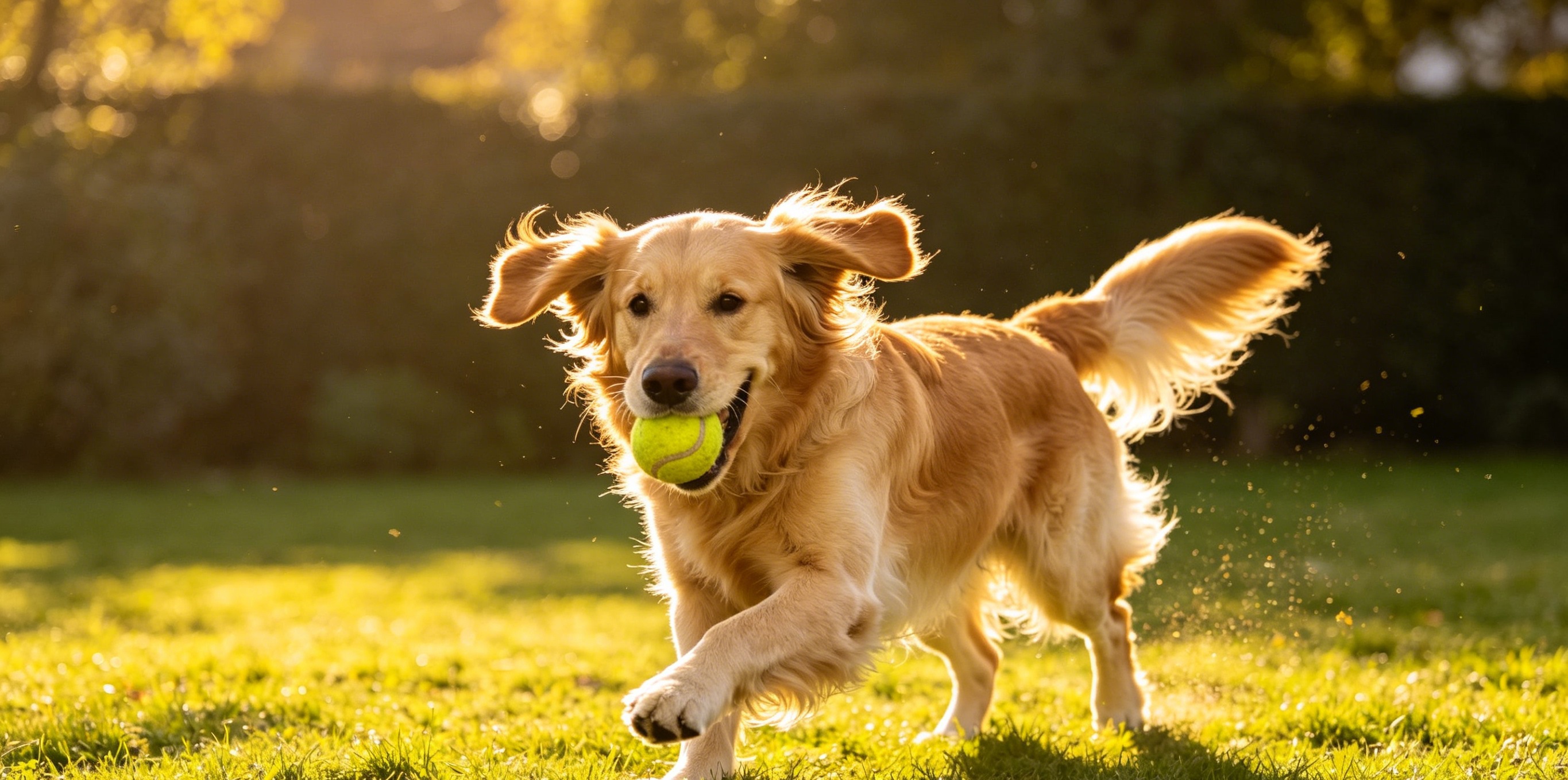
Plan for serious activity. A young, healthy Golden needs an hour or more of real exercise every day, and the breed’s history points to what it enjoys most: retrieving and water. A long game of fetch, a swim at a dog-friendly lake, a trail hike, or a session of dock diving will satisfy a Golden far more than a slow leash walk around the block.
A practical weekly rhythm might look like:
- A brisk morning walk plus a few rounds of fetch in the yard.
- A couple of longer adventures each week: a hike, beach trip, or swim.
- Short training or trick sessions to work the brain, which tires a Golden as much as running.
- Puzzle feeders or scent games on rainy or busy days.
Hold back on hard, high-impact exercise while a Golden is still growing. Their joints are vulnerable to dysplasia, so skip forced jogging, repetitive ball-launcher sprints, and jumping from heights until the growth plates close, usually well into the second year. If your dog limps, tires quickly, or seems sore after activity, ease off and check with your vet.
Mud, Water, and the Golden Coat
Let’s be blunt: Goldens shed, and they shed a lot. The breed carries a water-repellent double coat with a soft undercoat, and twice a year, in spring and fall, that undercoat releases in earnest. During those weeks you may pull out astonishing amounts of fluff. Year-round, expect golden hair on your clothes, your floors, and occasionally your dinner.
A workable grooming routine includes:
- Brushing two to three times a week, daily during heavy shedding, with a slicker brush and an undercoat rake.
- Cleaning and drying the ears regularly; those floppy, hairy ears trap moisture and are prone to infection, especially in a dog that swims.
- Trimming nails every few weeks and the feathering on feet and legs as needed.
- Bathing according to dirt, coat condition, and veterinary advice; use our dog bathing frequency guide to plan cleanup and drying instead of treating a fixed interval as a limit.
- Never shaving a Golden down; the double coat insulates against both heat and cold and regrows poorly.
Common Golden Retriever Health Issues
Goldens are generally robust, but the breed carries some well-documented vulnerabilities owners should understand. Hip and elbow dysplasia are common in the lines, which is why reputable breeders screen breeding dogs with OFA or PennHIP evaluations. The breed is also notably prone to several cancers, including hemangiosarcoma and lymphoma, a reality that has driven major canine health studies. Other frequent issues are chronic ear infections, skin allergies (atopy), and some eye and heart conditions.
When you are looking at a litter or an adult, ask to see health clearances for hips, elbows, eyes, and heart, and ask honestly about what the line has died from. A breeder who has spent years tracking longevity and cancer history is worth seeking out. Treat sellers who dodge those questions or push “rare” coat colors as a warning sign.
One honest note: the information here is meant to help you ask better questions, not to diagnose anything. Your veterinarian knows your individual dog. If you see sudden lethargy, a swollen abdomen, unexplained lumps, persistent lameness, or pale gums, get a professional opinion promptly rather than searching online.
Keeping a Food-Motivated Golden Lean
Goldens love food nearly as much as they love you, and that enthusiasm makes them easy to overfeed. Carrying extra pounds is especially hard on a breed already predisposed to joint problems, so keeping your dog lean is one of the most protective things you can do for its hips and lifespan. You should be able to feel the ribs easily and see a visible waist from above.
Feeding habits that work well:
- Portion food with an actual measuring cup based on your dog’s ideal weight, not its current weight.
- Choose a complete diet suited to life stage; large-breed puppy formulas help control growth rate and protect developing joints.
- Subtract treat calories from meals, since a food-driven Golden will happily eat its way past its daily budget.
- Skip the table-scrap habit; a begging Golden with sad eyes is very persuasive.
Because Goldens are deep-chested, they carry some risk of bloat. Many owners split the daily ration into two meals and avoid heavy exercise right around feeding time as a sensible precaution.
Teaching Calm Greetings and Reliable Recall
If there is an “easy mode” in dog training, the Golden Retriever is close to it. They are highly intelligent, eager to please, and strongly motivated by food and praise, which is why they dominate obedience, agility, and service work. Reward-based methods click with them quickly; harsh corrections, on the other hand, can wound their sensitive nature and shut down learning.
Useful starting points:
- Begin with name recognition, sit, down, and a rock-solid recall, which suits the breed’s natural willingness.
- Channel the mouthiness early by teaching “drop it” and “hold,” and keep approved chew items handy.
- Socialize the puppy broadly to people, dogs, surfaces, and sounds; Goldens are friendly by default, and good early exposure keeps them confident.
- Build up alone-time tolerance gradually to head off separation anxiety.
- Keep their clever brains busy with tricks and new commands, or they will invent their own entertainment.
The main “challenge” with Goldens is exuberance, not stubbornness. A young Golden’s enthusiastic jumping and pulling is best managed by teaching polite greetings before the dog grows into its full size and strength.
For the object-release part of training, use our guide to teaching a dog to drop it. Start with a safe toy exchange and a clear household plan for keeping unsuitable objects out of reach.
Pros and Cons of Golden Retrievers
| Pros | Cons |
|---|---|
| Exceptionally friendly and gentle with kids | Heavy, year-round shedding plus seasonal blowouts |
| Highly trainable and eager to please | Needs substantial daily exercise and engagement |
| Versatile: family pet, service, sport, therapy | Prone to several cancers and joint problems |
| Generally good with other dogs and pets | Dislikes long hours alone; can develop anxiety |
| Loving, loyal, and endlessly people-oriented | Not a guard dog; greets everyone as a friend |
Golden Retriever Myths Built From Good Publicity
Every Golden is naturally gentle and child-safe
Breed tendencies help, but puppies mouth, adolescents jump, and any large dog can knock down a child. Temperament, socialization, training, health, and adult supervision still decide whether interactions are safe.
A backyard gives a Golden enough exercise
Most dogs do not exercise meaningfully alone in a yard. Goldens benefit from shared walking, retrieving, swimming, scent work, and training. The yard is a convenience; the owner remains the activity plan.
Run the dog cost calculator twice before deciding: once for a home where someone handles midday exercise, and once with a dog walker or daycare. Include large-dog food, ear care, training beyond puppy class, grooming tools, and an emergency reserve. Then use the dog fit score cards to test the less charming variables: shedding tolerance, alone hours, small-child supervision, and whether every adult can handle an exuberant sixty-pound adolescent.
Is a Golden Retriever Right for You?
A Golden tends to thrive with active people who want a dog truly woven into family life: someone home much of the day, with time for daily exercise, a tolerance for fur, and a budget for good food and veterinary care. If you enjoy hiking, swimming, training, or just having a devoted shadow follow you room to room, this breed rewards that lifestyle generously.
It is a tougher fit if you travel constantly, work long hours away from home, or want a tidy, low-shedding, low-maintenance dog. The combination of high exercise needs and constant grooming catches some first-time owners off guard.
If you are weighing your options, it helps to compare temperaments across very different dogs. You might look at the spirited Yorkshire Terrier, the laid-back Shih Tzu, or the compact and very different French Bulldog. Two dogs that both “love people” can demand wildly different homes.
The Hardest Part Is Consistency
Week one usually exposes the real Golden Retriever workload. A puppy or adolescent moves quickly between people, water, mud, toys, food, and attention. Decide early how greetings work, whether furniture is allowed, where wet coats are dried, and what the dog should do instead of jumping or counter surfing.
The breed’s sweet reputation often causes families to postpone ordinary training. By adolescence, a friendly dog that pulls, jumps, steals food, and ignores recall can be physically difficult to manage. Brushing, impulse control, recall practice, and planned downtime preserve the easygoing qualities people wanted in the first place.
Three Golden Retriever Decisions Families Miss
Can a Golden Retriever live in an apartment?
Yes, but only if the apartment routine is active and predictable. A Golden does not need a huge yard as much as it needs real daily exercise, toilet breaks, training, and people time. If the dog gets a brisk walk, retrieving games, and mental work, apartment life can work. If the plan is mostly short hallway walks, the breed will feel too big, too hairy, and too restless for the space.
How expensive is a Golden Retriever to own?
Expect a medium-to-high ownership budget. Food, flea and tick prevention, boarding, grooming tools, ear care, and veterinary planning all cost more than they do for small companion breeds. The bigger budget concern is health: Goldens can face joint disease, allergies, ear infections, and cancer. Pet insurance or a serious emergency fund is worth considering before the puppy comes home.
Is a Golden Retriever a good family dog with kids?
Usually, yes. This is one of the breed’s strongest matches, especially for families that enjoy outdoor time and can teach calm manners early. The honest caution is size and enthusiasm. A young Golden can knock over small children, steal snacks, mouth hands, and drag toys through the house. Good family fit still needs supervision, training, and a plan for all that fur.
The Golden Retriever Household Test
Can your routine survive a wet coat?
Many Goldens head for water with no concern for the car seat, clean floor, or freshly washed bedding. Owners need towels near the door, a place to dry the dog, and time to rinse lake water or mud from the feathering. Long ear hair and damp ears also deserve regular checks. This is ordinary ownership, not an occasional grooming project.
Who handles the adolescent dog?
A young Golden can be tall enough to reach a counter and strong enough to pull an unprepared handler while still behaving like a puppy. The difficult stretch often includes jumping, carrying household objects, distracted recall, and over-friendly greetings. Decide who will attend classes and enforce the same rules before the puppy becomes a sixty-pound teenager.
What happens during a full workday?
Goldens usually want close contact with people. An adult may rest through part of the day, but a puppy needs toilet breaks, short training sessions, and a safe outlet for chewing. Families with long work hours should price a dog walker or daycare and agree on an evening exercise routine. A backyard cannot supply the social contact this breed expects.
The Home That Usually Suits a Golden
The Golden Retriever earns its reputation as a near-ideal family companion: warm, trainable, athletic, and devoted. None of that comes free. You are signing up for serious daily exercise, a lifelong relationship with a lint roller, and the emotional commitment of a dog that genuinely needs you around.
If those trade-offs sound like a fair price for one of the most affectionate dogs you’ll ever own, the Golden will likely exceed your expectations. If the shedding, exercise, or cancer risk gives you pause, take that seriously now, while it is still a choice rather than a decade-long commitment.