
The Irish Water Spaniel is the tallest of the spaniels and one of the most unmistakable dogs in the field, with a coat of tight liver-colored curls, a curly “topknot” between the ears, and a smooth, tapering “rat tail” that gives the breed away at a glance. Bred in Ireland to retrieve waterfowl from cold lakes and rivers, it pairs serious working stamina with a mischievous, almost comedic personality that owners adore.
Within the family of curly water breeds, the Irish Water Spaniel is the clown: clever, playful, and endlessly entertaining, but also independent enough to do things its own way. The low-shedding coat appeals to many buyers, yet it asks for steady upkeep, and the dog behind it needs real exercise and a sense of humor from its human to match its own.
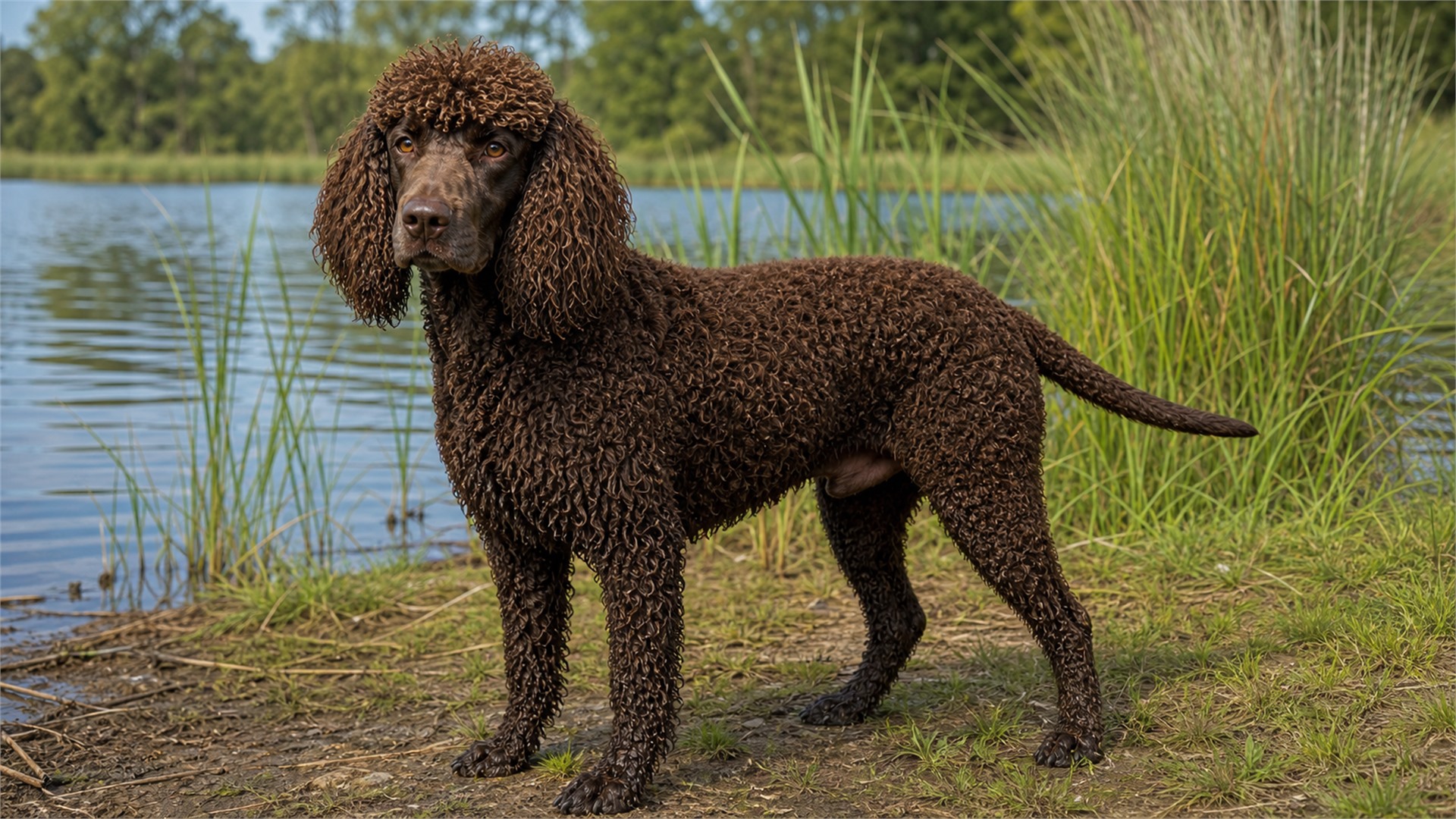
Field Work, Wet Coats, and Spacious Routines
| Fit Factor | Score | What It Means | |—|—|—| | Apartment Fit | 2/5 | Possible only with committed exercise, training, and careful neighbor management. | | First-Time Owner Fit | 2/5 | Challenging for new owners unless they have strong support and training plans. | | Family Fit | 3/5 | Can suit the right family when children, space, and routines are managed. | | Exercise Demand | 5/5 | High-drive breed; under-exercise can quickly create behavior problems. | | Grooming Difficulty | 3/5 | Moderate grooming or shedding; plan for regular brushing and basic upkeep. | | Training Difficulty | 4/5 | Can be stubborn, intense, or independent; structure matters. |
Irish Water Spaniel Quick Facts
| Trait | What to Expect |
|---|---|
| Size | Medium to large; roughly 45 to 68 pounds, 21 to 24 inches tall |
| Temperament | playful, clever, energetic, confident, and independent-minded |
| Energy level | High |
| Exercise needs | one to two hours daily of swimming, retrieving, and brisk walks |
| Grooming needs | moderate to high; brush curls regularly, trim every couple of months |
| Apartment friendly | Challenging without committed daily exercise and enrichment |
| Good with families | Good for active families that enjoy the outdoors |
| Common concerns | hip and elbow dysplasia, ear infections, skin allergies, and hypothyroidism |
| Best for | active owners who enjoy water work, training, and a humorous dog |
| Not ideal for | low-energy homes or owners who dislike grooming and ear care |
Irish Water Spaniel Temperament
This breed is best known for a quirky, fun-loving spirit. Irish Water Spaniels are alert, inquisitive, and full of personality, often described by owners as having a genuine sense of humor. They enjoy inventing games, showing off, and engaging their people, which makes them tremendous fun when their needs are met and a handful when they are bored.
There is a thoughtful independence here too. As working retrievers expected to make decisions in the field, they are not blindly biddable like some sporting breeds. They can be reserved with strangers and benefit greatly from early socialization to keep that caution from sliding into wariness. With their families they are devoted, affectionate, and bonded, thriving on inclusion and attention.
They are typically good with children and other dogs when raised alongside them, though their exuberance suits active households better than quiet ones.
How an Irish Water Spaniel Uses Its Energy
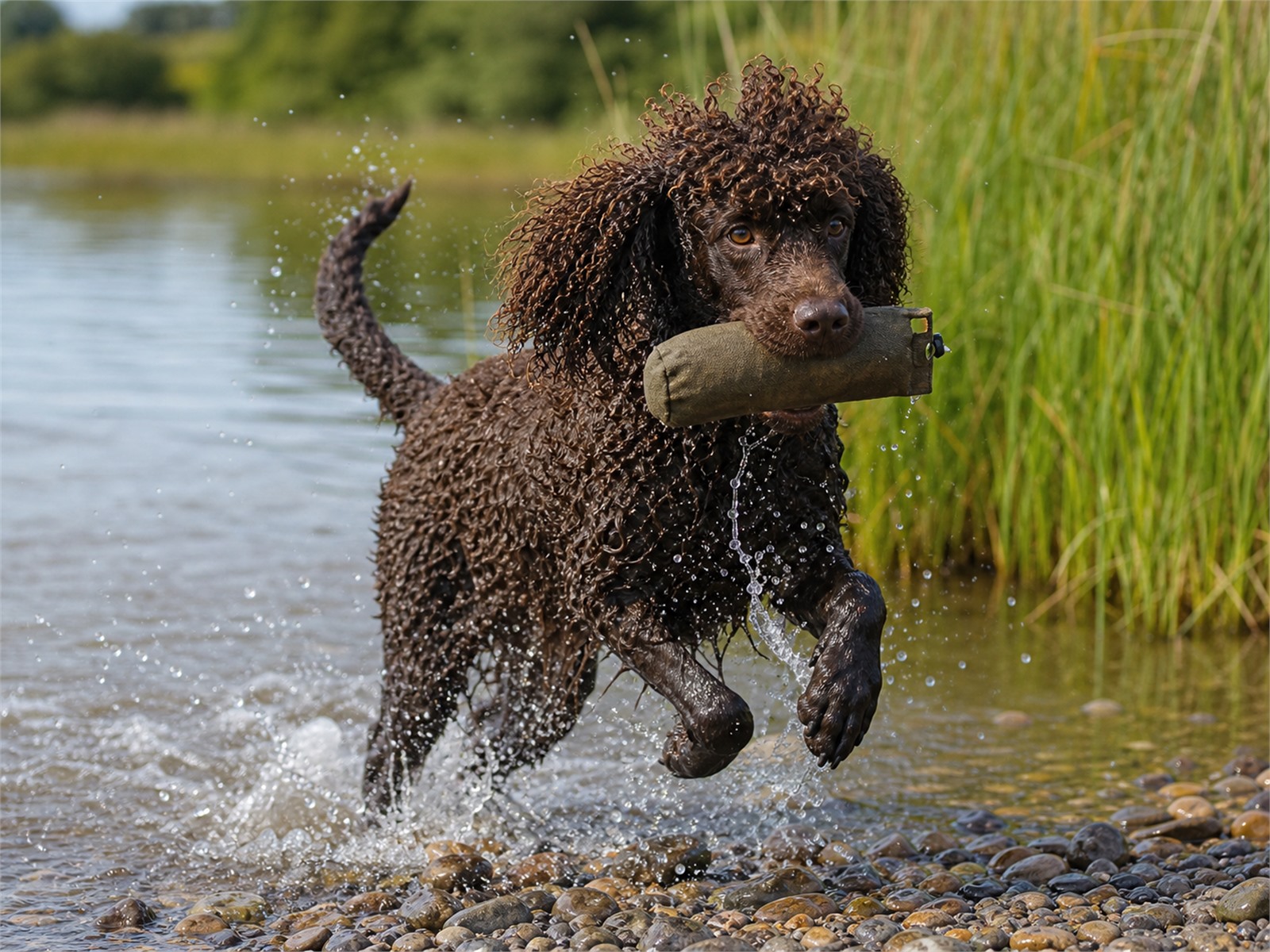
A working retriever’s stamina demands real outlets. Irish Water Spaniels need vigorous daily exercise, and like the rest of their family they are happiest in the water. Swimming and water retrieves are ideal, exercising the body hard while satisfying deep instinct. On dry land they need running, hiking, and energetic games to stay balanced.
A satisfying routine for this breed often features:
- A long walk, jog, or hike to cover ground.
- Retrieving games, especially anything involving water.
- Training or puzzle work to occupy that clever, independent mind.
- Dog sports such as dock diving, agility, or rally for added structure.
Match the workload to age and fitness. Hold off on repetitive high-impact exercise for growing puppies, and use swimming as a joint-friendly option for older dogs. The dense coat insulates well in cold water but can lead to overheating in summer, so plan vigorous sessions for cooler hours and offer plenty of water.
Coat Care in an Irish Water Spaniel Home
The Irish Water Spaniel’s double-layered curly coat is low-shedding, which many owners prize, but those tight curls mat easily and need regular attention. Brush and comb through the coat every week or so, working down to the skin in the areas that felt fastest: behind the ears, under the legs, and around the neck. Most owners also have the coat trimmed and tidied every couple of months to keep it manageable and free of mats.
The breed’s long, heavily feathered drop ears are a standing concern. They trap moisture and debris, and this breed is genuinely prone to ear infections, so the ears need drying and checking after every swim and a regular cleaning routine year-round. The hairless rat tail and face, by contrast, need almost no coat care at all.
Round out the routine with:
- Frequent ear checks and cleaning, the single most important grooming task for this breed.
- Regular nail trims, since active dogs still need them.
- Teeth brushed several times weekly.
- Skin inspections, as the breed can be allergy-prone.
Common Irish Water Spaniel Health Issues
As a fairly rare breed with a limited gene pool, the Irish Water Spaniel benefits from careful breeding, and buyers should ask pointed questions. The most relevant screening concerns are hip and elbow dysplasia and eye conditions, all of which responsible breeders evaluate. The drop-eared anatomy makes chronic ear infections a practical health issue, and the breed also sees skin allergies and hypothyroidism with some frequency.
A few Irish Water Spaniels have shown unusual sensitivity to certain vaccines or drugs, so it is worth discussing the line’s history with both your breeder and your veterinarian. A conscientious breeder will provide hip, elbow, and eye clearances for the parents and talk openly about longevity and any sensitivities in their dogs. Given the small population, finding such a breeder may take patience.
Recurrent ear odor or head-shaking, persistent itching, unexplained weight gain with sluggishness, or any sudden behavior change all warrant a professional exam.
Meals and Body Condition for an Irish Water Spaniel
Keeping an Irish Water Spaniel trim protects the joints this athletic breed relies on and supports the stamina its work demands. The curly coat can disguise a thickening waistline, so judge condition by feel: ribs easily found under a thin layer, with a clear tuck behind the ribcage.
Feeding habits suited to this breed:
- Portion a quality diet to the dog’s true activity level and adjust as the seasons change its workload.
- Feed two measured meals daily rather than leaving a bowl out.
- Account for training treats, since a clever, food-motivated dog will earn many.
- Consider how hypothyroidism can affect weight, and raise unexplained gain with your veterinarian.
- Use slow feeders or food puzzles to add mental work to mealtime.
Teaching a Irish Water Spaniel Useful Habits
Training an Irish Water Spaniel is an exercise in partnership rather than command. They are intelligent and capable but think independently, so they respond best to positive, engaging methods that make cooperation worth their while. Repetitive drilling bores them and harsh corrections shut them down; variety, humor, and good rewards win them over.
Effective approaches for this breed:
- Socialize early and widely to temper the breed’s natural reserve with strangers.
- Keep sessions short, fresh, and game-like to hold a quick mind that tires of repetition.
- Build a dependable recall before off-leash water access, where the urge to swim is powerful.
- Reward problem-solving rather than punishing independence, working with the breed’s nature.
- Introduce calm alone-time gradually so a bonded dog does not become anxious.
Expect a dog that will test whether a rule really applies. Stay patient and consistent, lean into the breed’s playfulness, and you will find a willing and remarkably capable partner.
Pros and Cons of Irish Water Spaniels
| Pros | Cons |
|---|---|
| Low-shedding curly coat suits some allergy-aware homes | Curls mat easily and need regular brushing and trims |
| Playful, humorous, and full of character | Independent streak makes training a partnership, not a given |
| Excellent swimmer and tireless retriever | Drop ears are very prone to infection and need vigilance |
| Devoted and affectionate with its family | High exercise needs unsuited to quiet households |
| Distinctive, head-turning appearance | Rare breed; reputable puppies can be hard to find |
Irish Water Spaniel Owners Need More Than a Sense of Humor
An Irish Water Spaniel’s comic topknot sits on a substantial sporting dog. Owners have to combine athletic work and coat care with a temperament that may be playful with family but reserved with strangers. Curls, ears, wet-dog drying, retrieving drive, and a rare-breed support network all enter the plan. Adolescence and careful sourcing matter far more than the novelty of the silhouette.
Irish Water Spaniel Advice by Space and Handler
An apartment needs major outdoor support
A suitable adult may settle after purposeful exercise, but limited space does not reduce retrieving, scent, or training needs. Plan grooming and drying areas. Narrow stranger encounters should be handled with distance rather than forced greetings.
A yard and water access still need structure
Secure fencing supports play, while swimming requires safe entry, exit, and supervision. Dry ears and coat thoroughly. Continue walks and new environments so the dog does not become isolated on its own property.
A beginner should locate expertise before the dog
Find a breeder or rescue network, groomer, trainer, and veterinarian comfortable with the breed’s needs. Start recall, handling, and calm stranger exposure early. Rarity is not a substitute for fit.
Experienced sporting homes can protect steadiness
Retrieving and water work are useful, but train waiting, release, and recovery. Watch for overuse and ear or skin changes after wet activity. Keep training varied rather than endlessly throwing objects.
Irish Water Spaniel Myths Hidden in the Curls
The curly coat makes the breed hypoallergenic
Lower loose-hair levels do not guarantee an allergy-safe dog. Allergens vary by person and dog. The coat still needs clipping, combing, and drying.
A clownish spaniel is easy with every stranger
Family playfulness can coexist with reserve. Social development should build calm choice and recovery, not demand greetings from every unfamiliar person.
For a practical planning check, use the dog cost calculator to include grooming, ear and drying care, training, water or field activities, secure transport, boarding, and veterinary savings. The dog fit score cards can help you compare daily exercise, stranger expectations, grooming skill, water access, rarity of local support, and time for a close working relationship.
Is an Irish Water Spaniel Right for You?
This breed fits an active, outdoorsy owner who enjoys water sports, hands-on training, and a dog with a comedic streak. If you can commit to daily vigorous exercise, regular coat and ear care, and the patience an independent thinker requires, the Irish Water Spaniel offers loyalty, athleticism, and entertainment in equal measure.
It is a poor match for a sedentary home, an owner unwilling to keep up with grooming and ear maintenance, or someone wanting a strictly obedient, low-key companion. The independence and the energy are central to the breed, not problems to eliminate.
For comparison, read the curlier Portuguese Water Dog guide, the birdy English Springer Spaniel guide, or the easygoing Labrador Retriever guide. Comparing retrievers reveals real gaps in coat care, biddability, and energy.
The Irish Water Spaniel Decision
The Irish Water Spaniel is a rare, characterful, hardworking retriever for owners who want athleticism wrapped in genuine comedy. Give it the exercise, water, training, and grooming it needs, and you gain a devoted, endlessly entertaining companion that will keep you laughing for years.
If you prefer a calm, effortlessly obedient dog with a wash-and-go coat, look elsewhere. Be honest about your activity level and grooming tolerance, and choose the breed that genuinely suits the life you lead.