
The Portuguese Water Dog, or Cao de Agua, earned its keep on the fishing boats of Portugal’s Algarve coast, diving for lost gear, herding fish into nets, and carrying messages between vessels. That heritage explains everything about the modern dog: a powerful swimmer with webbed feet, a tireless work drive, a quick problem-solving mind, and a coat built to dry quickly after a plunge. This is a medium athlete dressed in curls, not a decorative lapdog.
If you are comparing curly-coated water breeds, the Portie’s defining traits are its devotion and its appetite for activity. They bond hard to their families, follow their people room to room, and need a genuine outlet for body and brain every single day. Give them that, and they are biddable, joyful, and famously good company.
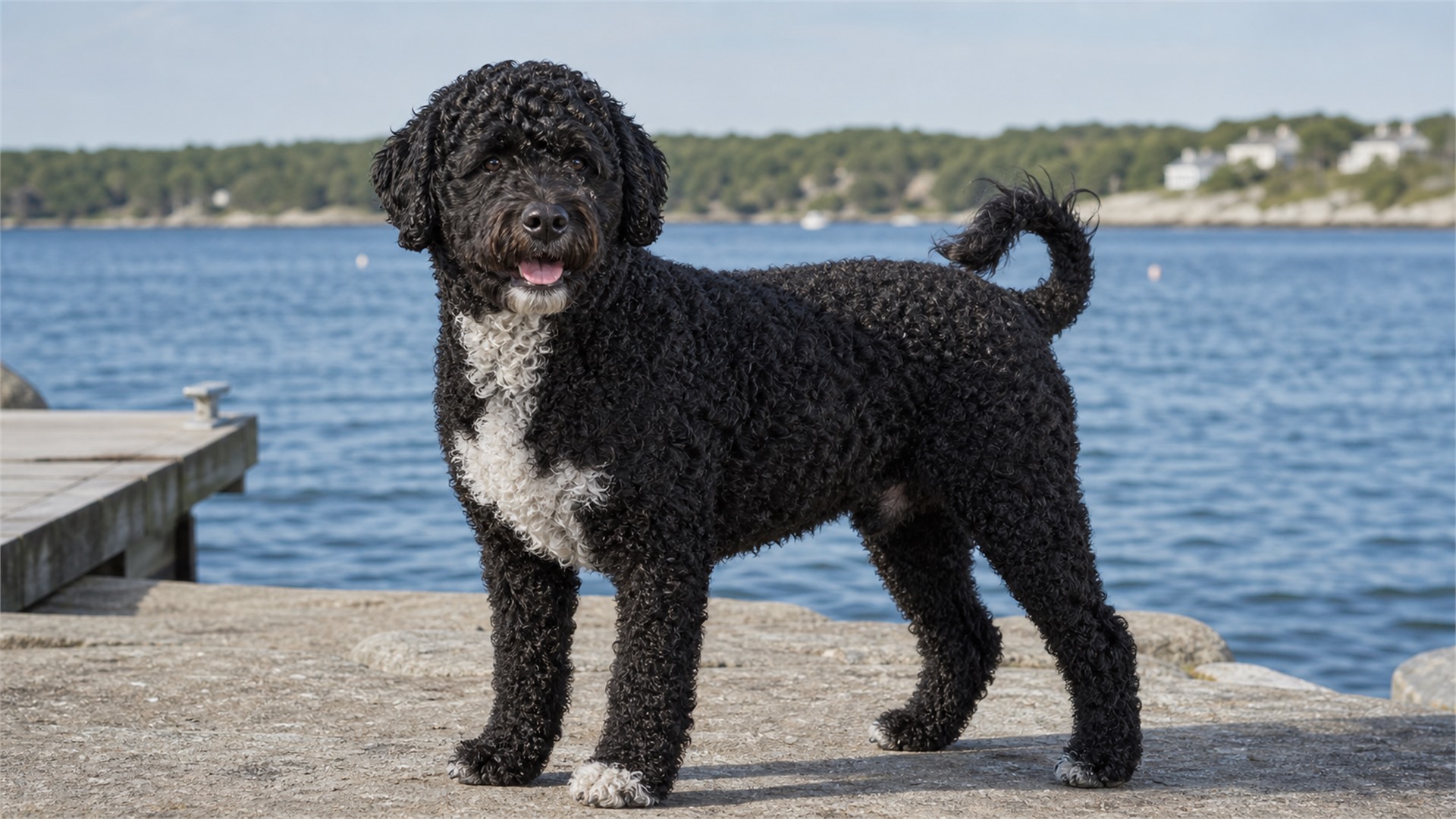
A Water Dog Schedule Beyond the Pool
| Fit Factor | Score | What It Means | |—|—|—| | Apartment Fit | 2/5 | Possible only with committed exercise, training, and careful neighbor management. | | First-Time Owner Fit | 2/5 | Challenging for new owners unless they have strong support and training plans. | | Family Fit | 3/5 | Can suit the right family when children, space, and routines are managed. | | Exercise Demand | 5/5 | High-drive breed; under-exercise can quickly create behavior problems. | | Grooming Difficulty | 3/5 | Moderate grooming or shedding; plan for regular brushing and basic upkeep. | | Training Difficulty | 4/5 | Can be stubborn, intense, or independent; structure matters. |
Portuguese Water Dog Quick Facts
| Trait | What to Expect |
|---|---|
| Size | Medium; roughly 35 to 60 pounds, 17 to 23 inches tall |
| Temperament | intelligent, devoted, energetic, biddable, and playful |
| Energy level | High |
| Exercise needs | one to two hours daily, ideally including swimming and retrieving |
| Grooming needs | high; brush every few days, professional clip every 6 to 8 weeks |
| Apartment friendly | Possible if exercise and grooming commitments are met fully |
| Good with families | Excellent for active, involved households |
| Common concerns | hip dysplasia, PRA, GM1 storage disease, juvenile dilated cardiomyopathy |
| Best for | active owners who love water sports and hands-on grooming |
| Not ideal for | sedentary homes or anyone wanting a wash-and-go coat |
Portuguese Water Dog Temperament
Porties are spirited and affectionate, with a clownish streak that endears them to their people. They were bred to work closely with fishermen all day, so they are wired for partnership and constant interaction. A Portie is rarely content to be a background dog; it wants a role in the family’s activities and grows bored and mischievous without one.
That intelligence cuts both ways. A stimulated Portuguese Water Dog is a delight, easy to train and quick to learn complex tasks. An under-stimulated one becomes an inventive troublemaker, chewing, counter-surfing, or inventing games you would rather it did not play. They are also notorious for a long, mouthy adolescence, picking up and “managing” objects with their mouths well into their second year.
They tend to be friendly with strangers and other dogs, alert enough to announce a visitor, but not guard-dog suspicious. With early socialization, they grow into stable, outgoing adults.
How a Portuguese Water Dog Uses Its Energy
This is a high-energy working breed, and it shows. A casual stroll will not cut it; Porties need vigorous daily exercise that taxes the body and engages the mind. Swimming is the gold standard, since it is exactly what they were built for and easy on the joints. If water is not available year-round, substitute hard fetch, jogging, hiking, or dog sports.
A satisfying day for a Portie often includes:
- A long walk or run to take the edge off.
- A retrieving session, on land or in water, that lets them carry and fetch.
- A training or puzzle game to work the brain as hard as the legs.
- Dock diving, agility, obedience, or scent work for owners who want structure.
Adapt the plan for life stage. Growing puppies should avoid repetitive high-impact exercise until their joints mature, and older dogs benefit from swimming as a low-stress way to stay fit. Always rinse off chlorine or saltwater after a swim to protect the skin.
Coat Care in a Portuguese Water Dog Home
The Portuguese Water Dog’s single, curly or wavy coat sheds very little, which is part of its appeal, but low shedding is not low maintenance. Without regular brushing, the curls mat readily, especially behind the ears, in the armpits, and around the collar. Plan to brush and comb every two to three days right down to the skin.
The breed is traditionally shown in two clips: the “lion clip,” with the hindquarters and muzzle shaved, and the “retriever clip,” an even length over the whole body. Most pet owners choose the practical retriever clip, which still requires a professional groomer every six to eight weeks. Budget for those appointments; they are not optional with this coat.
Beyond coat care, stay on top of:
- Ears, which are drop-shaped and prone to trapping moisture, so dry and check them after every swim.
- Nails, trimmed regularly since the coat hides them.
- Teeth, brushed several times a week.
- Skin folds and clip lines, watched for irritation after grooming.
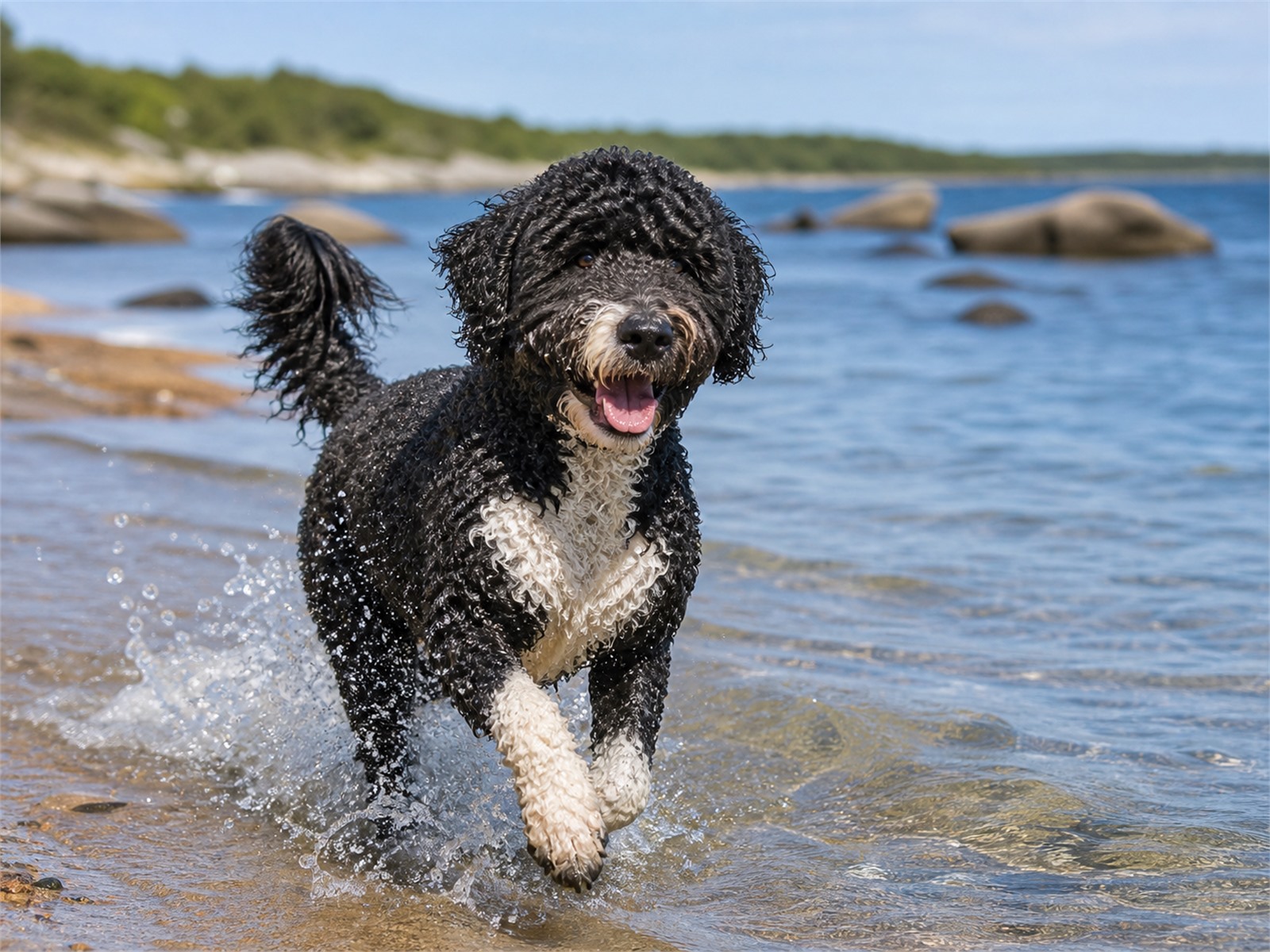
Common Portuguese Water Dog Health Issues
Porties benefit from a dedicated community of breeders who have used DNA testing aggressively, but several inherited conditions remain on the radar. Hip dysplasia and progressive retinal atrophy (PRA) are the classics. The breed also carries risk for two serious genetic diseases that responsible breeders test for directly: GM1 gangliosidosis, a fatal storage disease in puppies, and juvenile dilated cardiomyopathy, which affects very young dogs.
Because reliable DNA tests exist for several of these, a conscientious breeder can show you clear results for the parents and explain how the pairing avoids producing affected pups. Ask specifically about GM1 and JDCM status, hip and eye clearances, and the longevity of the line. Skipping these questions is the single biggest avoidable risk with this breed.
Sudden weakness, fainting, exercise intolerance, vision changes, or unexplained collapse warrant a prompt veterinary visit rather than a wait-and-see approach.
Meals and Body Condition for a Portuguese Water Dog
A working dog’s physique depends on a controlled diet. Porties are athletic and food-motivated, and extra pounds undermine the joint health and stamina the breed needs. Aim for a visible tuck at the waist and ribs you can feel without pressing hard.
Feeding habits that suit this breed:
- Portion a high-quality food to the dog’s size and real activity level, then adjust as workload changes seasonally.
- Feed two measured meals a day rather than leaving food out.
- Count the generous training treats this trainable breed earns as part of the daily total.
- Use food puzzles and snuffle work to make mealtime mentally engaging.
- Re-check body condition every few weeks, since a heavy coat masks weight gain.
Teaching a Portuguese Water Dog Useful Habits
Training is one of this breed’s great pleasures. Portuguese Water Dogs are quick studies that genuinely enjoy learning, and their fishing-boat heritage left them wired to take direction. Reward-based training brings out their best, while heavy-handed corrections only frustrate a sensitive, clever dog.
Strategies that work well:
- Start early and keep the dog’s busy brain engaged with new tasks, tricks, and games.
- Redirect the breed’s mouthiness onto appropriate toys and “hold” or “fetch” games rather than punishing it.
- Teach a reliable recall before letting them off-leash near water, where their drive to swim can override your call.
- Introduce alone-time gradually in puppyhood to prevent the separation stress this attached breed is prone to.
- Pursue a dog sport; dock diving, agility, and obedience give that working mind a true outlet.
Most Porties want to please, but adolescence brings testing and selective hearing. Stay consistent, keep it fun, and the teenage phase passes into a wonderfully cooperative adult.
Pros and Cons of Portuguese Water Dogs
| Pros | Cons |
|---|---|
| Low-shedding curly coat suits some allergy-aware homes | High grooming workload and recurring professional clips |
| Highly intelligent and eager to train | Easily bored; mischief follows under-stimulation |
| Devoted, affectionate family companion | Prone to separation stress when left alone too long |
| Outstanding swimmer and athletic partner | Demands serious daily exercise, not just walks |
| Friendly and sociable with people and dogs | Long, mouthy adolescence tests new owners |
Portuguese Water Dog Owners Budget for Haircuts and Impulse Control
A clever Portuguese Water Dog adolescent can organize the house around its own ideas surprisingly fast. Owners manage jumping, carrying objects, water obsession, and a coat that keeps growing whether the family swims or not. Low loose hair does not mean low maintenance, and a working dog still needs a clear off switch. Families drawn by allergy claims or celebrity visibility can miss the daily training volume.
Portuguese Water Dog Advice by Home and Handler
An apartment requires work outside and calm inside
A suitable adult can settle after vigorous activity and training, but long isolation and hallway excitement are difficult. Plan professional grooming, drying space, and safe access to exercise. Indoor puzzles alone will not carry the schedule.
A yard and pool need rules
Secure fencing supports play, while pools require safe exits and supervision. Do not let self-directed swimming replace training or rest. Dry ears and coat thoroughly and continue walks beyond the property.
A beginner should expect a working adolescent
Book grooming, start handling, and find a trainer before mouthing and jumping gain adult strength. Teach leave, settle, recall, and calm greetings. Do not choose the breed solely for a low-shedding label.
Experienced working-dog homes can vary the outlets
Retrieving, scent, water work, and sport suit the breed, but every activity needs a finish. Watch for over-arousal and repetitive demand behavior. Mental work should improve household life, not create a full-time performer.
Portuguese Water Dog Myths That Skip the Groomer
Portuguese Water Dogs are hypoallergenic
They often shed less loose hair, but allergens also come from skin and saliva. Individual reactions vary. Spend time with adult dogs and seek medical advice for significant allergies.
Every Portuguese Water Dog naturally loves and understands water
Comfort and skill vary. Introduce water gradually, provide safe exits, and supervise. Swimming enthusiasm does not equal safety or substitute for broader training.
For a practical planning check, use the dog cost calculator to include clipping, drying and ear care, ongoing training, walkers or activities, secure equipment, boarding, and medical savings. The dog fit score cards can help you compare grooming tolerance, daily work time, mouthy adolescence, time alone, water access, children, and desire for a highly involved dog.
Is a Portuguese Water Dog Right for You?
A Portie thrives with an active, hands-on owner who can offer daily vigorous exercise, ideally including swimming, plus the time and budget for diligent grooming. If you want a smart, devoted companion to train, hike, and play with, and you enjoy a dog that is fully woven into family life, this breed delivers in spades.
The fit falters if you are away from home most days, prefer a calm low-drive dog, or hoped a non-shedding coat would also be low-effort. The curls demand work, and the dog demands company and activity.
For comparison, read the rustic Spanish Water Dog guide, the giant-sized Newfoundland guide, or the easygoing Labrador Retriever guide. Comparing water breeds side by side exposes real differences in grooming, shedding, and intensity.
The Portuguese Water Dog Decision
The Portuguese Water Dog is a brilliant, athletic, deeply devoted companion for the right home, a dog that wants to swim, train, and stay close all day long. For owners who match its energy and embrace the grooming, it rewards the effort with intelligence, loyalty, and a sense of humor few breeds can match.
If your days are quiet, your hours away long, or your tolerance for grooming low, this is not the breed to romanticize. Choose a dog whose needs you can meet honestly, and both of you will be far happier.