
A Newfoundland is a gentle giant with an unusually practical relationship to water. The dog may be calm indoors, but wet coat, drool, heavy equipment, food, medication, and transport all scale up with the body. A suitable household plans those logistics before treating the breed’s sweet reputation as the main decision.
Swimming is an activity, not proof that every individual is a safe swimmer. The dog still needs supervision, a way out of the water, cool-weather or climate-controlled rest, and joint-conscious exercise while growing. A family also needs enough space for a giant dog to move without turning every hallway into a collision zone.
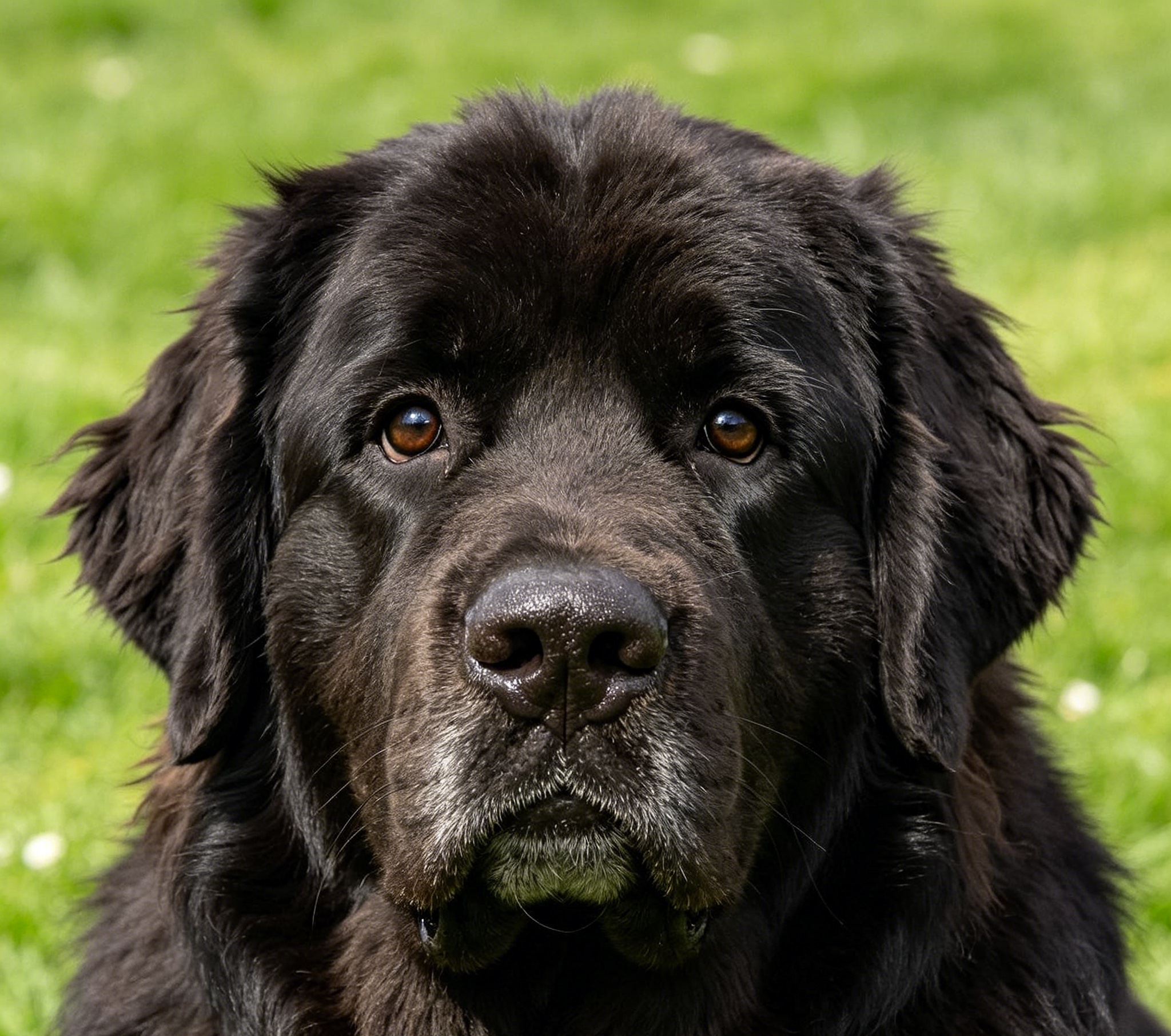
What a Newfoundland Asks of a Household
| Daily constraint | Score | What it changes | |—|—|—| | Giant-dog footprint | 5/5 | Beds, gates, bowls, vehicle access, and turning space must work for a 100-plus-pound body. | | Water and drying | 5/5 | Swimming, rain, drool, and bathing require towels, drainage, and a plan for drying the coat. | | Heat margin | 5/5 | Air conditioning, shade, and cool-hour activity are essential in warm or humid climates. | | Health budget | 5/5 | Food, weight-based medication, imaging, and giant-breed emergencies need a larger reserve. | | Gentle family handling | 4/5 | The temperament may be patient, but the dog can still knock over children or guests by accident. |
Newfoundland Quick Facts
| Trait | What to Expect |
|---|---|
| Size | Giant working dog, 100–150 lb |
| Temperament | Sweet, patient, devoted, and famously gentle |
| Energy level | Low to moderate |
| Exercise needs | Daily walks plus swimming; no hard running as pups |
| Grooming needs | High: thick double coat, heavy shedding, constant drool |
| Apartment friendly | Difficult given the sheer size |
| Good with families | Outstanding; the classic “nanny dog” reputation |
| Common concerns | Hip/elbow dysplasia, subaortic stenosis (SAS), bloat, cystinuria |
| Best for | Cool climates with space and a love of gentle giants |
| Not ideal for | Hot regions, tidy homes, or first-time small-space owners |
Newfoundland Temperament
The breed standard prizes “sweetness of temperament” above all else, and good Newfoundlands live up to it. They are mellow, tolerant, and deeply bonded to their families, often content to lie quietly at your feet for hours, then rouse themselves to lean their full weight against you for affection. Many are remarkably patient with children, which is where the “nanny dog” lore comes from, though no dog this size should ever be left unsupervised with small kids simply because of the risk of an accidental bump.
Despite the gentle nature, the working instinct runs deep, especially around water. A Newfie may try to “rescue” a swimming family member by towing them to shore whether they want it or not. They are not guard dogs in any aggressive sense; their size alone is the deterrent, and their instinct is to greet rather than confront.
Loneliness is their weak spot. A Newfoundland wants to be with its people, and one shut away in a yard or left alone too often becomes a sad, sometimes destructive dog. This is a breed that belongs inside the family, not on the periphery of it.
How a Newfoundland Uses Its Energy
Newfoundlands are calm, not lazy, and they need moderate daily exercise to stay sound and trim. A couple of good walks plus the chance to swim suits them perfectly, since swimming is the ideal low-impact workout for a heavy dog with vulnerable joints. They genuinely love the water and many will paddle for ages.
A sensible routine includes:
- Two unhurried walks at a pace the dog sets, especially in cooler hours.
- Swimming whenever a safe, clean body of water is available.
- Gentle cart-pulling or backpack work for dogs trained and conditioned for it.
- Plenty of cool, shaded rest between activity.
- Light puzzle or training games to keep the mind engaged.
The critical caution is heat. With a thick double coat and a large body, Newfoundlands overheat dangerously fast and should never exercise hard in warm weather. Equally important: do not let a Newfie puppy run, jump, or climb stairs excessively while the joints are still forming, since over-exercising a growing giant breed contributes to lifelong orthopedic problems.
Coat Care in a Newfoundland Home
This is a high-maintenance coat. The Newfoundland’s dense, oily, water-resistant double coat needs brushing several times a week, and during the two big seasonal “coat blows” the undercoat comes out in clouds that demand near-daily attention. Mats form quickly behind the ears, under the legs, and around the rear, so a thorough line-brushing down to the skin is essential, not optional.
Your grooming reality:
- Brush several times weekly, daily during shedding season, working down to the undercoat.
- Bathe periodically, which is a genuine production given the size and coat density.
- Keep a drool towel handy and wipe the jowls; this breed slings saliva, especially after drinking.
- Clean the ears and check for moisture, particularly after swims.
- Trim nails on those big feet regularly to protect the gait.
Be honest with yourself about the drool. After a Newfie drinks, shakes its head, or sees food, ropes of saliva fly, and they land on walls, floors, and guests. People who cannot live with that should choose a different breed.
Common Newfoundland Health Issues
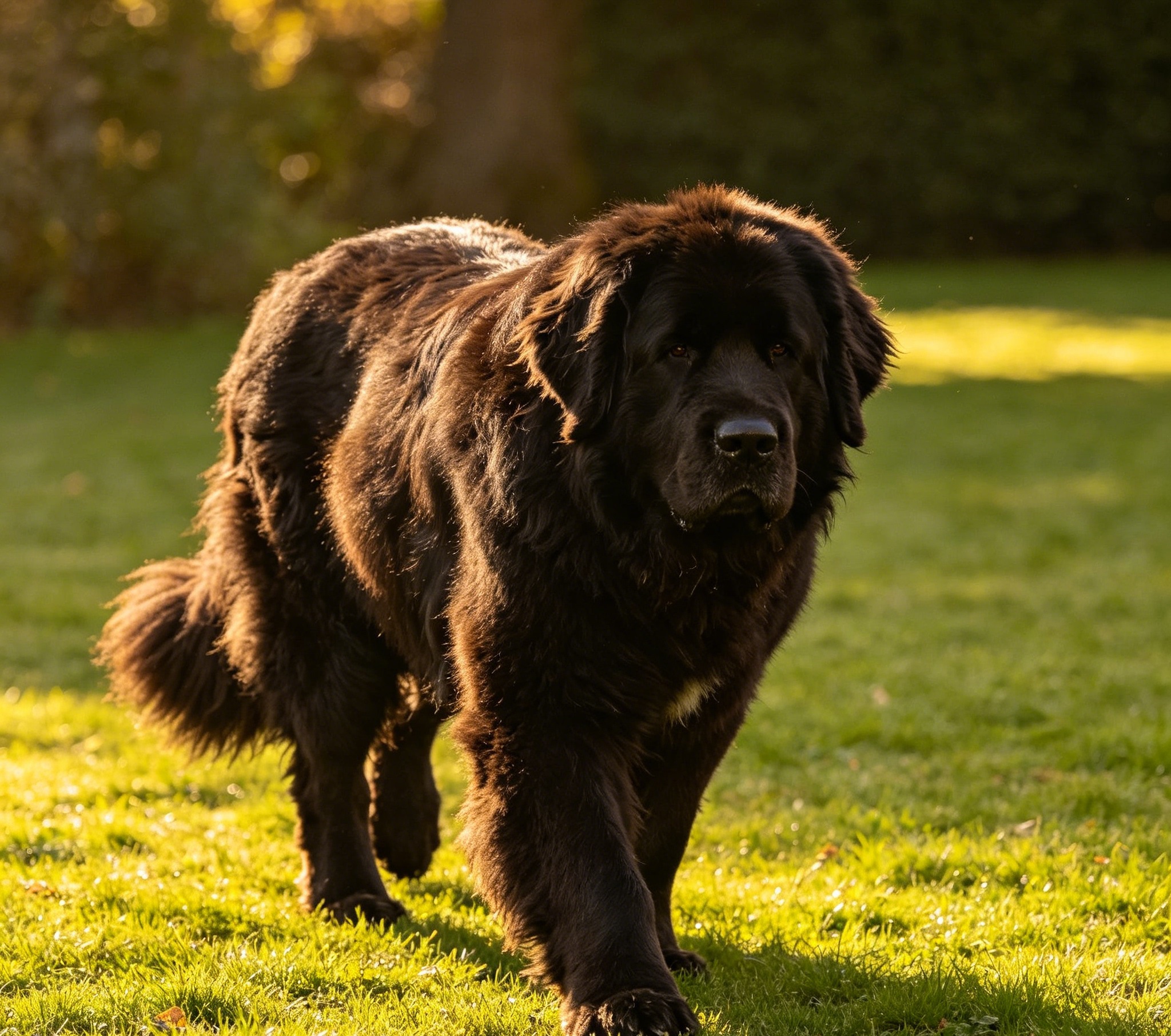
Giant breeds live shorter lives and carry significant health risks, and the Newfoundland is no exception, with an average lifespan around 9 to 10 years. Hip and elbow dysplasia are common, so orthopedic screening of breeding dogs matters enormously. The breed’s signature heart concern is subaortic stenosis (SAS), a serious congenital condition that good breeders screen for with a cardiologist. Newfoundlands are also prone to bloat (gastric dilatation-volvulus), a sudden, life-threatening emergency, and to cystinuria, an inherited disorder causing bladder stones.
When buying a puppy, insist on seeing hip, elbow, heart, and cystinuria clearances on the parents. A reputable breeder will have a board-certified cardiologist’s evaluation and will talk frankly about what runs in their lines. Walk away from anyone who shrugs off these screenings or emphasizes only color or size.
Because bloat can kill within hours, learn its signs (a distended abdomen, unproductive retching, restlessness) and treat any suspicion as the emergency it is.
Meals and Body Condition for a Newfoundland
Feeding a giant is a balancing act. A Newfoundland needs enough quality food to fuel slow, steady growth as a puppy and to maintain that big frame as an adult, but extra weight is brutal on joints already at risk for dysplasia. Keep your dog lean, with ribs you can feel and a visible waist from above.
Practical feeding guidance:
- Feed a large- or giant-breed formula, especially during the long puppy growth phase, to support controlled bone development.
- Split the daily ration into two or more meals rather than one large bowl, which helps reduce bloat risk.
- Avoid heavy exercise right around mealtimes for the same reason.
- Account for treats in the daily total, since a few biscuits add up fast in a food-loving giant.
- Have your vet confirm an ideal body condition rather than guessing.
Slowing things down at mealtimes with a slow-feeder bowl is a smart, simple precaution for a bloat-prone breed that might otherwise inhale its dinner.
Teaching a Newfoundland Useful Habits
The good news is that Newfoundlands are sweet-natured and eager to cooperate, so basic training comes fairly easily with patience. The non-negotiable reason to train, though, is size: a 140-pound dog that pulls, jumps, or fails to listen is genuinely difficult to manage, so manners must be installed while the dog is still a controllable puppy.
Focus your early work on:
- Loose-leash walking, taught long before the dog outweighs you.
- A reliable “off” and “settle” so the dog does not lean or flop on people.
- Calm, non-jumping greetings.
- Solid recall, especially around water.
- Gentle handling tolerance for grooming and vet exams.
Keep sessions positive and patient. Newfies are sensitive souls who respond to encouragement and can sulk under harsh correction. Many also enjoy and excel at water-rescue work and draft (cart-pulling) titles, which are a wonderful outlet for the working drive.
Pros and Cons of Newfoundlands
| Pros | Cons |
|---|---|
| Exceptionally gentle and patient temperament | Heavy, constant drooling |
| Devoted, calm family companion | High grooming load and seasonal shedding storms |
| Natural swimmer and capable working dog | Serious giant-breed health risks and vet costs |
| Generally quiet and low-key indoors | Overheats easily; needs a cool climate |
| Great with respectful children | Short lifespan and large food bills |
Newfoundland Owners Manage Water Even on Dry Days
A Newfoundland brings water into the house even on days it never swims. Drinking creates wet floors, drool reaches walls, and a soaked double coat takes serious drying. Heat restricts exercise, while stairs, vehicles, and emergency transport grow difficult fast. The gentle reputation is valuable but should not delay leash work or child supervision; a friendly giant can knock someone down without meaning to.
Newfoundland Advice by Space and Experience
An apartment needs cool, washable access
A calm adult may rest well, but elevator size, stairs, heat, wet-coat cleanup, and toilet trips make the setup demanding. Plan non-slip surfaces and a drying area. Confirm the building can physically accommodate the dog.
A house needs cooling and drainage
Shade, indoor cooling, secure fencing, and easy-clean floors matter. Supervise around pools and natural water. A yard is convenient but does not replace moderate walking, training, or family contact.
A beginner must train the giant before swimming
Teach leash control, handling, grooming, and calm greetings early. Discuss growth and body condition with a veterinarian. Do not assume every puppy can swim safely or perform rescue behavior.
Experienced giant-dog homes plan drying and transport
Use proper water safety, gradual conditioning, and thorough coat drying. Keep a plan for moving an injured dog. Experience should not normalize heat stress, obesity, or constant skin dampness.
Newfoundland Myths From the Water-Rescue Legend
Every Newfoundland is automatically a safe swimmer
Water confidence, health, condition, and experience vary. Use gradual introductions, safe exits, and supervision. Rescue work requires training and should not be improvised.
Gentle giants are naturally safe with children
Temperament helps, but size, excitement, guarding, pain, and child behavior still matter. Adults should supervise and give the dog a quiet escape space.
For a practical planning check, use the dog cost calculator to include giant food and medication, grooming and drying equipment, cooling, training, vehicle access, insurance or savings, and capable boarding. The dog fit score cards can help you compare climate, floors, car size, stairs, drool, children, water access, and ability to care for an injured giant.
Is a Newfoundland Right for You?
A Newfoundland suits the household with room to spare, a cool or temperate climate, and a genuine soft spot for big, mellow, devoted dogs. The ideal owner is home often, does not flinch at drool and dog hair, and budgets realistically for giant-breed food, grooming, and veterinary care.
It is the wrong dog for a hot region, a small apartment, or anyone who needs a pristine home, since the coat, the slobber, and the sheer scale touch everything. It is also a tough first dog for someone who underestimates the cost and physical management a giant breed demands.
If you are still comparing, look at the English Springer Spaniel for a smaller water-lover, the lean and tidy Whippet, or another large guardian in the Caucasian Shepherd Dog. Big dogs differ wildly in drive and care despite their shared size.
The Newfoundland Decision
The Newfoundland is a dog of extraordinary warmth wrapped in an extraordinary amount of dog. For the right home, cool, spacious, and unbothered by hair and drool, there are few more loving or dignified companions, and the breed’s gentle devotion is genuinely special.
But the scale is everything here. The grooming, the heat sensitivity, the giant-breed health risks, and the short lifespan are real and unavoidable. Embrace those honestly and a Newfie will be the soul of your home; underestimate them and the reality will overwhelm you.