
The Australian Shepherd is not a decorative version of a farm dog. It is a bright, athletic herding breed that pays close attention to movement, routine, and its person. A pretty merle coat can distract from the practical question: does the household have useful work, training time, and a way to teach an energetic dog to rest?
More exercise is not always the answer. An Aussie that only learns to expect bigger outings can become fitter without becoming easier to live with. The better routine combines physical activity with skills such as waiting, settling, recall, and switching off around children, bicycles, and visitors.
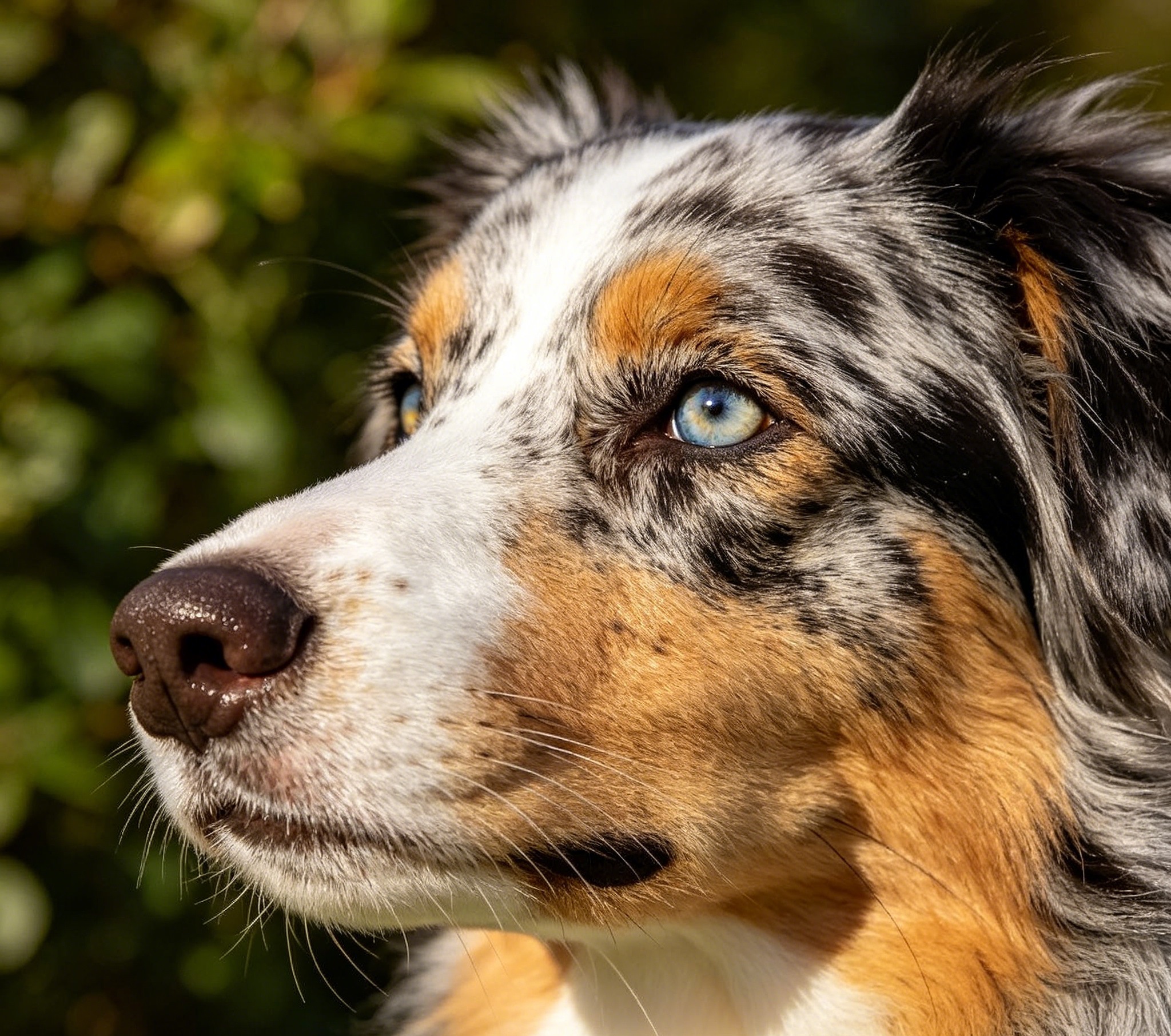
Aussie Fit: Work Needs a Place in the Day
| Daily constraint | Score | What it changes | |—|—|—| | Structured activity | 5/5 | Training, scent work, or a dog sport gives the dog a job beyond casual exercise. | | Settle skills | 5/5 | Resting while people work or children move around is a skill that must be taught. | | Herding behaviour | 4/5 | Chasing or heel-nipping needs early, fair management around running children and pets. | | Coat maintenance | 3/5 | The double coat sheds and mats where friction builds, especially during seasonal changes. | | First-dog margin | 2/5 | A committed beginner needs a detailed routine and professional support before behaviour slips. |
Australian Shepherd Quick Facts
| Trait | What to Expect |
|---|---|
| Size | Medium; 18–23 inches, roughly 40–65 lb |
| Temperament | Smart, energetic, loyal, driven, watchful with strangers |
| Energy level | Very high |
| Exercise needs | 1.5–2+ hours daily of activity plus real mental work |
| Grooming needs | Moderate; brush 2–3 times weekly, heavy seasonal shedding |
| Apartment friendly | Challenging; needs a very active routine to make it work |
| Good with families | Great for active families; may herd young children |
| Common concerns | Hip dysplasia, eye disorders, MDR1 sensitivity, epilepsy |
| Best for | Active owners wanting a trainable, athletic companion |
| Not ideal for | Low-energy homes or owners away most of the day |
Australian Shepherd Temperament
Aussies are intelligent, energetic, and intensely devoted to their families. They form strong bonds and want to be involved in everything you do, which makes them wonderful, responsive companions for active people, and frustrated, anxious ones for sedentary households. This is a dog that needs a partnership and a purpose, whether that is herding, dog sports, hiking, or structured training.
The breed is naturally watchful and often reserved with strangers, a herding-dog trait that makes them alert and somewhat protective without being aggressive when properly socialized. They tend to bond particularly closely with their person and can be sensitive, reading your moods and responding to your energy. That sensitivity means they do best with patient, positive handling rather than harshness.
Then there is the herding instinct, which is strong and ever-present. Aussies notice and want to control movement, and without an outlet that often shows up as chasing and nipping at the heels of running children, joggers, bikes, or other pets. It is instinct rather than misbehavior, but it needs early redirection. A well-exercised, well-trained Aussie is a delightful housemate; a bored one invents jobs, and they are rarely jobs you would have chosen.
How a Australian Shepherd Uses Its Energy
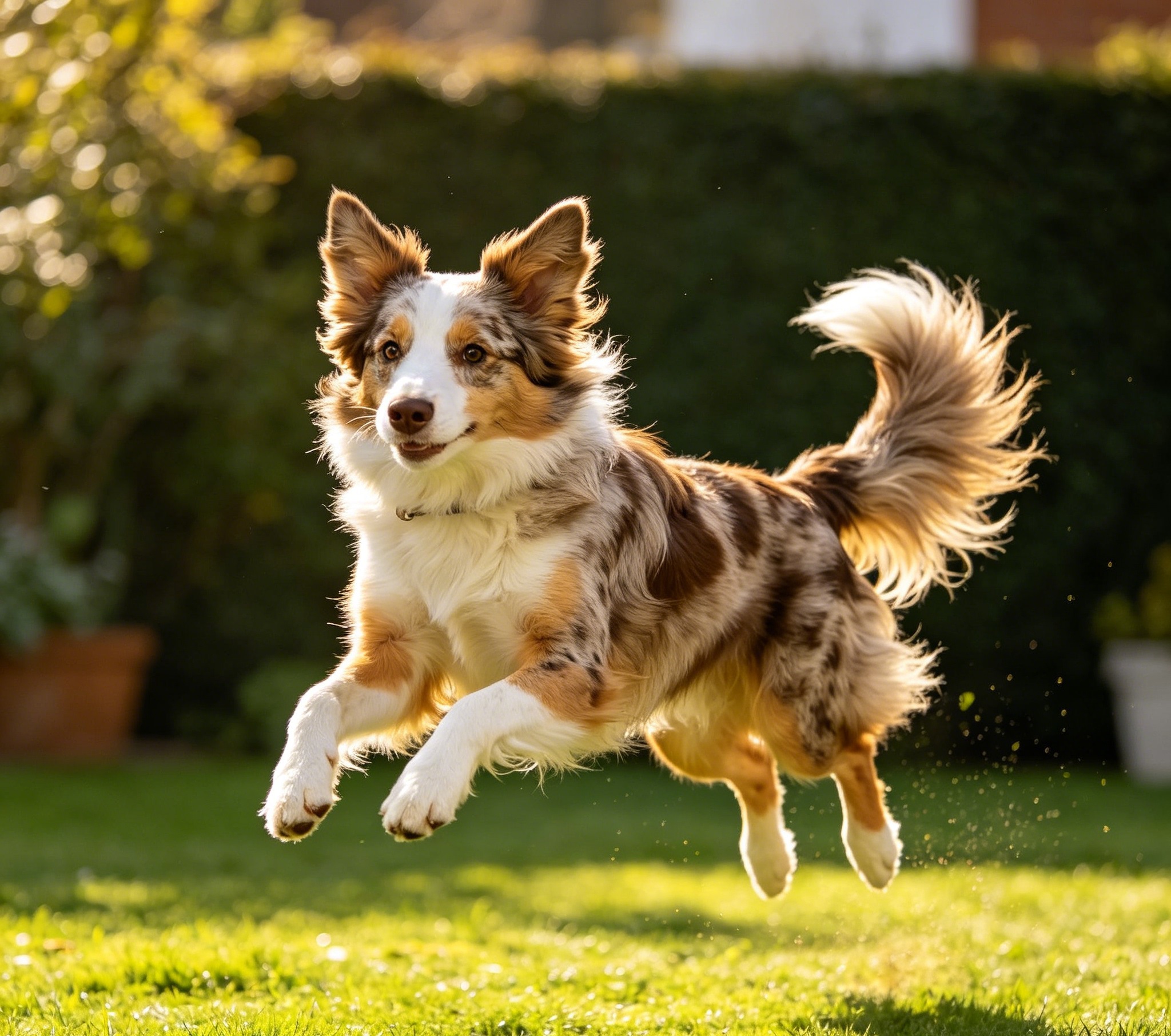
The Australian Shepherd needs a lot of exercise, generally at least an hour and a half to two hours a day, and physical activity is only half the equation. Like other top herding breeds, an Aussie that is run hard but never asked to think simply becomes fitter and more restless. Mental work is essential to a genuinely tired, content dog.
A realistic daily program blends:
- Vigorous physical exercise: running, hiking, long fetch, or swimming.
- A dog sport or job: agility, herding, flyball, disc, obedience, or rally.
- Training sessions and trick work that challenge the mind.
- Puzzle feeders, scent games, and problem-solving at home.
- Practice settling calmly, so the dog can also relax indoors.
Aussies excel at almost any canine sport and love having a clear task. Avoid relying solely on repetitive ball-chasing, which can become obsessive; variety and structure serve the breed better. Given the right outlets, an Aussie is athletic, willing, and a joy to be active with.
Coat Care in a Australian Shepherd Home
The Aussie’s medium-length double coat is beautiful and moderately demanding. Brushing two to three times a week keeps it healthy, controls loose hair, and prevents mats in the feathering on the legs, the “pants” around the rear, and behind the ears. During the spring and fall coat blow, shedding ramps up sharply and more frequent brushing is needed.
A sensible coat routine includes:
- Brushing several times a week, daily during heavy seasonal sheds.
- Working through the feathering and the dense undercoat down to the skin.
- Trimming the fur between the paw pads and tidying the hocks.
- Keeping nails short for an active dog and checking ears regularly.
- Bathing occasionally; over-bathing strips the protective coat.
Aussies shed year-round and heavily in season, so expect fur around the house. Never shave the double coat, which protects against both heat and cold. A note on the merle coat: breeding two merle dogs together can produce serious health defects, which is one reason buying from a responsible breeder matters.
Common Australian Shepherd Health Issues
Aussies are generally healthy, athletic dogs, but several inherited conditions run in the breed. Hip dysplasia and elbow problems can significantly affect such an active dog, so reputable breeders screen their stock. Eye disorders are particularly notable, including cataracts, collie eye anomaly, and progressive retinal atrophy, and responsible breeders test for these.
Two genetic issues deserve special attention. Like many herding breeds, Australian Shepherds frequently carry the MDR1 gene mutation, which makes affected dogs dangerously sensitive to certain common medications; a simple DNA test reveals your dog’s status and is worth sharing with your vet. The breed also has an elevated incidence of epilepsy. Additionally, double-merle breeding (merle to merle) is associated with deafness and blindness, which is why ethical breeding practices are so important.
Because this driven breed often masks discomfort, watch for subtle changes, reluctance to move, altered gait, vision trouble, or seizure activity, and contact your veterinarian when something seems wrong.
Meals and Body Condition for a Australian Shepherd
An Aussie’s calorie needs track closely with its activity, which can be considerable. A dog doing real herding or competing in sports burns far more than one with a lighter routine, so portions should follow the dog’s actual workload and body condition rather than a fixed amount.
Feeding habits that work well for the breed:
- Choose a quality, appropriately active-dog diet and adjust portions to workload and weight.
- Feed two meals a day and reassess as activity and season change.
- Use part of the daily ration as training rewards, since this breed earns plenty of them.
- Keep the dog lean and muscular; extra weight strains an active dog’s joints.
- Check body condition by feel regularly, as the thick coat can hide weight changes.
Aussies are food- and toy-motivated, which makes them easy to train and easy to overfeed. Counting treats toward the daily total keeps a working athlete in trim, healthy shape.
Teaching a Australian Shepherd Useful Habits
Training an Australian Shepherd is rewarding because the breed is so quick to learn and so eager to work with you. That same intelligence means an untrained Aussie will find its own outlets, so deliberate, ongoing training is part of the deal. The breed thrives on reward-based methods, plenty of variety, and a sense of purpose.
Focus areas that matter most:
- Provide a job or sport from early on; an Aussie needs a constructive outlet for its drive.
- Redirect herding behavior, chasing and heel-nipping, onto toys and games, never onto people.
- Socialize widely as a puppy to temper the breed’s natural wariness of strangers.
- Teach a reliable recall, since the herding and chase instinct can override a distracted dog.
- Build an “off switch” so the dog learns to settle calmly indoors.
Because Aussies are sensitive and smart, they mirror their owner’s consistency and clarity. A patient, engaged handler ends up with a phenomenal partner; an inconsistent one ends up managing a frustrated, inventive dog.
Pros and Cons of Australian Shepherds
| Pros | Cons |
|---|---|
| Highly intelligent and very trainable | Demands heavy daily exercise and mental work |
| Athletic and superb at dog sports | Becomes destructive or anxious when bored |
| Loyal, devoted, and eager to please | Strong herding drive may target kids and pets |
| Striking, distinctive appearance | Sheds heavily and needs regular brushing |
| Versatile working and adventure companion | Reserved with strangers; needs early socialization |
Aussie Owners Learn That Busyness Is Not Fulfillment
Filling an Australian Shepherd’s calendar can still miss the dog’s need for clear starts and stops. A dog that chases children, barks at windows, or demands a toy may be over-aroused as well as underoccupied. The harder lesson is teaching neutrality around movement and rest after activity. Coat, mud, and adolescent suspicion add to the routine, especially when a buyer selected color before asking how adult relatives behave.
Aussie Advice by Home and Handler
An apartment requires planned work and quiet
A suitable individual can live there with substantial outdoor activity, training, and noise management. Hallway movement may trigger barking. Long workdays and a few short walks are not enough, even if weekend exercise is intense.
A yard can become a motion-monitoring station
Fence traffic, children, and bikes may trigger herding or barking. Use supervised sessions and call the dog away. Continue outings beyond the property and build calm indoor time instead of expecting the yard to provide a job.
A beginner should choose temperament before color
Ask about adult energy, recovery, sound sensitivity, and social behavior. Start handling, quiet, leash skills, and alone time early. A first-time owner may need professional help during adolescence, not only puppy class.
Experienced sport owners should schedule rest
Agility, stock work, rally, and scent can be excellent, but the dog should also tolerate uneventful days. Track sleep and stress. Performance drive does not excuse chasing household movement or an inability to settle.
Australian Shepherd Myths That Add More Activity Than Sense
Aussies need nonstop exercise to stay sane
They need meaningful activity, training, and mental work, plus recovery. Endless high-intensity play can create a fitter dog with poorer arousal control.
Smart herding dogs are naturally easy with children
Movement may trigger chasing, barking, or heel nipping. Family success requires supervision, child education, and trained alternatives, not intelligence alone.
For a practical planning check, use the dog cost calculator to include ongoing training, structured activities, walkers, coat tools, secure fencing, boarding, and injury or health reserves. The dog fit score cards can help you compare household motion, daily work time, sound sensitivity, other pets, shared walls, shedding, and the owner’s interest in training rest.
Is an Australian Shepherd Right for You?
An Australian Shepherd is right for an active owner who genuinely wants a partner for training, sports, or outdoor adventures, and who can commit to the daily physical and mental work the breed needs. For the right person, the Aussie is a brilliant, beautiful, deeply bonded companion that can do almost anything you teach it.
It is the wrong dog for a quiet, low-activity household or for someone away at work all day. The breed’s intelligence and energy are not optional extras to manage; they demand an outlet, and an unfulfilled Aussie commonly develops the kind of destructive and anxious behaviors that lead to rehoming. Matching the dog’s drive to your real lifestyle is everything.
For comparison, the equally brilliant Border Collie is the closest high-drive alternative, the mellow giant Saint Bernard sits at the opposite end of the energy scale, and the fluffy, family-oriented Bernese Mountain Dog offers a calmer take on a working breed.
The Australian Shepherd Decision
The Australian Shepherd is a stunning, brilliant, athletic dog, and a demanding one. For an active owner who wants a true working or sporting partner and a devoted companion, few breeds are as capable or as rewarding to share an adventurous life with.
For a quieter household, honesty serves everyone better. This is not a dog that contentedly adapts to a low-key routine, and trying to make it do so usually frustrates both dog and owner. If you can give an Aussie the exercise, training, and purpose it was bred for, it will be an extraordinary companion. If you cannot, choosing a breed whose needs match your life is the kinder and wiser path.