
A Saint Bernard is a calm giant, but calm does not make a giant dog logistically simple. Before choosing one, measure doorways, vehicle access, sleeping space, and the route to a veterinary clinic. Add drool, food, weight-based medication, shedding, heat management, and the shorter lifespan common to giant breeds to the real ownership budget.
The breed’s gentle reputation can be useful in a family, yet a 140-pound dog can still knock over a child, block a hallway, or become difficult to move when ill. A suitable home needs enough room for the dog to settle without taking over every passage, plus adults who will teach calm greetings and safe handling from puppyhood.
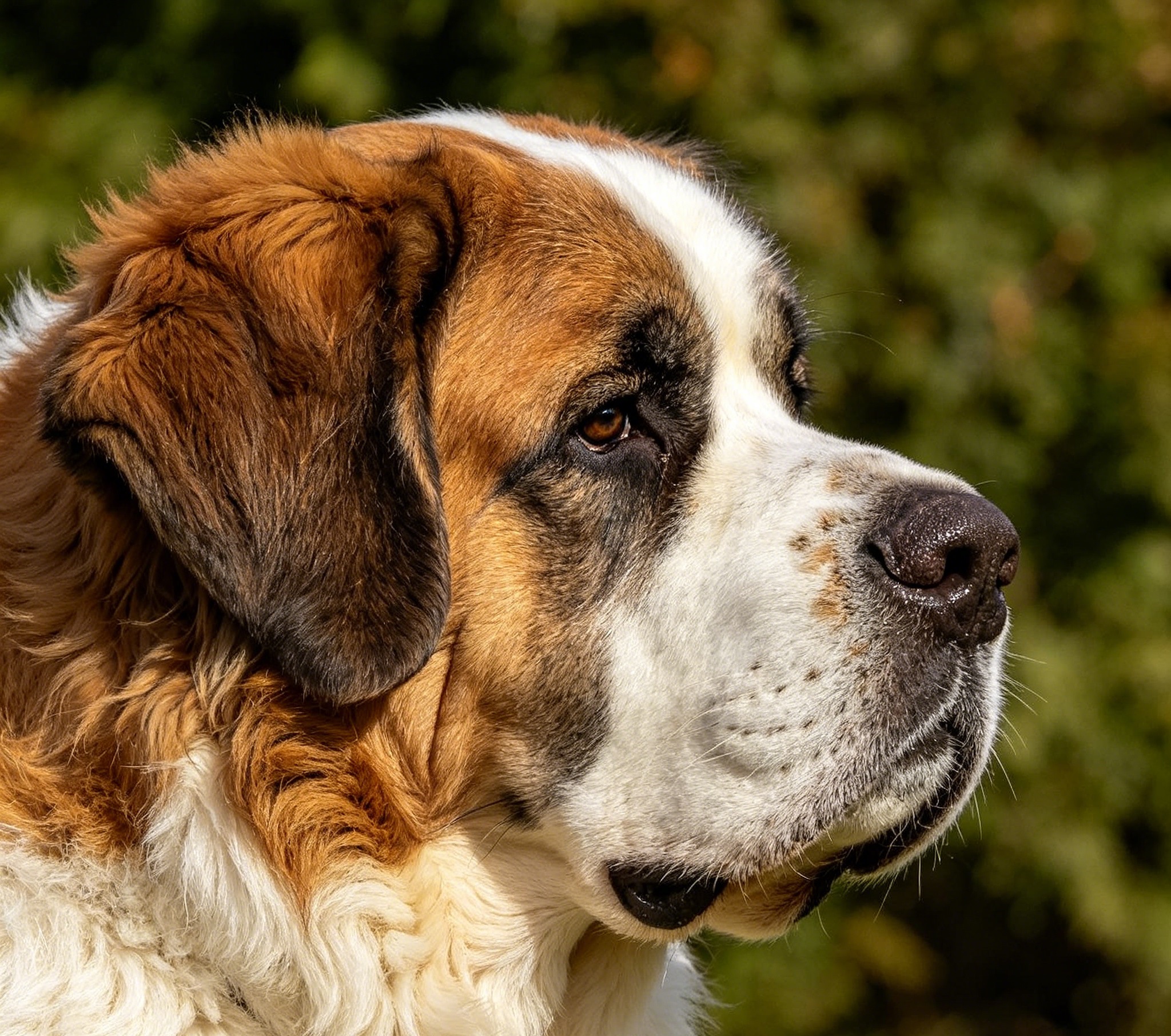
What a Saint Bernard Asks of a Household
| Daily constraint | Score | What it changes | |—|—|—| | Household footprint | 5/5 | Beds, crates, bowls, gates, and turning space need to be planned at giant-dog scale. | | Heat margin | 5/5 | Air conditioning, shade, and cool-hour activity are safety equipment in warm climates. | | Transport and care | 5/5 | A vehicle, clinic, and emergency plan must handle a dog that adults may not be able to lift. | | Drool and cleaning | 4/5 | Water stations, towels, floors, and visitor clothing become part of the ordinary routine. | | Gentle exercise | 3/5 | Regular walks help, but growing joints and a giant frame rule out forced intensity. |
Saint Bernard Quick Facts
| Trait | What to Expect |
|---|---|
| Size | Giant; 26–30 inches, roughly 120–180+ lb |
| Temperament | Gentle, patient, calm, friendly, devoted to family |
| Energy level | Low to moderate; calm indoors, enjoys cool-weather activity |
| Exercise needs | 30–60 minutes daily of steady walks and gentle play |
| Grooming needs | Moderate to high; brush 2–3 times weekly, more in shedding season |
| Apartment friendly | Difficult due to size, drool, and heat needs |
| Good with families | Excellent; famously gentle “nanny dog” reputation |
| Common concerns | Bloat/GDV, hip and elbow dysplasia, heart disease, heat sensitivity |
| Best for | Cooler-climate homes with space and tolerance for slobber |
| Not ideal for | Hot regions, small spaces, or tidy-house perfectionists |
Saint Bernard Temperament
Saint Bernards are gentle giants in the truest sense. Calm, steady, and good-natured, they were bred to be patient and dependable, and a well-raised Saint is wonderfully tolerant, especially with children, which earned the breed its old “nanny dog” reputation. Indoors they are typically placid and affectionate, happy to sprawl near the family and soak up attention.
This is a breed that lives for its people. Saints are loyal and bond closely, and they do not do well shut away from the household; they want to be part of daily life. Their size and devotion make them naturally watchful, and they can be a deterrent simply by existing, but temperamentally most are friendly rather than aggressive. Early socialization keeps that friendly confidence intact, which matters enormously in a dog this large.
Saints are sensitive and respond poorly to harsh handling. They are eager to please but can be a touch stubborn, and because of their size, behaviors that would be trivial in a small dog, jumping up, pulling, leaning, become serious management issues. They tend to mature slowly, staying puppy-minded in a giant body well past their first birthday.
How a Saint Bernard Uses Its Energy
For such a huge dog, the Saint Bernard’s exercise needs are surprisingly moderate. A daily walk or two plus some gentle play keeps an adult fit and content; they are not built for endurance or speed, and they are happy to be relative couch potatoes between outings. What they enjoy most is steady activity in cool conditions, and many love snow.
Heat is the critical limiting factor. The dense double coat and large body make Saint Bernards highly prone to overheating, so exercise should happen in the cooler parts of the day, and hot, humid weather calls for serious caution and plenty of water and shade. A panting, struggling Saint in the heat is an emergency in the making.
Puppies need careful management. Saints grow to enormous size rapidly, and their developing joints are vulnerable, so avoid forced running, jumping, and stairs while young, and let a puppy self-regulate its play. Over-exercising a growing giant risks lasting orthopedic harm, and patience during that first year protects the dog for life.
Coat Care in a Saint Bernard Home
Saint Bernards come in long-haired and short-haired varieties, and both shed substantially. The coat is dense and weatherproof, and regular brushing, two to three times a week, keeps it healthy, controls loose hair, and prevents mats in long-haired dogs, especially behind the ears and on the legs and tail.
A practical care routine includes:
- Brushing several times a week, daily during the heavy seasonal sheds.
- Keeping nails trimmed; long nails strain the joints of a heavy dog.
- Cleaning the facial folds and wrinkles to prevent irritation and infection.
- Checking the ears and brushing the teeth as part of routine care.
- Wiping the jowls often, because this is one of the drooliest breeds there is.
Be fully prepared for drool. The loose flews mean strings of slobber after every drink and meal, and a vigorous head shake can decorate your walls and ceiling. Slobber towels in every room are a Saint Bernard owner’s standard equipment.
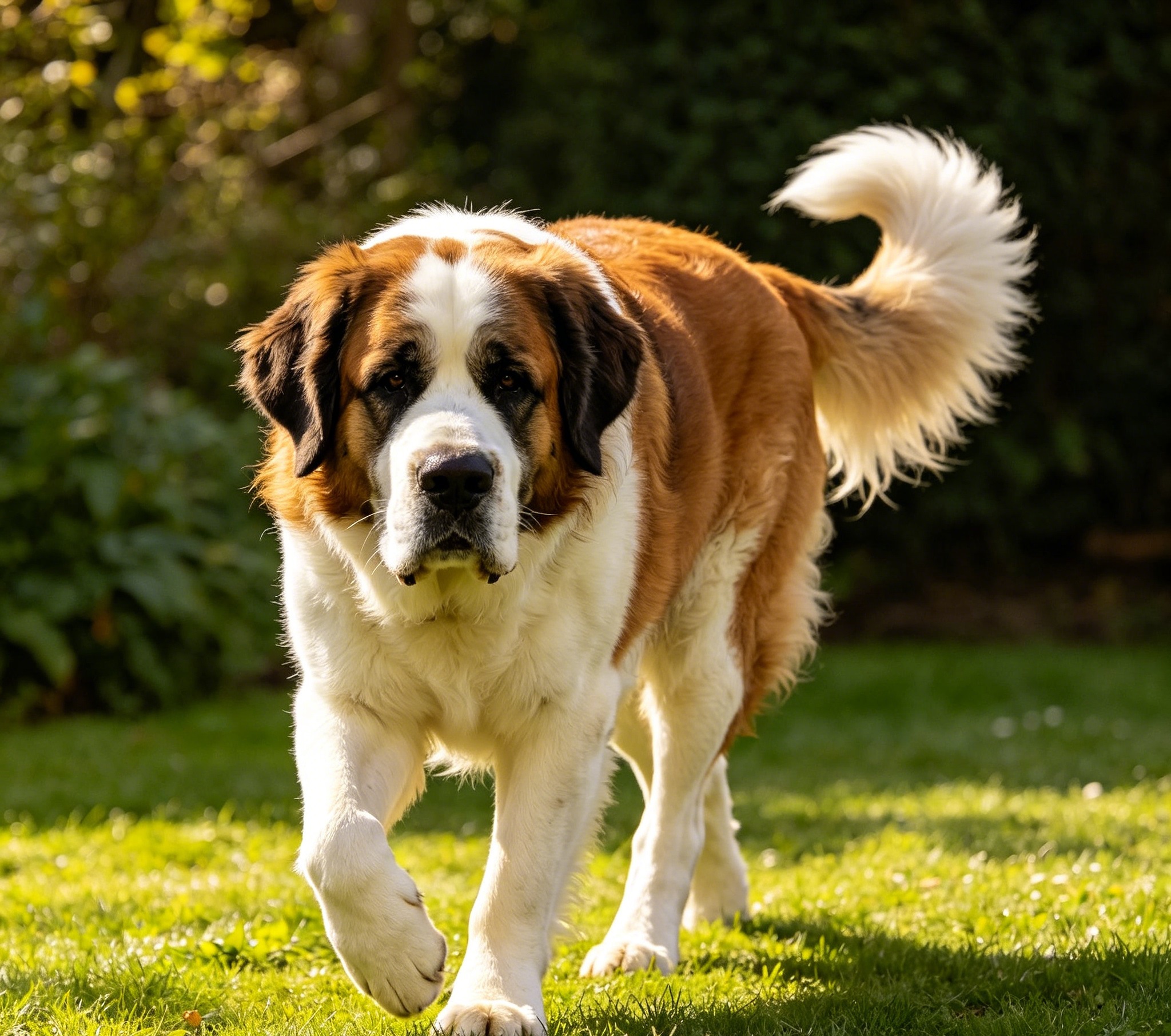
Common Saint Bernard Health Issues
Like other giants, the Saint Bernard’s size brings serious health considerations and a short lifespan, typically 8 to 10 years. The most urgent risk is bloat (gastric dilatation-volvulus), the sudden, life-threatening twisting of the gas-filled stomach that deep-chested breeds are prone to. Many owners discuss a preventive gastropexy with their vet, and every Saint owner should know the warning signs.
Orthopedic problems are common given the breed’s rapid growth and weight: hip and elbow dysplasia and osteoarthritis affect many Saints, so reputable breeders screen their breeding dogs. Heart disease, including dilated cardiomyopathy, also occurs in the breed, as do certain eye conditions like entropion and ectropion related to the loose facial skin. The dense coat and large body also make heatstroke a genuine, preventable danger.
Given the bloat risk, learn the signs now, a swollen or hard belly, unproductive retching, restlessness, and distress, and treat them as an emergency. Likewise, signs of overheating or lameness warrant prompt attention. Keeping the dog lean and cool prevents many of these problems from worsening.
Meals and Body Condition for a Saint Bernard
Feeding a Saint Bernard is a significant commitment in both cost and care. Adults eat a lot, and growing puppies must be fed a large- or giant-breed growth formula that controls calories and calcium to support slow, joint-friendly development rather than rapid growth, which is linked to lifelong orthopedic problems.
Feeding practices that protect a Saint:
- Split the daily ration into two meals to help reduce bloat risk, and keep the dog calm around mealtimes.
- Avoid vigorous activity in the hour before and after eating.
- Keep the dog lean; excess weight is brutal on giant-breed joints, the heart, and heat tolerance.
- Use a slow-feeder if your dog gulps its food.
- Follow your vet’s guidance on diet and portions, especially during the rapid growth phase.
Because a few extra pounds matter so much on a frame already carrying so much weight, checking body condition by feel and adjusting portions accordingly is one of the kindest things you can do for the breed.
Teaching a Saint Bernard Useful Habits
With a dog that may outweigh its owner, training is essential rather than optional. The good news is that Saint Bernards are intelligent, willing, and sensitive, and they respond well to patient, reward-based methods. Harsh corrections backfire with this gentle breed and are unnecessary. The challenge is consistency through a long, slow adolescence.
Priorities for a giant breed:
- Teach loose-leash walking and “off” while the dog is still small enough to manage; you cannot out-muscle an adult Saint.
- Curb jumping up and leaning early, before a friendly greeting can knock someone over.
- Socialize thoroughly during puppyhood so the breed’s friendliness stays confident.
- Crate- and house-train with a steady routine from the start.
- Build calm independence to prevent separation anxiety in such a family-bonded dog.
Because Saints mature slowly and can be a little stubborn, short, positive, regular sessions work better than long ones. Group classes during the manageable puppy months pay dividends when the dog reaches its full, formidable size.
Pros and Cons of Saint Bernards
| Pros | Cons |
|---|---|
| Gentle, patient, and wonderful with children | Heavy drooling is constant and messy |
| Calm and affectionate family companion | Highly heat-sensitive; struggles in warm climates |
| Naturally loyal with a watchful presence | Serious giant-breed health risks and short lifespan |
| Loves cool weather and snow | Very expensive to feed and care for |
| Moderate exercise needs for its size | Sheer size makes space and handling demanding |
Saint Bernard Owners Measure Doorways and Summer Heat
Living with a Saint Bernard turns ordinary chores into physical management. Drool lands on walls, a damp coat takes space to dry, and warm weather shortens useful exercise hours. A gentle adolescent can still pull an adult off balance or clear a table with its tail. Owners need giant-scale transport and medical plans long before old age, because a dog this large cannot be improvised into a small car or carried down stairs.
Saint Bernard Advice by Home and Experience
An apartment depends on cool access
A calm adult may rest well, but stairs, heat, elevator size, toilet trips, and neighbor comfort make the setup difficult. Measure common spaces and plan for an elevator outage. Drool and coat cleanup also need a realistic indoor zone.
A cool ground floor is more useful than acreage
Non-slip floors, shade, secure fencing, and limited stairs support daily life. A yard is not a reason to leave the dog outside in heat. Keep food and counters out of reach and provide structured moderate walks.
A beginner should train the giant puppy early
Teach leash control, handling, grooming, and greetings before strength arrives. Discuss growth and body condition with a veterinarian. Confirm that vehicles, boarding, and emergency clinics can accommodate the adult.
Experienced owners prepare for reduced mobility
Giant-breed experience helps, but every home needs a plan for injury or senior decline. Ramps, support harnesses, and extra people may become necessary. Keep the dog lean rather than accepting bulk as breed type.
Saint Bernard Myths From Rescue Cartoons
Saint Bernards instinctively know how to rescue people
Historic rescue work depended on breeding, environment, handlers, and training. A household puppy is not born with safe search-and-rescue skills and still needs ordinary obedience and social development.
A calm giant needs almost no exercise
Adults benefit from moderate daily movement and mental activity, adjusted for heat, age, and health. Complete inactivity encourages weight gain and loss of condition.
For a practical planning check, use the dog cost calculator to include giant food, medication, grooming, cooling, training, vehicle changes, boarding, ramps, insurance or savings, and mobility equipment. The dog fit score cards can help you compare climate, stairs, car capacity, drool tolerance, floor traction, child supervision, and ability to move an injured giant dog.
Is a Saint Bernard Right for You?
A Saint Bernard suits a household with space, a cooler climate, and a real tolerance for mess, plus the budget for a giant dog’s food and care. In return you get one of the gentlest, most devoted family dogs imaginable, a calm, affectionate companion that adores its people and is famously good with kids.
It is a poor fit for hot regions, for those who prize a tidy home, or for tight budgets. The drool is relentless, the heat sensitivity is a daily consideration in warm areas, and the costs and short lifespan are realities every owner must accept. None of that diminishes the breed; it simply means a Saint asks for a particular kind of home.
For comparison, the equally calm but drier-mouthed Great Dane is a useful giant-breed alternative, the tireless Border Collie shows the opposite extreme of energy and drive, and the athletic Australian Shepherd offers a high-activity contrast to this mellow giant.
The Saint Bernard Decision
The Saint Bernard is a living storybook character, a gentle, devoted alpine giant that brings warmth and calm to the right home. For families with the space, the climate, and the patience for its quirks, few breeds are as sweet-tempered or as good with children.
The trade-offs, the drool, the heat sensitivity, the expense, and the all-too-short years, are real and entirely predictable. If you can welcome a slobbery, snow-loving giant and accept what comes with it, a Saint Bernard will reward you with extraordinary gentleness and loyalty. If those realities give you pause, it is wiser to choose a breed that better fits your home and climate.