
The Great Dane is large enough to turn minor household details into logistics. A doorway, car, stairs, couch, food bin, boarding kennel, and even a friendly jump all carry more consequence when the dog is this tall and strong. A calm temperament helps, but it does not remove the need for early manners.
The best first step is to measure the home and price the ordinary supplies. A Dane does not require an estate to be content, but it does need safe traction, room to turn and rest, transport that works, and adults who can manage a giant adolescent. Health planning, particularly around urgent abdominal symptoms, belongs in the decision from the start.
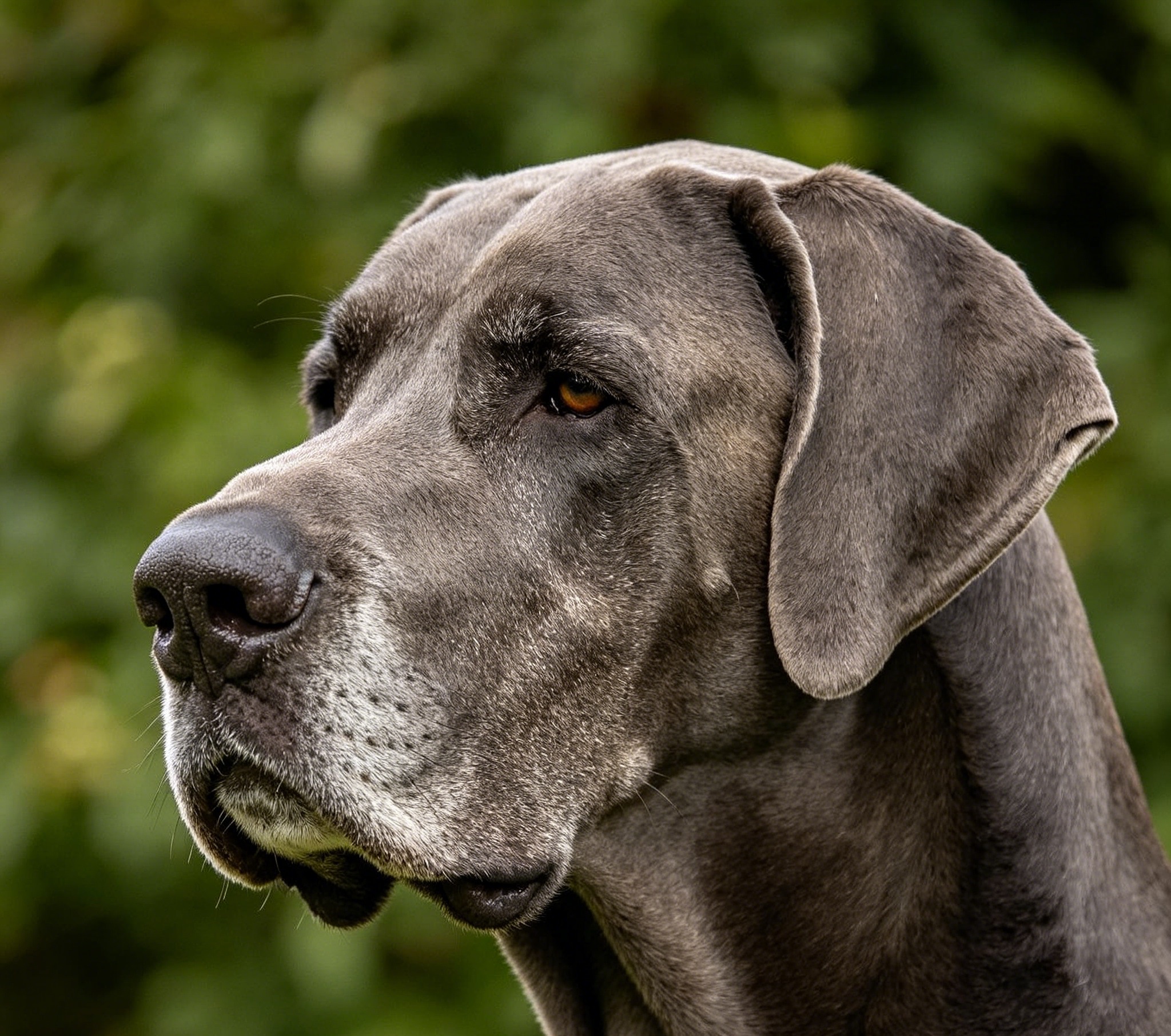
Great Dane Fit: Measure the House First
| Daily constraint | Score | What it changes | |—|—|—| | Home dimensions | 5/5 | Clear walking paths, non-slip flooring, and a bed sized for a giant dog are daily needs. | | Transport | 5/5 | The family needs a realistic plan for veterinary trips and emergencies before adopting. | | Food and supplies | 5/5 | Large portions, medication doses, crates, beds, and boarding all cost more at this scale. | | Adolescent manners | 5/5 | Loose-leash walking and calm greetings are safety skills, not optional tricks. | | Exercise management | 3/5 | Regular controlled activity matters, while forced endurance is not the goal for a growing giant breed. |
Great Dane Quick Facts
| Trait | What to Expect |
|---|---|
| Size | Giant; males 30–34 inches and 140–175 lb, females slightly smaller |
| Temperament | Gentle, affectionate, calm indoors, friendly, often goofy |
| Energy level | Moderate; bursts of play, then long naps |
| Exercise needs | 30–60 minutes daily of walks and light play, joint-safe for young dogs |
| Grooming needs | Low; short coat, weekly brushing |
| Apartment friendly | Possible thanks to a calm nature, but space and stairs are factors |
| Good with families | Generally very good; gentle but needs supervision around small kids |
| Common concerns | Bloat/GDV, dilated cardiomyopathy, joint disease, short lifespan |
| Best for | Owners with space, budget, and love for a giant companion |
| Not ideal for | Tight budgets, small spaces, or anyone wanting a long-lived dog |
Great Dane Temperament
For all their size, Great Danes are famously sweet-natured. The breed standard prizes a calm, friendly, dependable temperament, and a well-raised Dane is gentle, patient, and devoted to its family. Indoors they are often surprisingly mellow, content to sprawl across the floor (or your feet) and nap, which is part of why some manage in smaller homes despite their footprint.
They are deeply attached to their people and want to be involved in family life rather than left in a yard. Many are “leaners,” pressing their considerable weight against you as a sign of affection, and plenty try to be full-blown lap dogs. That bonded nature also means they do not do well isolated for long stretches and can become anxious or destructive when lonely, and a bored, anxious giant is a lot of dog to manage.
Danes are generally good-natured with strangers and other animals when socialized, though their sheer size means even a friendly, exuberant greeting can knock over a child or an unsteady adult. Their imposing look gives them natural deterrent value, but temperamentally most are lovers, not fighters.
How a Great Dane Uses Its Energy
Great Danes need less exercise than their athletic appearance suggests, but they do need regular, moderate movement to stay fit and to keep joints and weight in check. For an adult, a couple of walks a day plus some play usually suffices; they are sprinters and loungers more than endurance athletes.
Puppies are a special case and the source of many costly mistakes. Danes grow at an astonishing rate, reaching enormous size within a year, and their joints and growth plates are vulnerable during that time. Avoid forced running, repetitive jumping, and stairs with young dogs, and let a Dane puppy set its own pace in free play rather than pushing structured exercise. Over-exercising a growing giant can cause lasting orthopedic damage.
Crucially, never exercise a Dane vigorously right before or after meals. Activity around feeding is a known risk factor for bloat, the breed’s most dangerous health threat, so build in calm rest time around mealtimes for the whole of the dog’s life.
Coat Care in a Great Dane Home
Grooming is one of the few easy parts of Great Dane ownership. The short, smooth coat needs little more than a weekly brush with a rubber curry or grooming mitt to remove loose hair and keep it shiny. They shed moderately, with a heavier shed once or twice a year, but the upkeep is minimal compared with long-coated breeds.
The basics still apply, just on a larger scale:
- Brush weekly; more often during seasonal sheds.
- Trim those big nails regularly, since long nails change how a heavy dog stands and stresses the joints.
- Check the ears and clean as needed.
- Brush teeth often; dental disease affects giant breeds too.
- Bathe occasionally, which is its own adventure given the size; many owners use a walk-in shower or do it outdoors.
Be ready for drool. Danes are not the sloppiest of the giants, but the loose flews mean strings of slobber after drinking or eating, and a “slobber towel” by the water bowl is a common household fixture.
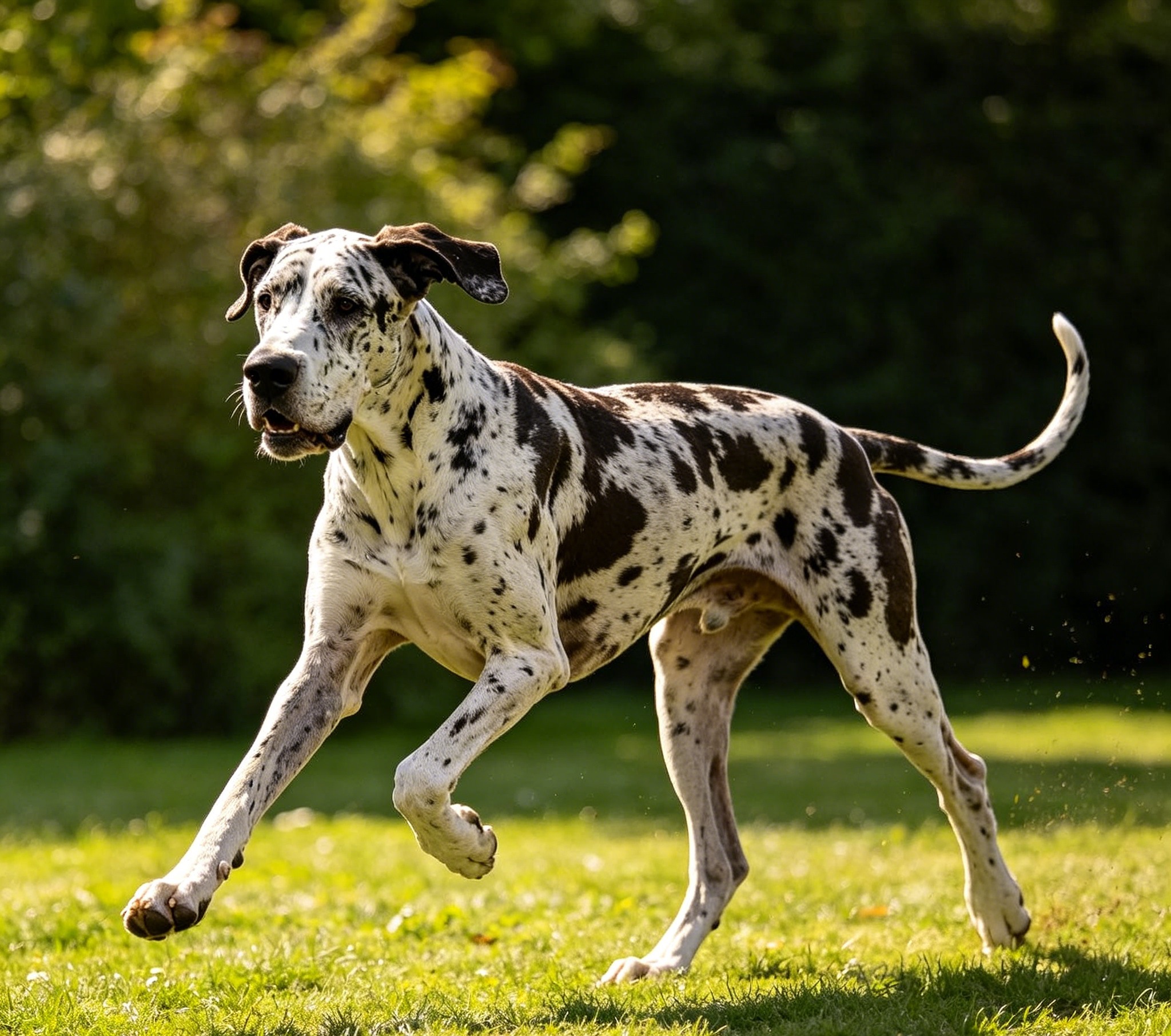
Common Great Dane Health Issues
The hard truth about Great Danes is that their health concerns are serious and their lifespan is short, typically only 7 to 10 years. The most urgent risk is gastric dilatation-volvulus, or bloat, in which the deep chest allows the stomach to fill with gas and twist on itself. It is a true emergency that can kill within hours, and because Danes are so prone to it, many owners and vets discuss a preventive gastropexy (a surgical tacking of the stomach) often done at the time of spay or neuter.
Heart disease is the other major concern; dilated cardiomyopathy is notably common in the breed and can lead to heart failure or sudden death. Their rapid growth and weight also predispose them to orthopedic problems including hip dysplasia, osteoarthritis, and wobbler syndrome (a spinal condition affecting the neck). Like several large breeds, they have an elevated risk of bone cancer (osteosarcoma).
Given the bloat risk in particular, learn the warning signs now: a distended or hard abdomen, unproductive retching, restlessness, drooling, and obvious distress. If you see them, get to an emergency vet immediately, because minutes matter.
Meals and Body Condition for a Great Dane
Feeding a Great Dane is both expensive and consequential, since diet directly affects growth, joints, and bloat risk. Adults eat a lot, and growing puppies need a diet formulated specifically for large- or giant-breed growth, which controls calcium and calorie levels so the dog grows steadily rather than too fast. Rapid growth from an over-rich diet is linked to lifelong joint problems.
Feeding practices that protect a Dane:
- Split the daily ration into two or three meals rather than one large bowl, which may help reduce bloat risk.
- Feed from a comfortable height and discourage gulping; a slow-feeder bowl can help fast eaters.
- Keep the dog calm for an hour before and after meals, with no vigorous play.
- Keep the dog lean; excess weight is brutal on giant-breed joints and the heart.
- Choose a large- or giant-breed life-stage formula and follow your vet’s guidance, especially during the rapid growth phase.
A lean, properly fed Dane is more comfortable, moves better, and has a better shot at the upper end of the breed’s modest lifespan.
Teaching a Great Dane Useful Habits
Training a Great Dane is non-negotiable, because manners that are merely inconvenient in a small dog become genuinely unmanageable in a 150-pound one. The good news is that Danes are intelligent and eager to please, and they respond well to patient, reward-based training. Harsh methods are both unnecessary and a poor idea with such a sensitive, bonded breed.
Priorities for a giant breed:
- Teach loose-leash walking early; you cannot physically out-muscle an adult Dane, so the habit must be set young.
- Train “off” and “four on the floor” so the dog learns not to jump on people.
- Crate-train and house-train with a consistent schedule from puppyhood.
- Socialize thoroughly while the dog is still small enough to manage easily.
- Build calm independence to prevent separation anxiety in such a people-focused breed.
Because Danes mature slowly and stay puppy-brained in a giant body for a year or more, consistency and patience through adolescence are essential. Group classes while the dog is young pay off enormously later.
Pros and Cons of Great Danes
| Pros | Cons |
|---|---|
| Gentle, affectionate, and devoted to family | Short lifespan, often just 7–10 years |
| Calm indoors and surprisingly apartment-tolerant | High bloat risk requiring careful feeding management |
| Low-maintenance short coat | Serious heart and joint health concerns |
| Imposing presence is a natural deterrent | Very expensive to feed, medicate, and care for |
| Generally good with families and other pets | Sheer size makes training and logistics demanding |
Great Dane Ownership Is a Logistics Problem in Disguise
A Great Dane can be calmer than expected and harder to move than expected. A crate, car, staircase, narrow hallway, or veterinary waiting room changes once the adolescent is waist-high. Food, medication, boarding, and emergency transport scale with the body. The gentle reputation also tempts families to delay leash and greeting work, then discover that friendly pulling from a giant dog is still a public safety problem.
Great Dane Advice by Floor Plan and Handler
Floor space can work if the elevator does
A calm adult may suit a roomy apartment, but reliable elevator access, outdoor toilet trips, and room for a giant bed are essential. Plan for elevator outages and injury before they happen. Hallway greetings must be controlled because neighbors cannot easily pass a leaning or excited Dane.
A house needs traction and ground-level options
Rugs on slippery floors, blocked stairs, and a secure yard reduce daily strain. A large lawn does not replace walking or manners. Measure doors, crates, and the vehicle while the dog is still small enough to lift.
A beginner must train before the growth spurt
Teach leash skills, handling, settle, and polite greetings immediately. Discuss growth, feeding, and emergency warning signs with a veterinarian. The owner should be physically able to manage the adult or have reliable help.
Experienced giant-dog homes plan for the bad day
Experience helps with pacing growth and protecting joints, but backup transport and care still need names and phone numbers. A sick Dane cannot be carried casually. Keep weight lean and avoid assuming quiet behavior means the dog needs no enrichment.
Great Dane Myths That Ignore Scale
Gentle giants barely need training
A friendly mistake from a giant dog can injure someone or make housing difficult. Calm handling, leash control, visitor manners, and cooperative veterinary care are essential.
Great Danes need a huge yard but little else
Safe space helps, while shared walking, mental work, social exposure, and indoor rest still matter. Property size cannot solve slippery floors, poor manners, loneliness, or health planning.
For a practical planning check, use the dog cost calculator to include giant food and medication doses, training, crates, vehicle access, boarding, insurance or savings, non-slip flooring, and emergency transport. The dog fit score cards can help you compare elevator reliability, car size, child supervision, leash strength, stairs, time alone, and access to giant-breed veterinary care.
Is a Great Dane Right for You?
A Great Dane suits an owner who has the space, the budget, and the heart for a giant companion, and who understands what that truly means. The dog itself is loving, calm, and rewarding to live with. The commitment around it, oversized food and medication costs, a car and home that accommodate the dog, and the emotional weight of a short life, is what separates a good fit from a regretful one.
It is a poor choice for tight budgets, for those who want a long-lived dog, or for anyone unprepared to manage bloat risk and giant-breed orthopedics. None of that diminishes how special the breed is; it simply means a Dane asks more of you, in money, space, and heart, than almost any other companion.
For comparison, the velcro-soft Cavalier King Charles Spaniel offers gentle companionship in a fraction of the size, the brilliant Shetland Sheepdog trades size for drive and brains, and the tireless Border Collie sits at the opposite end of the energy spectrum entirely.
The Great Dane Decision
The Great Dane is a singular dog, a gentle, affectionate giant that fills your home and your heart in equal measure. That mix of imposing presence and soft, family-loving nature is rare, and owners who are equipped for them tend to be devoted for life.
But this is a breed that asks for honesty about cost, space, and mortality. The expense is real, the health risks are serious, and the years are too few. If you can provide what a giant needs and accept that its time with you will be precious and brief, a Great Dane can be an extraordinary companion. If those realities give you pause, that hesitation is worth listening to.