
A Rottweiler affects more than the household’s walking schedule. Before the dog comes home, check lease terms, insurance rules, access to qualified training, vehicle space, visitor management, and the ability of every adult to handle a powerful dog calmly. A stable Rottweiler can be affectionate and surprisingly playful; treating its size and guardian reputation casually is where avoidable problems begin.
Rottweilers descend from Roman cattle-driving dogs that later worked as drovers and cart-pullers in the German town of Rottweil. That history shows up in how they move and think: deliberate, strong, and quietly watchful rather than frantic. Before you commit, the honest question is whether your home can give a powerful, intelligent guardian the structure, training, and companionship it needs to be its best self.
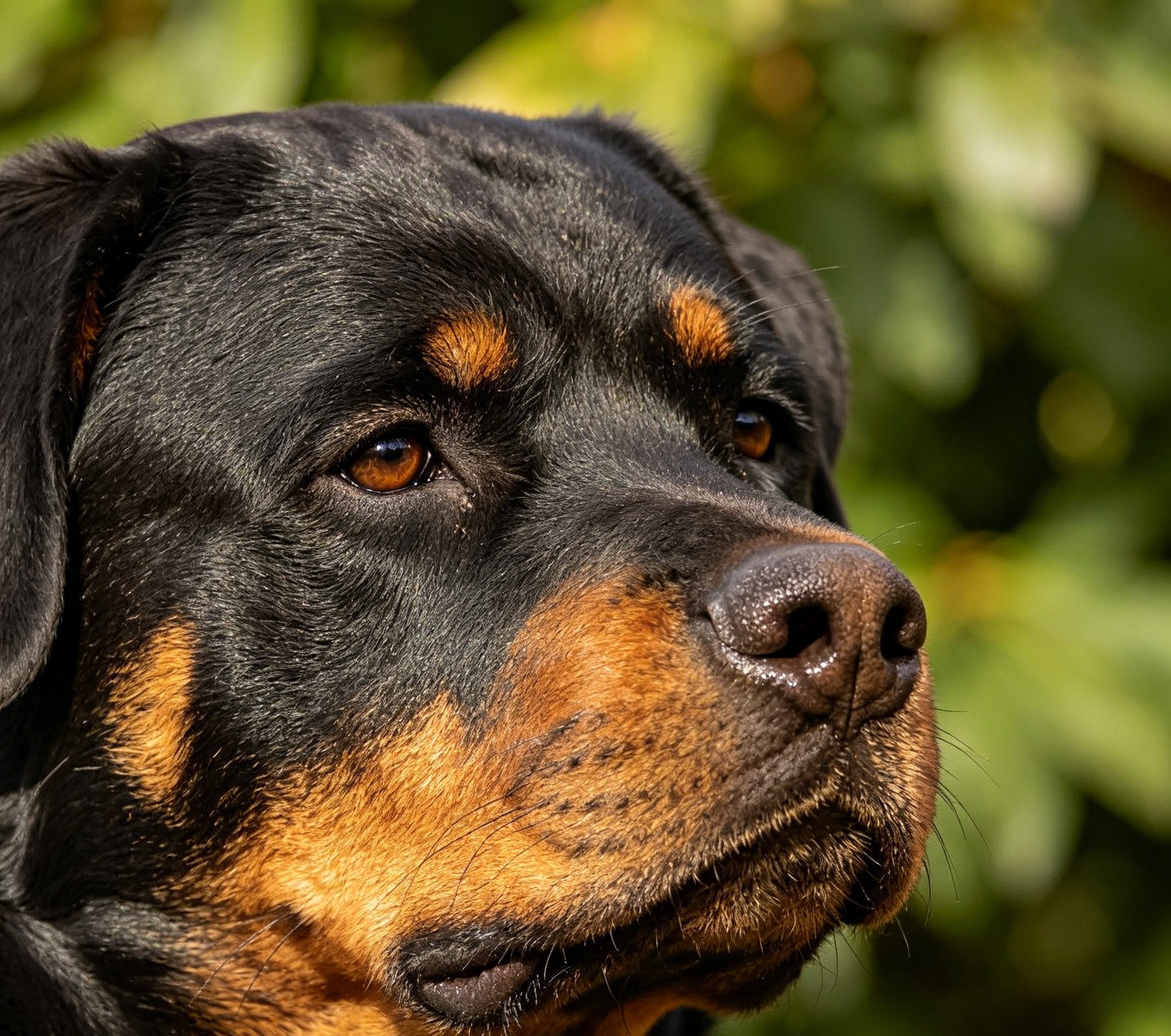
Rottweiler Fit Begins With Housing and Insurance
| Fit Factor | Score | What It Means |
|---|---|---|
| Apartment Fit | 2/5 | Possible only with committed exercise, training, and careful neighbor management. |
| First-Time Owner Fit | 1/5 | Not a sensible first dog for most owners; experience and structure matter. |
| Family Fit | 3/5 | Can suit the right family when children, space, and routines are managed. |
| Exercise Demand | 4/5 | Needs serious daily exercise, training games, and owner consistency. |
| Grooming Difficulty | 2/5 | Relatively simple coat care, though nails, ears, teeth, and shedding still matter. |
| Training Difficulty | 5/5 | Best for experienced handlers who can manage strength, drive, or guardian instincts. |
Rottweiler Quick Facts
| Trait | What to Expect |
|---|---|
| Size | Large; males roughly 95–135 lb, females 80–100 lb, 22–27 inches tall |
| Temperament | Confident, calm, deeply loyal, naturally protective |
| Energy level | Moderate to high with strong working drive |
| Exercise needs | About 1–2 hours daily of walking, training, and pulling or fetch play |
| Grooming needs | Short double coat; weekly brushing, heavier shedding twice a year |
| Apartment friendly | Workable for committed owners who exercise and train consistently |
| Good with families | Excellent with their own family when raised with structure and supervision |
| Common concerns | Hip and elbow dysplasia, osteosarcoma, bloat, heart issues, obesity |
| Best for | Experienced owners who enjoy ongoing training and clear leadership |
| Not ideal for | Passive homes, or people wanting an instant off-the-shelf guard dog |
Rottweiler Temperament
A well-bred, well-raised Rottweiler is steady. It tends to assess a new situation calmly rather than react first, and that thoughtful self-control is exactly what good breeders work to preserve. With family, the breed is famously affectionate and physical; many Rotties think of themselves as lap dogs and will try to climb onto the couch beside you regardless of their size. The breed often forms an intense bond with one or two people in particular.
That loyalty comes with a natural guarding instinct, which means socialization is not optional. A Rottweiler that meets many friendly strangers, dogs, surfaces, and sounds as a puppy grows into a confident adult that can tell a guest from a genuine threat. Skip that work and you may end up with a large dog that is wary or reactive. Aloofness toward strangers is normal and acceptable; outright nervousness or aggression usually traces back to poor breeding or missed early experiences.
Owners also learn quickly that Rottweilers are leaners and “talkers,” using soft groans and grumbles to communicate. They can be stubborn and will test soft handling, so they thrive with someone who is consistent, fair, and confident without being harsh.
Strength, Endurance, and Joint-Safe Work
This is a working breed, and an under-exercised Rottweiler can become bored, mouthy, and destructive. Plan on roughly one to two hours of activity spread across the day: brisk walks, structured training, fetch, tug, or controlled play with trusted dogs. Many Rotties love jobs that use their strength, like weight-pull sports, carting, or carrying a loaded backpack on hikes.
Because they grow large and heavy, take care with young dogs. Hard jumping, forced running, and repetitive stair work should wait until the growth plates close, usually around 18 to 24 months, to protect developing joints. Mental work matters as much as physical work; a Rottweiler that gets to use its brain through nose games, obedience, or trick training settles far better at home than one that is only walked.
In hot weather, exercise in the cooler parts of the day. The breed’s dark, dense coat absorbs heat, and a panting, overheated Rottie should always be cooled and rested rather than pushed.
Short Coat, Heavy Seasonal Shed
The short, flat double coat is one of the easier things about owning this breed, but “low maintenance” is not the same as “no maintenance.” A weekly once-over with a rubber curry brush or hound mitt pulls out loose hair and keeps the coat glossy. Twice a year, during the spring and fall coat blow, that loose hair arrives in earnest and daily brushing helps keep it off your floors and clothes.
Routine care should also include:
- Trimming nails every few weeks; heavy dogs feel long nails in their joints.
- Checking ears for wax or a yeasty smell, since the folded ear traps moisture.
- Brushing teeth regularly, as larger breeds still build tartar.
- Wiping facial folds and the muzzle after meals or drooly drinks.
- Bathing every couple of months or when genuinely dirty.
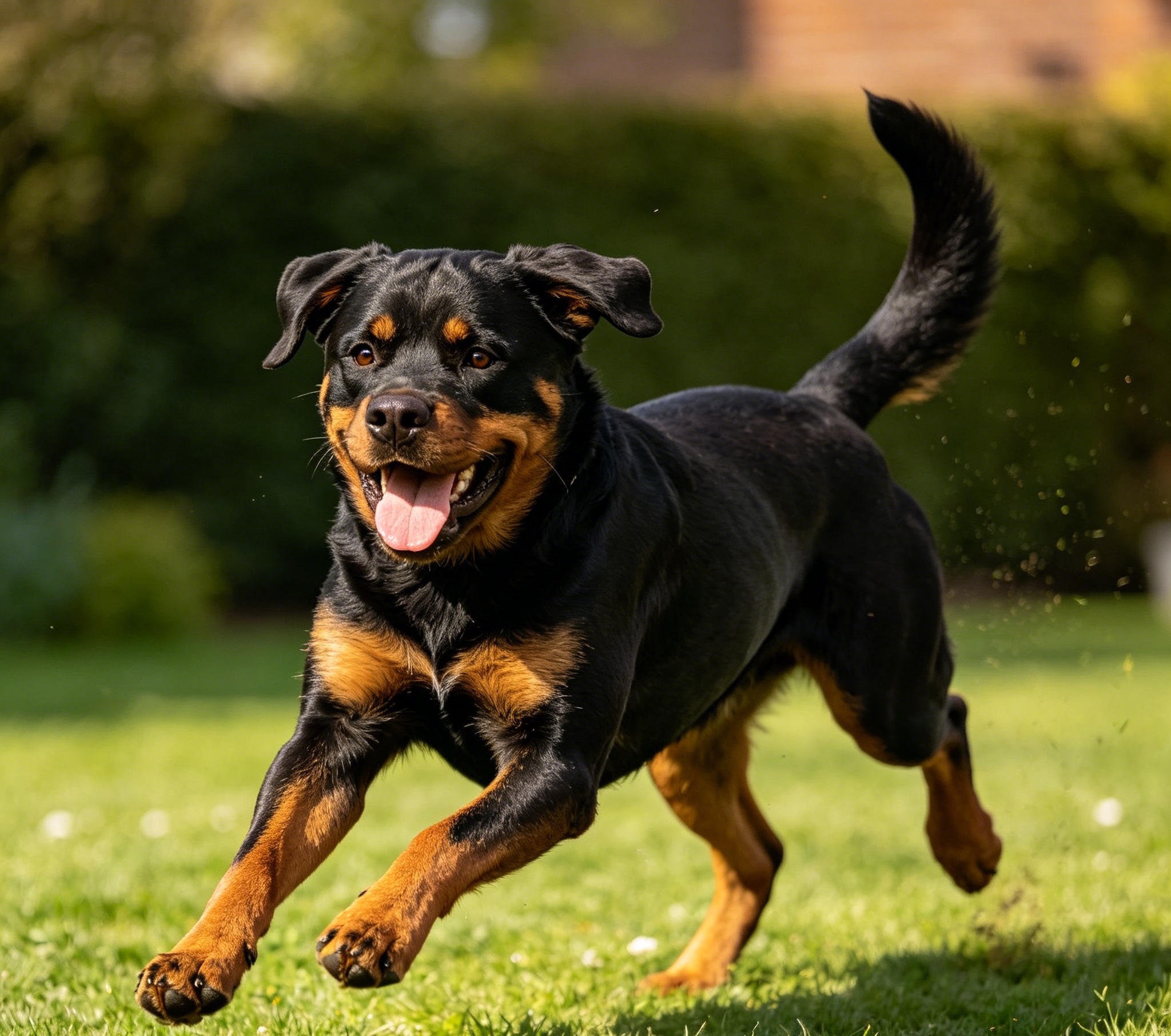
Common Rottweiler Health Issues
Rottweilers are robust dogs, but their size and genetics carry specific risks worth understanding before you buy. Hip and elbow dysplasia are common in the breed, which is why responsible breeders screen their breeding stock with OFA or PennHIP evaluations. The breed also has an above-average rate of osteosarcoma, an aggressive bone cancer, so any persistent limping or limb swelling in an adult deserves prompt veterinary attention.
Like most deep-chested dogs, Rottweilers can develop bloat (gastric dilatation-volvulus), a sudden, life-threatening twisting of the stomach. Heart conditions, particularly aortic stenosis, also appear in the breed, and a careful breeder will have cardiac clearances. Because Rotties love food and gain weight easily, obesity is a quiet but serious risk that worsens every joint and cardiac concern.
This guide is meant to inform, not to replace your veterinarian. If your dog shows a swollen or hard belly, unproductive retching, sudden collapse, severe limping, or labored breathing, treat it as an emergency and call a vet immediately.
Slow Growth and a Lean Adult Frame
A lean Rottweiler lives a longer, more comfortable life, and the difference between fit and fat on this breed is often just a few extra cups of food a week. Feed a complete diet suited to large breeds, and for puppies specifically choose a large-breed growth formula, which keeps calcium and calories in the range that supports slow, joint-friendly development rather than rapid weight gain.
Practical habits that help:
- Split the daily ration into two meals rather than one large bowl, which may lower bloat risk.
- Avoid vigorous exercise in the hour before and after eating.
- Keep treats to a small fraction of daily calories and subtract them from meals.
- Run your hands along the ribs weekly; you should feel them under a light layer.
You can use food as a strong training reward with this breed, but set clear mealtime rules early, because a 120-pound dog that begs and counter-surfs is hard to live with.
Public Manners Before Guardian Work
Rottweilers are intelligent and genuinely enjoy training, which is fortunate, because a large guardian breed without manners is a real liability. They respond best to calm, confident handling and reward-based methods. Harsh corrections tend to backfire, eroding the trust the breed relies on and sometimes provoking a stubborn standoff.
Useful priorities for this breed:
- Nail a reliable recall and a solid “leave it” early, given the dog’s size and strength.
- Teach loose-leash walking before adolescence, when the dog gains real power.
- Front-load socialization in the first months: new people, dogs, places, and handling.
- Keep sessions short, upbeat, and frequent rather than long and repetitive.
- Channel the guarding instinct into obedience and impulse control, not suppression.
Adolescence, roughly 8 to 24 months, is when many Rottweilers test boundaries. Staying consistent through that phase, ideally with help from a group class or trainer experienced with working breeds, pays off for the dog’s whole life.
Pros and Cons of Rottweilers
| Pros | Cons |
|---|---|
| Deeply loyal and affectionate with family | Strength and size demand experienced, confident handling |
| Calm, confident temperament when well raised | Requires committed early socialization to be safe and stable |
| Highly trainable and eager to work | Serious health risks including joint disease and cancer |
| Naturally protective without constant barking | Breed bans and insurance issues affect some renters and owners |
| Lower-maintenance coat than many large breeds | Sheds heavily in season and can drool and gain weight easily |
Rottweiler Myths That Harm Both Dog and Owner
Rottweilers are naturally aggressive
A breed label cannot predict every individual. Genetics, health, social development, learning, and context matter. Responsible ownership still acknowledges power and uses careful selection, training, and management.
A Rottweiler should live outside and guard the yard
Isolation can strengthen territorial behavior and weakens the household relationship needed for control. The breed needs family life, structured activity, rest, and managed outdoor access.
Map the practical commitments in the dog cost calculator: ongoing training, large-dog food, secure containment, insurance restrictions, health planning, capable boarding, and emergency transport. The dog fit score cards help with the less visible fit checks, including housing rules, visitors, other dogs, public handling, child supervision, and access to qualified local support.
Is a Rottweiler Right for You?
A Rottweiler suits an owner who wants a true partner: someone willing to train consistently, socialize thoroughly, and provide both physical exercise and a calm, structured home. If you enjoy working with a smart, powerful dog and you are home enough to keep it company, the breed rewards you with loyalty that is hard to match.
It is a poor match if you want a low-effort pet, travel constantly, or expect a guard dog that needs no training. The breed’s strength and protective nature mean mistakes have bigger consequences than they would with a small companion dog.
For a close guardian comparison, read Cane Corso vs Rottweiler before looking at more distant alternatives such as the laid-back Basset Hound or the agile Shetland Sheepdog. Side-by-side reading makes the differences in temperament, exercise, grooming, and training demands easier to see.
Manners Are Not Optional
Teach loose-leash walking, settling, polite greetings, body handling, and waiting at doors before adolescence adds muscle. These are ordinary companion skills, but adult size raises the consequence of skipping them. Every family member needs to use the same door and greeting rules.
Warm behavior at home proves little about public management. A Rottweiler can be playful with family and still require careful socialization, secure handling, and an owner who reads crowded situations early. Plan for joint health, weight control, bloat awareness, insurance restrictions, and the public response to the breed.
Ownership Checks Before a Rottweiler Comes Home
Ask insurers and landlords in writing
Breed restrictions vary by policy, building, and local rules. Confirm home or renter coverage before paying a deposit for a puppy, and keep the answer in writing. Some boarding facilities, daycares, and housing providers also set limits by breed or weight. Discovering those limits after the dog arrives can turn an ordinary move or trip into a serious problem.
Visitors need a repeatable routine
Teach a place cue, use a secure gate or room during arrivals, and introduce guests only when the dog is settled and the situation is controlled. Delivery workers should not become socialization practice. A Rottweiler that can remain neutral behind a barrier is easier to live with than one expected to make decisions at an open front door.
Public handling starts with the vehicle
The dog should load, ride, and exit on cue without pushing past the handler. Use secure restraint and practice calm waits before busy veterinary visits or training classes. Muzzle training can be taught positively as a practical safety skill, even for a friendly dog. It gives veterinary staff more options if pain or fear changes behavior during an emergency.
Who Should Take On a Rottweiler
The Rottweiler is one of the most rewarding dogs you can own and one of the easiest to get wrong. In the hands of an owner who values training, leadership, and companionship, it becomes a confident, affectionate, deeply loyal partner with a surprising sense of humor. In a passive or inconsistent home, that same power and protectiveness can become a problem.
If you are ready for the commitment to socialization, lifelong training, and the realities of a large, sometimes short-lived breed, a Rottweiler can be the dog of a lifetime. If any of that feels like more than you want to take on, it is wiser to keep looking than to learn the hard way.