
The main differences between an English and an American Cocker Spaniel are build, head shape and coat: the English is usually taller and longer-muzzled, while the American is more compact with a rounder head and fuller coat. For a household decision, compare the particular dog’s activity and grooming needs together. Choosing the smaller spaniel does not remove either commitment.
This guide uses American Cocker Spaniel for the breed the AKC calls Cocker Spaniel. The AKC’s explanation of the two breeds also highlights variation between field and companion backgrounds. Confirm the full breed name and breeding goals before comparing puppies or adult dogs advertised simply as “Cockers.”
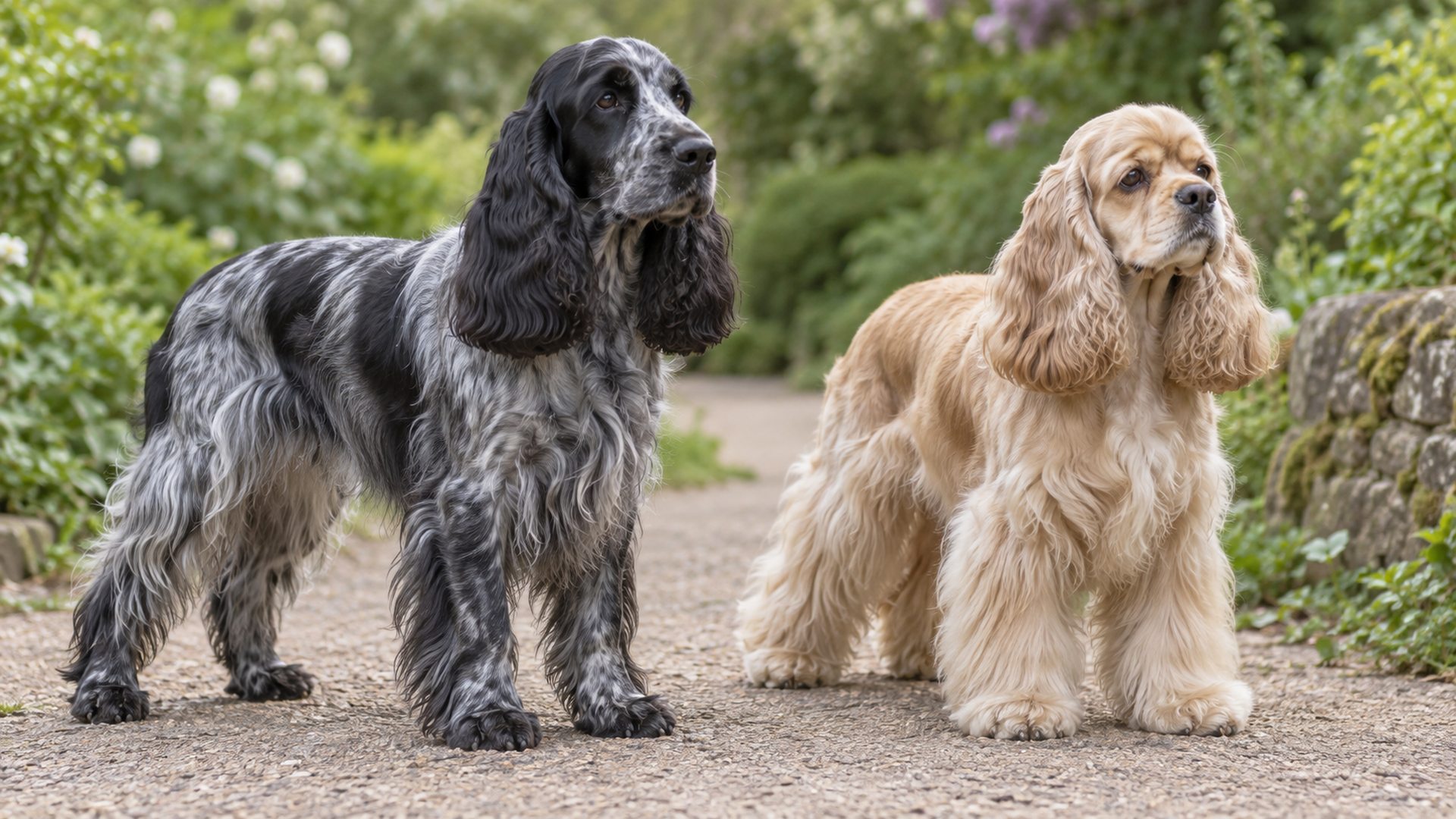
Cocker Spaniel Quick Facts
| Trait | English Cocker Spaniel | American Cocker Spaniel |
|---|---|---|
| Adult height, US standard | Males 16-17 inches; females 15-16 inches | Ideal 15 inches for males, 14 for females; half an inch either side |
| Adult weight, general reference | 26-34 pounds across the sexes | About 20-30 pounds |
| Head and coat | Longer muzzle; silky, moderate feathering | Rounder skull, shorter muzzle; fuller feathering |
| Activity question | What does this line and individual do each day? | What exercise does this individual enjoy and need? |
| Care question | Can you maintain feathering after outdoor activity? | Can you maintain the chosen trim between appointments? |
| Best evidence before choosing | Adult relatives, observed routine and health records | Adult relatives, observed routine and health records |
The English breed standard and American breed standard provide the height and appearance references; the AKC comparison supplies the general American weight range. These are breed references, not targets for feeding an individual dog. Ask your veterinarian about appropriate body condition.
For deeper background, read our English Cocker Spaniel guide and American Cocker Spaniel guide. Here, the useful question is which care plan you can actually carry out.
Compare the Line as Well as the Breed
An English Cocker advertised as working or field-bred is still an English Cocker. Its breeding background may place more emphasis on hunting work than a show-focused line. That distinction deserves a conversation before you assume a cheerful puppy will fit a quiet working week.
Ask the breeder to describe an ordinary adult dog’s day: outings, training, time resting and time with people. Ask what happens on days without field work. A description such as “active” is less useful than knowing what the household actually provides. For a rescue dog, request observations from the foster home, including what remains unknown.
The American breed standard also describes a sporting dog with working ability. A long show coat is not evidence that a dog needs little activity. Conversely, an English Cocker’s athletic outline does not tell you how that particular dog behaves indoors. Avoid turning appearance into a promise about temperament.
If you want a first dog, arrange to meet adults as well as puppies. Notice the handler’s routine and ask what took training to achieve. A calm visit can start a conversation; it cannot demonstrate how the dog will handle your commute, children or neighborhood.
Grooming and Shedding: Choose a Routine Before a Hairstyle
Both dogs have feathering to maintain. The English standard describes a coat that should not obstruct field work; the American standard calls for a silky coat and substantial feathering while rejecting excessive coat that hides movement. Neither description means a pet can wait for knots to become obvious before receiving care.
The American Spaniel Club’s ownership guidance treats grooming as an ongoing expense, even when owners learn to do it themselves. Before reserving a dog, take a photograph of the proposed trim to a groomer and ask for a realistic maintenance demonstration and quote. A short pet trim changes the work; it does not replace appointments, handling practice or checks between visits.
Ask which brush and comb suit the coat, where tangles tend to form, and what the groomer wants you to do between appointments. Also ask what to do if the dog becomes uncomfortable. Do not plan to pull through tight mats or cut close to skin without professional guidance.
Separate shedding from grooming in your budget. Loose hair on furniture and the work needed to prevent tangles are different household problems. If your priority is almost no coat maintenance, pause on both breeds. Our yearly grooming budget worksheet can help turn a local quote into a recurring care plan.
The Muddy-Walk and Evening-Care Test
Use this editorial worksheet with a breeder, rescue or groomer. It is a planning aid, not a validated suitability score. Write an answer for each individual dog under consideration; do not award points simply for being English or American.
| Moment in your week | Evidence to collect for the English Cocker | Evidence to collect for the American Cocker | Pause if… |
|---|---|---|---|
| Returning from a wet, grassy walk | See how this coat’s ears, feet and feathering are checked and dried | See the same routine with the proposed pet trim, not only a show photograph | Nobody has time or space for the return-home care |
| An evening when work runs late | Ask what activity and company adult dogs in this line normally receive | Ask the individual dog’s current walk, play and rest routine | Your only backup is skipping care |
| Grooming appointment postponed | Ask which coat tasks must continue until the next visit | Get specific instructions for maintaining the chosen length | The plan relies entirely on the groomer |
| A bird moves beside the path | Ask how the handler manages scent and movement around wildlife | Ask the same question despite the smaller body and heavier coat | Safe walking depends on an untested recall |
| You are away for a weekend | Find a carer who can follow the activity and feathering routine | Find a carer comfortable with the trim and handling requirements | The sitter has only agreed to feed and open the door |
For a hypothetical example, imagine two adults who enjoy weekend walks but both arrive home late on Wednesdays. One candidate is a field-bred English Cocker whose current household schedules substantial shared activity. The other is an adult American Cocker whose foster carer can describe a routine and grooming schedule. Do not choose by assuming the second dog is easier. Put each actual routine beside Wednesday’s available help.
If you can arrange a suitable walker but cannot maintain the coat, the exercise problem is solved and the grooming problem remains. If grooming is covered but the dog would spend an unsuitable stretch alone, a shorter trim changes nothing. A missing answer is a reason to gather evidence before choosing.
Training, Family Life and Apartment Fit
Start with the habits your home requires: walking with you, returning when called, resting while people are busy, and accepting comfortable handling. The AVSAB training position statement recommends reward-based methods. Ask a qualified trainer for help with a setup that causes fear or repeated frustration rather than escalating pressure.
Our settle-on-a-mat lesson offers a starting exercise for rest around people. It is not treatment for distress when left alone. Discuss persistent distress with your veterinarian and a qualified behavior professional.
For children or apartment living, request concrete observations: noise at doors, reactions to handling, interactions around food, and experience resting away from people. Ask which situations have not been assessed. Plan adult supervision around children and a quiet space the dog can use without being followed. A breed’s friendly reputation cannot supply that supervision or establish compatibility with your family.
Compare Health Records Without Declaring a Winner
This guide does not establish that one breed is healthier. The English Cocker club’s health-clearance guidance distinguishes DNA testing from eye, hearing and joint assessments. It identifies PRA/prcd, familial nephropathy and adult-onset neuropathy testing, with additional considerations for field-bred lines. Ask for the actual parental results and a veterinarian’s explanation of what they cover.
For the American Cocker, the parent club’s health registry guidance includes eye examinations and hip records, among other documentation. Look at dates and identification, not simply the phrase “health tested.” A registry entry or DNA panel is not a guarantee against future illness. With a rescue, discuss the available individual records and unknown history without expecting paperwork that may not exist.
Ear care needs an individual veterinary plan. VCA’s ear-infection guidance identifies Cockers among dogs predisposed to ear infections and describes head shaking, scratching, odor and discharge as warning signs. Arrange a veterinary examination for these changes; do not assume they are normal spaniel behavior or reuse old drops. The cause and condition of the eardrum affect treatment choices.
Pros and Cons for Your Shortlist
| Choice | Reason to investigate further | Commitment to verify |
|---|---|---|
| English Cocker | You want to explore a sporting companion and can assess the specific line | The ordinary weekday activity plan and feathering care both fit |
| American Cocker | You prefer the more compact build and can support the chosen coat routine | Grooming access, comfortable handling and daily activity are covered |
| Either adult dog | A breeder or foster carer can discuss an observed routine | The observations are relevant to your home, with unknowns stated |
| Neither yet | Your care or budget arrangements remain uncertain | Solve the missing arrangements before committing |
Use the dog cost calculator with local grooming and care quotes, then record your constraints in the dog fit score cards. Treat both tools as prompts for discussion rather than predictions about a dog.
Choose the Cocker Whose Week You Can Support
Choose between these Cockers with an actual weekday plan, a demonstrated coat routine and health records you understand. If you are still deciding from photographs, meet suitable adults and ask the unanswered questions first. For other pairings, visit the dog breed comparison hub.