
To teach a dog to leave it, start with a safe, uninteresting item, reward the dog for looking away, and add the cue once that response is becoming predictable. Build toward harder objects and new places gradually. The useful result is a dog who can turn away before picking something up, with you close enough to reward and guide the next step.
A dropped sandwich on a busy sidewalk is a difficult place to begin. Practice at home first, and keep using closed bins, clear counters, and a leash where needed. A cue adds an option; it does not make an unsafe object safe to approach.
Leave It Quick Facts
| Question | Practical answer |
|---|---|
| What does leave it mean here? | Turn attention away before taking the item |
| What earns the reward? | A voluntary look or movement away from the practice item |
| Where does the reward come from? | A separate hand or pouch |
| What should the first item be? | Something safe and less interesting than the reward |
| When should practice become harder? | When the current setup is comfortable and repeatable |
| What is outside this lesson? | Treating guarding, compulsive eating, or fear around other dogs |
If the object is already in the mouth, the relevant skill is teaching your dog to drop it. Keep the words and practice sessions distinct. Otherwise, the same phrase can end up meaning both “do not take that” and “give that back,” while nobody in the household knows which response to reward.
Set Up a Lesson You Can Manage
Choose a quiet space with a clear floor, suitable small food rewards, and one safe practice item. A little of the dog’s usual food can be the less interesting item if it fits their diet. Avoid medication, wrappers, tissues, sharp objects, or anything dangerous if swallowed. Do not borrow a prized chew to see how serious the dog is about keeping it.
Have one adult run the exercise. Other pets and children should have something else to do away from the practice area. Set the rewards within easy reach before inviting the dog over. If holding food makes the dog bite at your hands, skip the hand exercise and ask a qualified reward-based trainer for a suitable setup.
The AVSAB humane training statement recommends reward-based methods and rejects training that relies on pain or intimidation. In this lesson, that means rewarding a choice you can see and making the setup easier when necessary. Shouting, leash corrections, and pushing a dog away from food do not belong in the exercise.
Teach the Turn-Away Before Testing the Cue
1. Notice a small disengagement
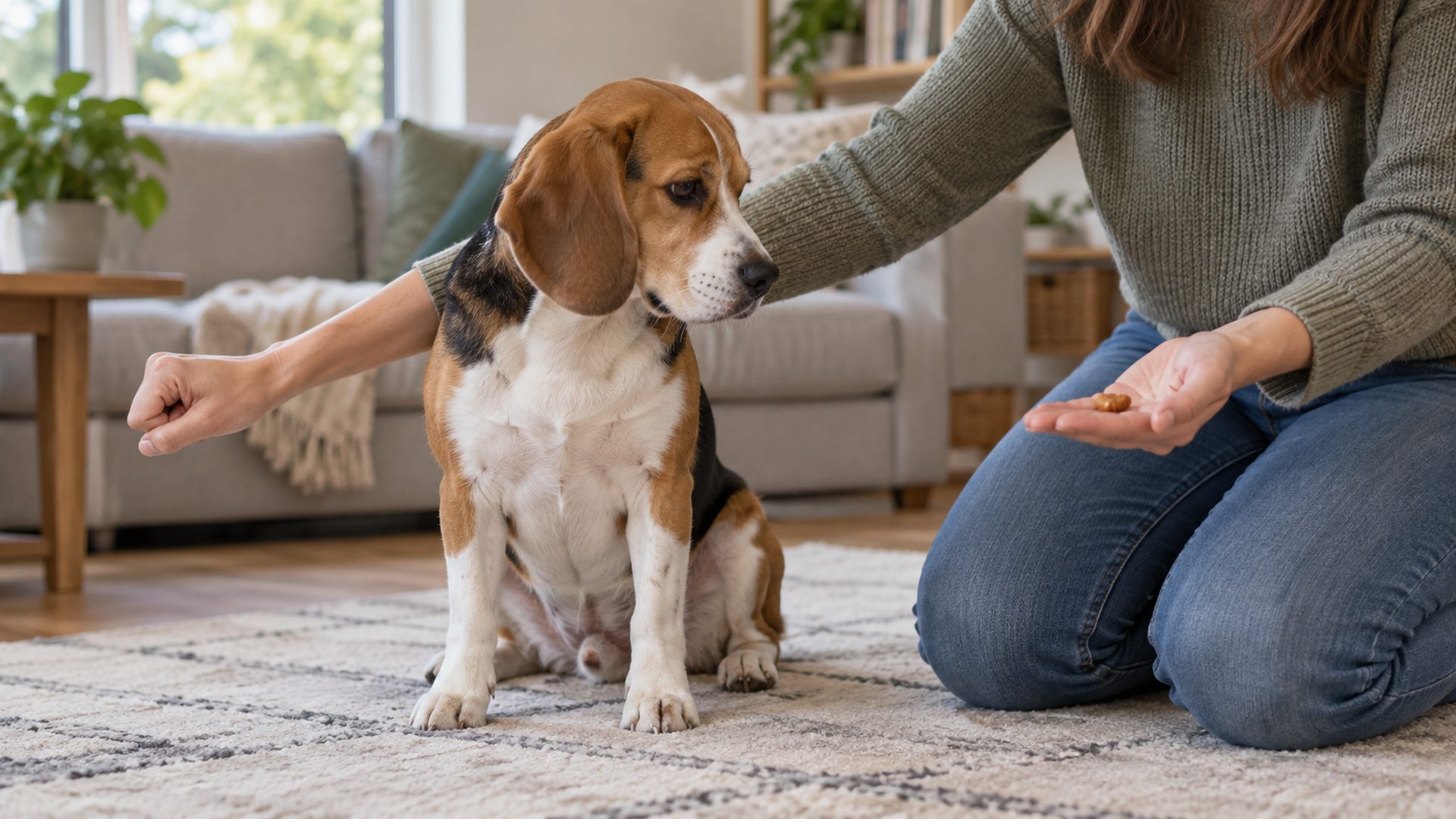
Hold the less interesting food securely in one closed hand and have a separate reward ready in the other. Allow a brief investigation. When the dog looks or moves away, mark that moment with a familiar word such as “yes,” then give the separate reward. Keep the marker consistent; it identifies the action that earned the food.
The Dogs Trust leave-it guide uses this look-away-and-reward sequence before adding a cue. You do not need a prolonged stare into your eyes. A small, relaxed turn away gives you something clear to reinforce. If the dog keeps pawing or becomes frustrated, pause and choose a less tempting setup instead of waiting through an escalating struggle.
2. Add the words when there is a behavior to name
Once the dog is repeatedly turning away comfortably, say “leave it” just before presenting the familiar practice item. Mark the turn and reward from the other hand. Say the cue once in an ordinary voice. If nothing happens, make the next attempt easier rather than repeating it louder.
Keep sessions brief enough to finish while both of you are comfortable. The RSPCA’s leave training guide also builds from a small withdrawal and recommends short, regular sessions. Its initial exercise releases the original treat; this guide uses a separate reward throughout to keep one consistent household rule.
3. Make the item visible without creating a grabbing contest
Try the familiar food on an open palm only when the closed-hand stage is easy. Give the cue, mark disengagement, and reward separately. If the dog reaches toward the food, calmly close your hand if safe, then return to an easier attempt. Do not snap your hand toward the dog’s muzzle or prolong the exercise to prove a point.
Being able to see the food is a new difficulty. Changing rooms at the same time would add another. Keeping those changes separate makes it easier to understand a missed response.
4. Practice at floor level, then while moving
For floor practice, start with a safe item you can keep inaccessible, at a comfortable distance. Reward turning away and moving with you. A leash and well-fitted harness can help prevent access, but should not be used to jerk the dog away. If you cannot prevent grabbing without a scramble, the arrangement needs changing before another attempt.
The AKC leave-it lesson progresses toward walking past items and practicing in different places. It also distinguishes the item being left from the reward. Begin with one easy pass rather than a trail of temptations. Collect the practice item after the dog is safely away, then reset.
A Home-to-Walk Practice Record
Use this editorial worksheet to track what has actually been practiced. The rows are possible settings, not a timetable or a test your dog must complete. Pick the easiest relevant row and write down the details. If a row is too difficult, return to the last comfortable arrangement.
| Setting | Controlled practice | What to record | What to change if it is difficult |
|---|---|---|---|
| Quiet living room | Familiar food in a closed hand; separate reward ready | Did the dog turn away without persistent pawing? | Reduce the item’s appeal or end the session |
| Same room, open palm | Same food and handler; only visibility changes | Was the hand open when the dog disengaged? | Return to the closed-hand setup |
| Clear indoor floor | One safe item kept out of reach | Distance, cue timing, and whether the leash stayed loose | Increase space and simplify the arrangement |
| Private outdoor space | Familiar item, no other dogs present | Surface, nearby sounds, and ability to take a reward calmly | Choose a quieter place or practice indoors |
| Quiet section of a walk | Reward a check-in and moving with you, without planted food | Route, distractions, and how easily you could create space | Take a wider route or stop the practice |
| Unexpected street litter | Prevent access and move away safely | Where the hazard was and how to avoid it next time | Change the route; do not repeat the encounter as a test |
For a hypothetical example, suppose Tuesday’s note reads, “Looked away from kibble in my hand in the kitchen.” On Wednesday, a different person asks beside the front door while holding a more exciting treat. A missed response tells you very little: the handler, place, and item all changed. A more useful next attempt keeps Tuesday’s setting and changes only the handler.
Write observable details rather than “good” or “stubborn.” “Needed the hand closed again” helps the next person choose a starting point. “Knows leave it” can hide the fact that the skill has only been practiced in one room.
Decide What Happens After the Dog Turns Away
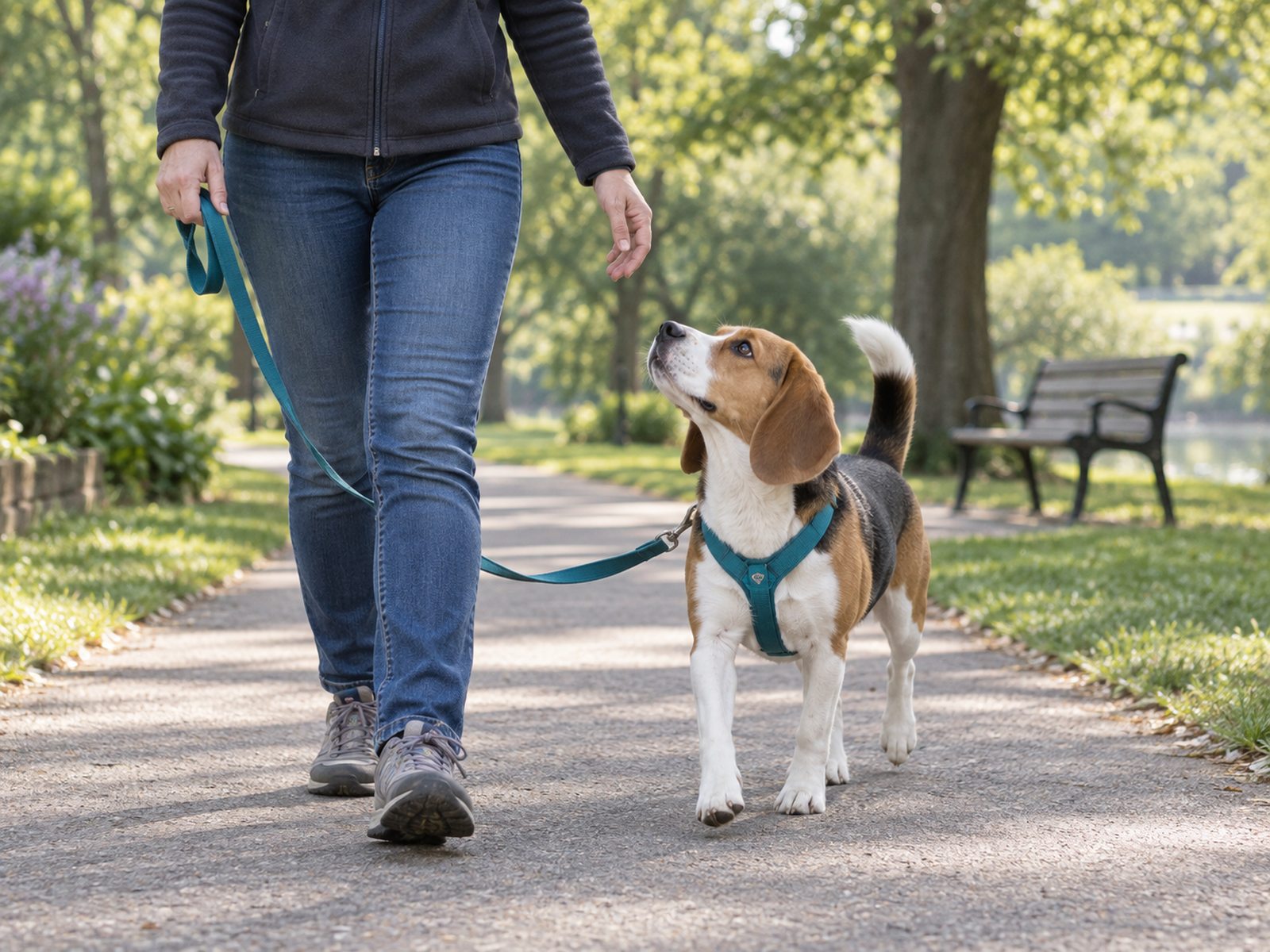
Disengaging is only one part of an ordinary walk. Plan the next action before asking: move along the clear side of the path, reward beside you, or leave the area. Standing beside an interesting object while searching every pocket for food makes that next step harder to deliver.
Agree on the reward location and cue with anyone else who walks the dog. One person might use “leave it” for food, another for pulling, and another whenever a dog appears. That makes the training record difficult to interpret. Keep this lesson focused on objects the dog has not picked up. Barking or lunging at another dog needs a separate assessment and plan.
At home, arrange somewhere comfortable to rest between short lessons. Our settle-on-a-mat guide covers that separate skill. The training and behavior hub can help you choose what to work on next without combining every household difficulty into a single cue.
When to Stop Practice and Get Help
Stiffening, hovering over food, growling, snapping, or a history of biting over items changes the situation. Stop, give space, and keep children and other pets away. Do not punish the warning or reach in to take the object. Dogs Trust’s resource-guarding guidance explains why confrontation can increase risk. Ask your veterinarian and a qualified behavior professional for an individual plan.
If your dog may have swallowed a dangerous item, contact a veterinarian promptly rather than continuing a training exercise. Cornell’s foreign-body guidance describes intestinal obstruction as a potentially serious problem; vomiting, appetite loss, abdominal pain, and lethargy are among the signs. Do not wait for all of them to appear before seeking advice about a known ingestion.
Repeated attempts to eat non-food objects or a sudden behavior change also deserve veterinary discussion. For ordinary training difficulties, bring your notes to a qualified reward-based trainer. If paid lessons may be needed, include them in your dog care budget. Prospective owners can also use the Dog Fit Score Cards to discuss the time and support their household can provide.
Pros and Cons of a Separate Leave-It Lesson
| Benefit | Limitation or commitment |
|---|---|
| Gives walkers a clear response to practice before an item is picked up | Does not replace preventing access to hazards |
| Lets the household reward a visible turn away | Everyone needs to agree on the cue and reward timing |
| Can be practiced in small, manageable setups | Progress in one setting does not prove reliability elsewhere |
| Produces useful notes for a trainer | Guarding and repeated ingestion need individual professional advice |
For the next session, choose one safe item, one quiet place, and one response to reward. Record what happened, put the item away, and let the dog get on with the day. The next useful step is the one that fits that record.