
Good dog sitter instructions explain what to do, when to do it, and who to contact when the plan changes. For a weekend away, leave a short daily care sheet, separate veterinary instructions where needed, and a clear handoff record. Go through them with the person caring for your dog before departure. A well-written document cannot fill a gap in actual care coverage.
This checklist is for a dog staying in your home with an agreed caregiver. If your dog will stay elsewhere, add that home’s access, sleeping arrangements, and other animals to the discussion. The RSPCA’s holiday-care guidance emphasizes familiar routines and notes that the best setting depends on the individual dog.

Dog Sitter Handoff Quick Facts
| Part of the plan | What needs to be clear |
|---|---|
| Care coverage | Who is present, when they leave, and who fills each gap |
| Daily instructions | The dog’s existing routine, with measurable portions and named equipment |
| Medical information | Current veterinary directions and a record of completed tasks |
| Emergency response | A reachable clinic, transport, authorization, and backup decision-maker |
| Return handoff | Who confirms you are home and which tasks remain outstanding |
Agree on the Care Before Writing the Sheet
Clarify what the booking includes. An overnight stay and a series of visits create different gaps during the day. Write the sitter’s expected arrival and departure times beside your travel times, including the first morning and final evening. Compare those gaps with your dog’s actual needs. Puppies, dogs with medical conditions, and dogs distressed by solitude may need a different arrangement.
AKC’s guide to choosing a sitter recommends meeting beforehand, checking references, discussing emergency procedures, and considering a trial. Ask the person to show you how they would handle an ordinary walk and meal. Discuss payment, cancellations, and replacement care before confirming the booking.
If your dog struggles when left, explain the observed behavior honestly. Dogs Trust’s separation guidance describes signs that can include pacing, vocalizing, and destructive behavior. Arrange care the dog can cope with and seek veterinary or qualified behavior support. A trip is a poor deadline for expecting independence to improve.
Our puppy-or-adult workday guide helps identify routine care gaps. Apply the same thinking to travel: each gap needs a person who has actually agreed to cover it.
Copy This Daily Care Sheet and Fill the Blanks
Use the following as an editorial planning template, not a prescribed schedule. Enter your own dog’s established routine. Replace vague directions such as “a scoop” with the measurement you normally use, and show the sitter the equipment. Ask your veterinarian about any needed diet changes before travel.
| Field | Your instructions |
|---|---|
| Dog and document | Name, current photo, identifying details, and date this sheet was checked |
| Coverage | Travel dates; each caregiver’s agreed start and finish; backup person’s acceptance |
| Meals | Food name and location; amount and unit per meal; times; permitted treats and restrictions |
| Water | Bowl locations and the routine for checking, cleaning, and refilling |
| Toilet outings | Usual opportunities, the dog’s signals, permitted area, and cleanup supplies |
| Walks | Familiar route, equipment, handling cues, and situations to avoid |
| Rest | Usual sleeping place, household boundaries, and agreed supervision arrangements |
| Medical attachment | Where current veterinary directions and the completion record are kept |
| Communication | Routine update time and method; when to telephone instead of sending a message |
| Return | Who receives the final handoff and confirms responsibility has transferred |
AAHA’s sitter instructions also recommend recording health conditions, fears, dietary restrictions, medication, and identification information. Supply enough detail to distinguish dogs in a multi-dog household. Describe what matters during care, such as which dog eats in which room, without expecting the sitter to infer it from personality labels.
Keep the latest version in one agreed place. A paper copy near the supplies can accompany a private digital copy. Put access codes and personal information somewhere secure rather than on a publicly shared checklist. If you edit an instruction after the walkthrough, tell the sitter exactly which line changed.
Walk Through the House in the Order the Sitter Will Use It
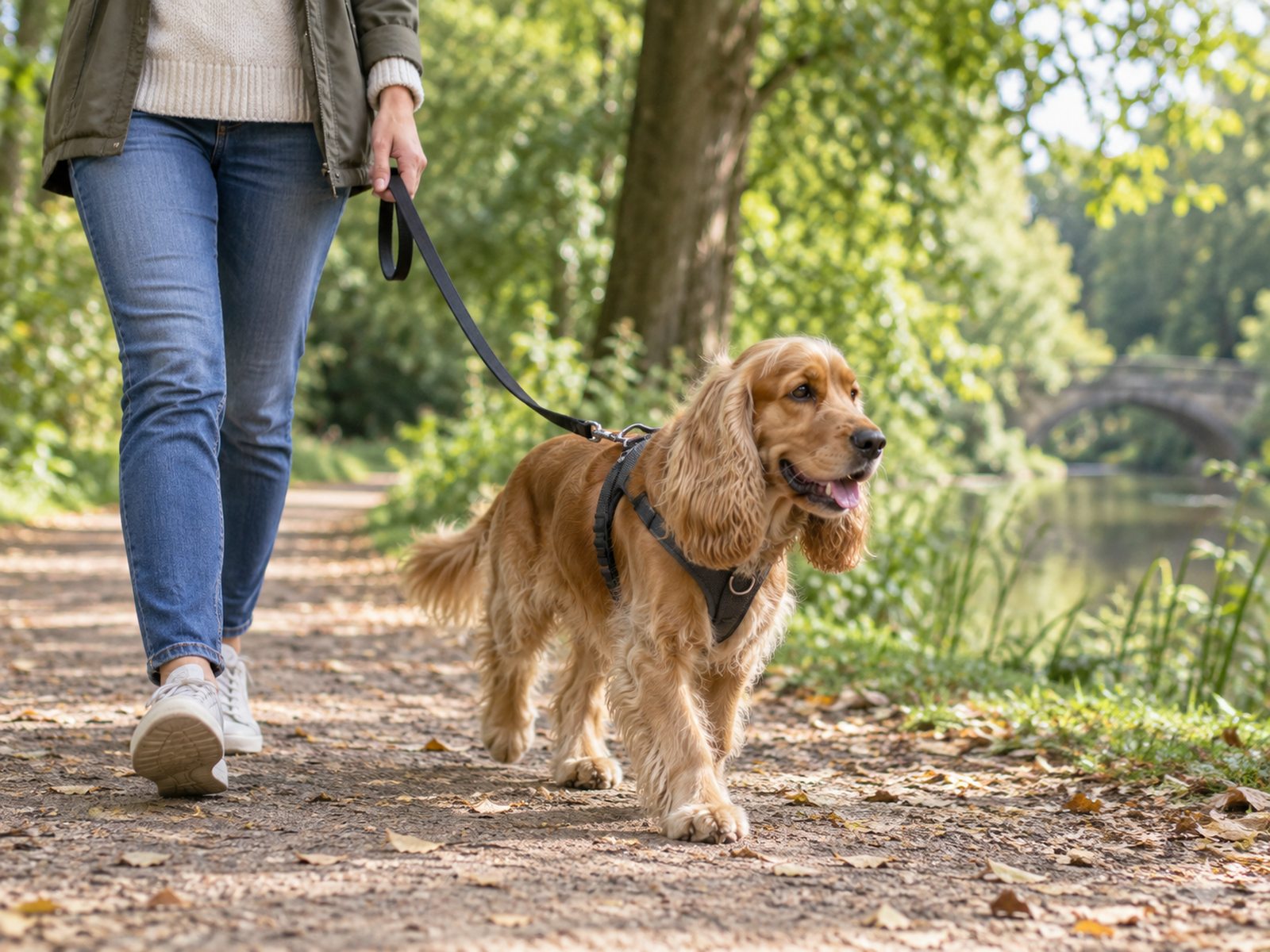
Start outside the front door. Let the sitter test the agreed entry method while you are there, then show where the dog waits during arrivals. Continue to the food, walking equipment, resting space, and cleaning supplies. Finish by leaving together so the sitter can check locks and gates.
AKC’s home-preparation checklist covers practical points such as labeling food, securing supplies, and arranging backup access. Use the walkthrough to find instructions that sound clear on paper but fail in the room: two similar food tubs, a leash hanging behind a coat, or a gate latch that appears closed before it catches.
Name the handling boundaries. Tell the sitter about escape attempts, reactions to visitors, and anything that has made routine care unsafe. Agree that unfamiliar outings, visitors, and dog introductions need your prior discussion. If a task involves growling, snapping, or unsafe restraint, stop and get qualified advice before relying on that care plan.
For two dogs, check each routine separately using our second-dog household worksheet. A sitter needs to know how to manage meals and rest even when both dogs usually appear comfortable together.
Separate Medication Directions From the Daily Chat
Use the current veterinary instructions and labeled packaging. Confirm the medicine, amount, route, timing, storage, and administration method with the veterinarian, and make sure the sitter can carry out the task. Leave enough supplies for the agreed care period and discuss a delayed return with the clinic.
The FDA’s medication questions for owners explain that responses to a missed or vomited dose depend on the medicine. Obtain instructions for these situations in advance when possible. If the sitter is unsure whether a dose was given, they should contact the veterinarian rather than guess or repeat it. Suspected accidental overdosing needs immediate veterinary contact.
For the record, use columns for the scheduled task, actual time, caregiver, and any exception. Keep planned and completed actions visibly different. A message saying “I’ll do it before I go” is a plan; it is not confirmation that the task happened.
Rehearse Three Ways the Weekend Could Change
This is a planning exercise, not a report of an actual household. Imagine one sitter covers Friday evening to Sunday afternoon, with the owner expecting to take over dinner. A delayed flight now creates an uncovered evening. The original booking can be perfectly clear while the return plan is incomplete.
| What changes | Decision to settle before departure | What the handoff record should show |
|---|---|---|
| Your return is delayed | Who can accept the extra care period, and how you confirm it | Named person, confirmed start time, and the next due tasks |
| The sitter cannot attend | Which backup has met the dog, can gain access, and agrees to step in | Who accepted responsibility and when they arrived |
| A medicine entry is unclear | Which clinic to call and where the original directions are | What is uncertain, the advice received, and who followed it |
Read each row aloud with the sitter. “Someone nearby can help” leaves the decision unfinished. Replace it with a name and a confirmed arrangement. If no suitable person can cover the gap, change the booking or travel plan before you leave.
Agree on how to acknowledge a handoff. For example, one person records that the evening meal is complete, the walk remains due, and the next caregiver has accepted those details. Choose a single record both can access. This avoids having one person search text messages while another updates a separate notebook.
Make Emergency Help Easy to Reach
Leave the regular veterinarian and an appropriate emergency clinic’s current contact details, location, and out-of-hours arrangements. Confirm how the sitter can transport your dog. Speak with the clinic before travel about authorizing care and arranging payment if you cannot be reached; clarify its requirements rather than assuming a note is sufficient.
AAHA’s emergency guidance identifies breathing difficulty, unresponsiveness, and suspected poisoning among reasons for urgent help. The sitter should contact a veterinarian promptly for concerning signs instead of waiting for a routine update. Follow professional instructions; this checklist does not supply treatment steps.
Place the contact information at the front of the care notes. Test the phone numbers and identify a backup decision-maker who has agreed to the role. If your dog has a diagnosed condition, ask the veterinarian for an individual action plan and review it with the sitter.
Before agreeing to paid cover, add the sitter’s actual quote and possible extra visits to the Dog Cost Calculator. If you are still choosing a dog, the Dog Fit Score Cards can organize breed-level questions; confirm handling and care needs for the individual dog with the sitter.
Pros and Cons of a Written Handoff
| What it helps with | What still needs a real arrangement |
|---|---|
| Keeping instructions in one place | A caregiver with the time and skills to carry them out |
| Showing which tasks are complete | Consistent recording by everyone involved |
| Preparing for a delayed return | Someone available and willing to extend care |
| Finding emergency details quickly | A workable clinic, transport, and payment plan |
Before leaving, have the sitter find the next task, demonstrate access, and locate the emergency number without your help. Correct whatever causes hesitation. On return, explicitly confirm that you have taken over and review outstanding care. That final exchange closes the weekend without leaving either person guessing who is responsible.