
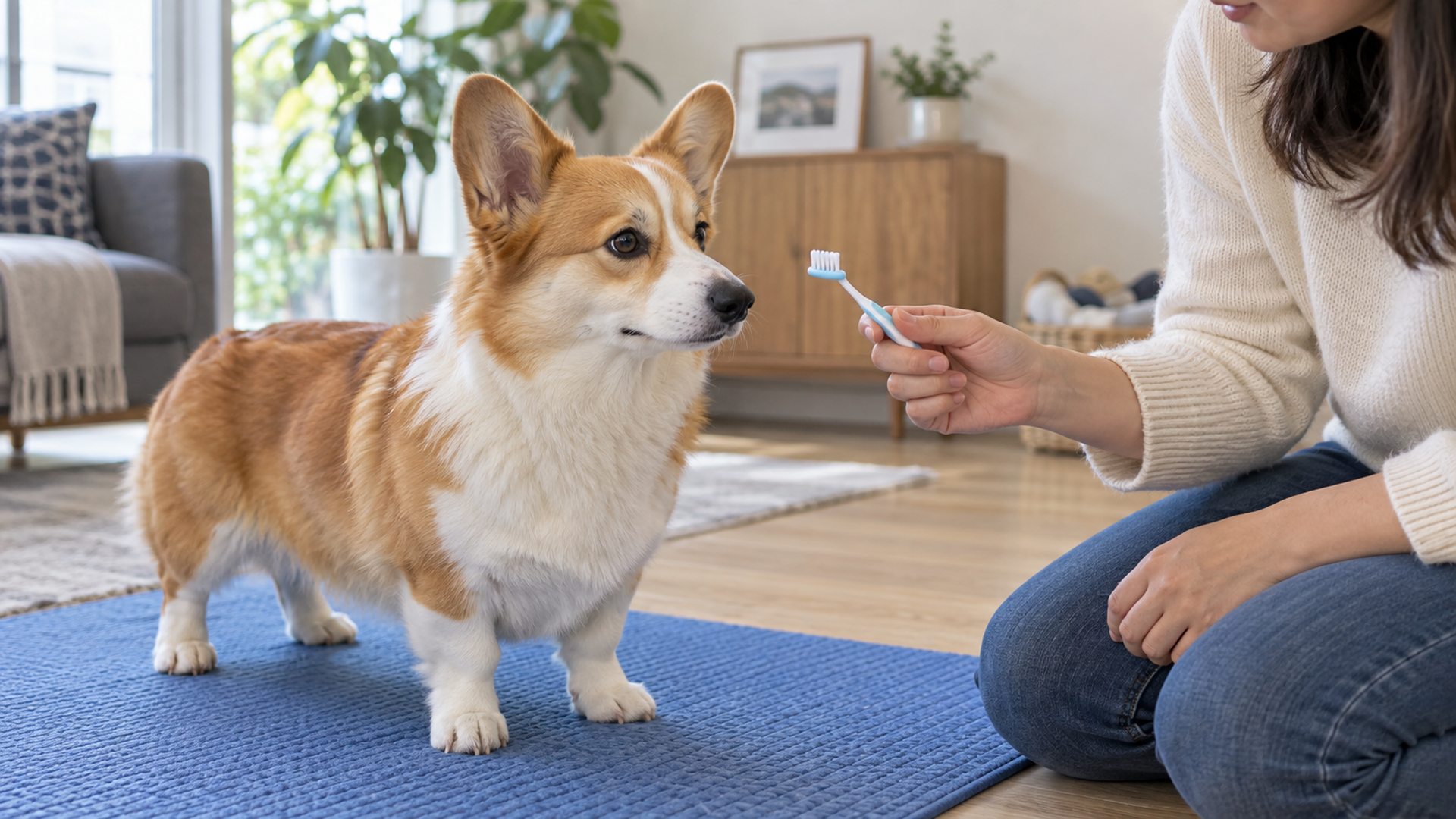
To brush a dog’s teeth, introduce mouth handling gradually, use a soft brush with dog toothpaste, and work toward daily cleaning of the outer tooth surfaces. The first evening may involve a toothbrush on the shelf and a dog who is comfortable looking at it. That is a useful beginning. Forcing a full cleaning before the dog accepts the equipment can make tomorrow harder. If the mouth seems painful or your dog has existing dental problems, ask your veterinarian before starting.
Tooth-Brushing Quick Facts
| Question | Practical starting point |
|---|---|
| What is the long-term target? | Daily home brushing, with veterinary dental care as advised |
| What belongs in the kit? | A suitably sized soft brush and dog toothpaste |
| Where do you begin? | A quiet, well-lit place with secure footing |
| Which surfaces come first? | The outside faces of the teeth, reached with a gentle lip lift |
| What determines progress? | Comfortable acceptance of the current step, not a date on a calendar |
| When should you pause? | Pain, bleeding, marked resistance, or another concerning change |
This is a routine-care guide, not a way to diagnose or treat dental disease. The Cornell periodontal-disease overview explains why brushing an already inflamed mouth can be uncomfortable and why home care needs to sit alongside veterinary care.
Before the Brush: Check Whether Practice Is Appropriate
Book veterinary advice for persistent bad breath, difficulty eating, drooling, bleeding, or swelling around the face or jaw. These are among the signs listed in Cornell’s dental-care guidance. A dog refusing a brush may be frightened, uncomfortable, or both; resistance alone does not tell you which.
If dental history is unknown, ask the clinic whether an examination should come first. For a puppy with a changing mouth, or a dog recovering from dental work, ask when and where brushing is appropriate. Do not use this introduction plan to override recovery instructions.
Prepare a short question list for the appointment: Is the mouth comfortable enough to brush? Which brush fits? Can someone demonstrate the lip lift? What should we do while working toward brushing? Record the answers where other carers can find them.
Put Together a Small, Usable Kit
Choose a soft toothbrush sized for the dog’s mouth and toothpaste formulated for dogs. VCA’s brushing guide describes several brush shapes and notes that a soft baby toothbrush can suit some dogs. Ask your veterinary team if you are unsure about the fit. A larger brush is not a shortcut to covering more teeth comfortably.
Keep human toothpaste and baking soda out of the routine. VCA’s practical introduction recommends pet toothpaste and a calm, comfortable setting. A product’s minty smell or familiar packaging does not establish that it is suitable for a dog to swallow.
Put the kit in one designated place, out of reach between sessions. Choose a washable, non-slip mat and enough light to see what you are doing. An adult should handle the practice; other pets and children do not need to gather around. Leave room for the dog to move away instead of arranging the session in a tight corner.
A Progression Without a Seven-Day Deadline
Cornell’s stepwise introduction builds from familiarity with the equipment to handling, brush contact, and small areas of brushing. Individual steps may take repeated sessions. The table below is an editorial practice aid based on that gradual approach; it is not a tested training schedule or a promise of success.
| Current task | What you are looking for before adding more | What to simplify if it is difficult |
|---|---|---|
| Let the dog investigate the brush and a small taste of dog toothpaste | Willing interest without backing away | Present one item at a time |
| Briefly touch the outside of the muzzle | Comfortable acceptance of a light touch | Shorten the touch and remove the brush from the exercise |
| Gently lift a lip for a moment | The dog remains comfortable while a few teeth are visible | Return to the earlier handling step |
| Introduce brief brush contact on an outside tooth surface | Acceptance of the brush touching, before movement is added | Separate seeing the brush from being touched by it |
| Add a few gentle strokes | Comfortable movement over a small area | Reduce the area and end sooner |
| Gradually include further sections | Continued comfort as coverage increases | Practice only the previously accepted amount |
Praise and reward cooperation with something appropriate for your dog’s diet and preferences. Stop if the dog withdraws or becomes agitated. A quiet pause is more useful than following the head around with the brush. Persistent difficulty deserves a conversation with the veterinarian; a qualified reward-based trainer can help with handling once health concerns are addressed.
Avoid measuring progress solely by how long the dog stays still. Write down what was actually accepted: brush visible, lip lifted, brush touching, or teeth brushed. Those are different stages, and distinguishing them prevents a hopeful checkmark from becoming a misleading care record.
When Brushing Starts, Keep the Job Small and Gentle
Once the dog accepts the preparation, lift the lip enough to reach the outer tooth surfaces and use gentle strokes around the tooth-and-gum margin. Begin with a small accessible area. You do not need to pry the jaws open to start; VCA’s guidance emphasizes outside surfaces. Ask the veterinary team to show the angle and pressure in person if the written description leaves you guessing.
Build coverage gradually while keeping the dog comfortable. Stop at signs of discomfort; do not increase pressure because a patch looks stained. Keep fingers clear of biting surfaces. A dog that snaps or threatens to bite needs professional handling advice, not another attempt with a different brush at home.
Daily brushing is the goal supported by the American Veterinary Dental College’s periodontal-disease factsheet. Brushing works on plaque; it does not provide the examination, imaging, or treatment available through veterinary dentistry. Leave scraping instruments and hardened deposits to the veterinary team.
A Two-Carer Log That Separates Practice From Cleaning
The following blank record is designed for a household sharing care. It is an organizational tool, not a dental-health score. Keep a paper copy near the stored kit or use a shared note. Record the dog’s left and right consistently so a second person can understand the entry.
| Entry | What to record |
|---|---|
| Date and adult responsible | Who actually attempted the session |
| Stage practiced | Equipment introduction, handling, brush contact, or brushing |
| Coverage | Which outside surfaces were brushed; write “none” for preparation only |
| Dog’s response | Describe what happened, such as moving away when the brush appeared |
| Reason for stopping | Planned finish, withdrawal, discomfort, or another observation |
| Next action | Repeat the accepted step, simplify, or contact the clinic |
For example, an explicitly fictional entry might read: “Monday, Alex: lip lift only; no teeth brushed; moved away when brush appeared; finish here and repeat the easier introduction next time.” This tells the next adult far more than “dental care done.” It also makes clear that the dog has not yet received a full home cleaning.
Agree who reads the note before starting. If one person has already stopped because of discomfort, the other should not repeat the attempt to see whether they get a different result. Take that observation to the clinic. Bring the record to a consultation if progress stalls; it shows which part of the task is difficult without labeling the dog stubborn.
If Brushing Is Not Yet Possible
Ask your veterinarian how to support dental care during the introduction, especially if progress is slow. The VOHC accepted-products list separates products by category and identifies whether their accepted claims concern plaque, tartar, or both. It can help structure that conversation; it is not a shopping list every dog needs.
Discuss size, age, chewing behavior, diet restrictions, and the product’s directions before choosing an option. A toothpaste, wipe, diet, and chew are different purchases with different uses. Do not assume a seal means that a product treats established disease or replaces professional care. Cornell also cautions that hard chewing objects can damage teeth.
Use the Dog Cost Calculator to leave room for routine dental supplies and veterinary care in the wider budget. Get actual clinic estimates for recommended procedures. A low-cost home kit cannot tell you what an individual dog’s dental treatment might cost.
Pros and Cons of Building a Home-Brushing Routine
| Benefits | Limitations and commitments |
|---|---|
| Provides regular plaque-focused home care | Does not diagnose disease or replace veterinary dentistry |
| Lets carers work on a small, repeatable task | Some dogs need a lengthy introduction or professional support |
| Can fit into an existing evening or morning routine | Requires an adult to take responsibility consistently |
| A shared record clarifies what has been done | Logging an attempt is not the same as cleaning the teeth |
This approach suits households willing to start below the final goal and follow veterinary advice. It is not suitable for forcing a painful mouth, restraining a frightened dog through a full session, or having a child manage a dog who may bite. If the adult cannot safely reach the mouth, seek an individualized plan.
Give Dental Care Its Own Place in the Week
Our Pembroke Welsh Corgi guide and Yorkshire Terrier guide include dental care among broader ownership duties. Use the Dog Fit Score Cards to consider that daily handling commitment alongside exercise and coat care before choosing a dog.
For an existing dog, decide on one place, one responsible adult, and the next manageable step. Keep dental care separate from the bath schedule: waiting for a grooming appointment leaves long gaps between brushing opportunities. The useful endpoint is a comfortable routine that you can sustain, with veterinary support when the mouth or the handling needs more help.