
Most healthy dogs need baths when their coat gets dirty or develops an ordinary doggy smell, with the interval shaped by coat type, daily activity, and skin health. There is no single weekly or monthly rule that suits them all. A muddy paw print on the kitchen floor may call for a small cleanup; a dog who has rolled in something unpleasant is a different job.
Start by separating those two situations from a third: a dog whose smell, itching, or skin changes keep returning. That dog needs veterinary advice, not a stronger fragrance. The guide below helps you choose a workable routine for an otherwise healthy dog and recognize when home grooming has reached its limits.
Dog Bathing Quick Facts
| Question | Useful starting point |
|---|---|
| Is monthly bathing compulsory? | No; use the dog’s coat, activities, and skin-care needs |
| Does every dirty paw mean a full bath? | Check whether the dirt is local or spread through the coat |
| Does low shedding mean little grooming? | No; a coat can need regular brushing and trims while shedding little |
| Which shampoo belongs in the cupboard? | A dog-formulated product appropriate for the individual dog |
| What should be ready before the water runs? | Secure footing, towels, suitable shampoo, and time to dry the coat |
| What overrides a general schedule? | Veterinary instructions, skin changes, significant matting, or distress |
Why a Single Bath Calendar Falls Short
VCA’s coat-care guidance describes occasional bathing for most dogs and gives roughly six to eight weeks as a typical interval for healthy non-shedding breeds. That is a starting reference, not a prescription for every Poodle or a reason to leave a dirty dog unwashed until a date arrives.
The AKC’s bathing discussion emphasizes variation in coats and activities, including more frequent schedules for some dogs. These recommendations address different circumstances. Ask what work the bath is doing: removing dirt, fitting a coat-maintenance appointment, or following a medical plan. A haircut appointment and a shampoo schedule need not answer the same question.
For an owner, the practical starting point is a conversation with the groomer or veterinarian who can see the dog. Ask, “What should make me bring the next bath forward, and what should make me call you?” That gives you something more useful than a number copied from another dog’s routine.
Choose the Routine Around the Coat You Actually Maintain
A short, smooth coat makes it easier to see whether dirt is confined to one area. It still deserves regular checking. A curly or long coat adds a separate brushing and combing commitment; washing does not replace the work between appointments. For a thick double coat, think about the time and setup needed to get the dog dry afterward.
Compare the household demands in our Toy Poodle guide and Golden Retriever guide. The smaller dog’s grooming calendar may involve regular professional coat work. The larger dog’s cleanup corner may need room for towels, loose hair, and a wet adult dog. Size alone does not tell you which routine is easier.
Before booking, tell the groomer how the coat is kept at home. A useful question is, “Can you show me what a properly combed section should feel like?” That is more informative than buying several brushes and guessing whether the top layer looking tidy means the job is finished.
The After-Walk Cleanup Decision Table
This is an editorial planning aid for ordinary dirt on a comfortable dog, not a medical triage tool. The point is to choose the smallest appropriate cleanup while noticing exceptions. If a substance might be harmful, contact your veterinarian promptly for specific instructions.
| What happened? | First decision | What to record or arrange |
|---|---|---|
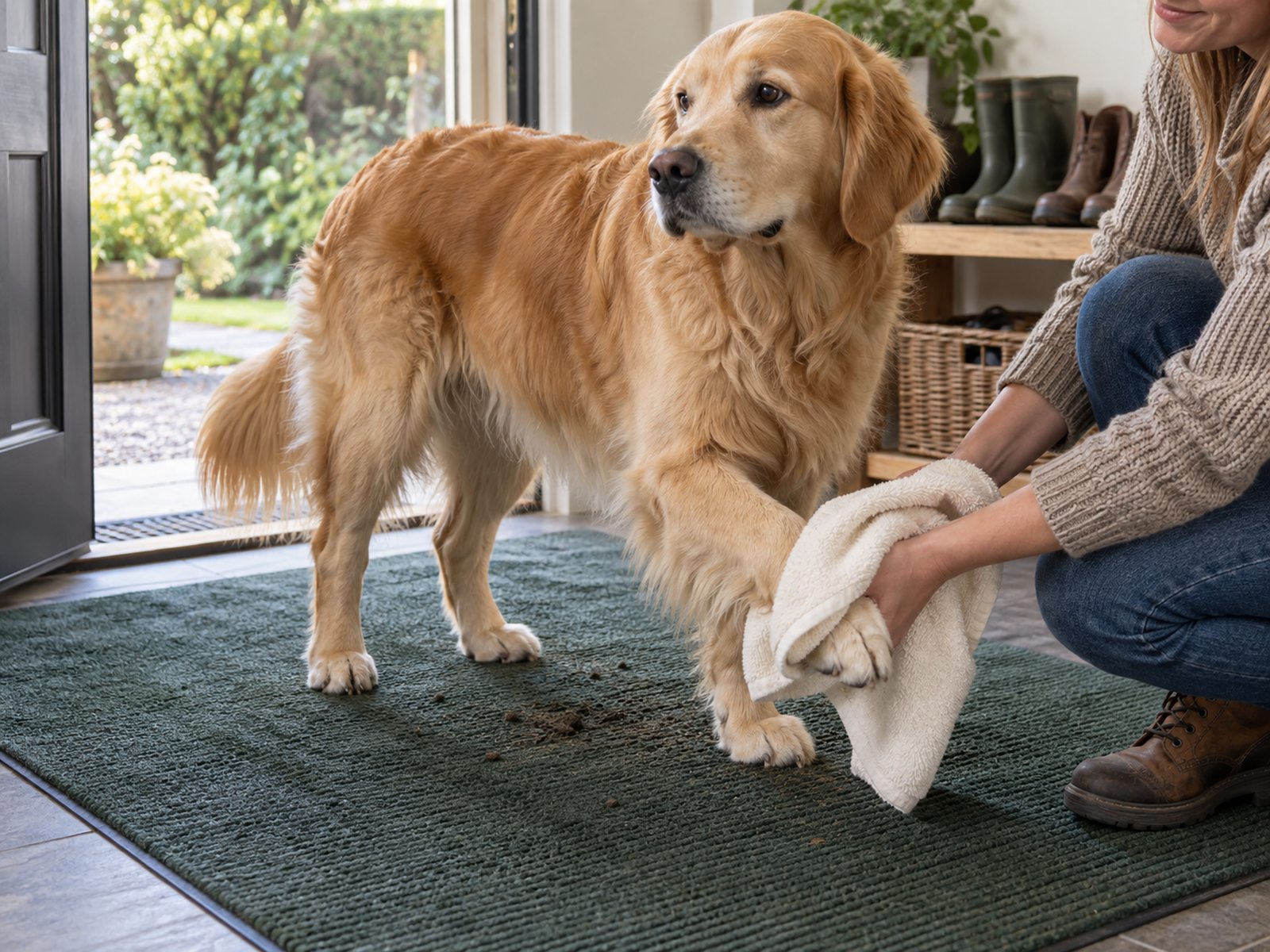
| A pavement walk left a little dirt on the paws | Check whether local cleaning removes it | Keep a cloth and towel by the door |
| The lower legs are muddy but the body is clean | Clean the affected areas and dry them | Note whether the usual entryway setup is adequate |
| The dog rolled and dirt is spread across the coat | Plan a complete bath if the dog and coat are comfortable to handle | Leave time for preparation, rinsing, drying, and cleanup |
| A swim left the coat wet | Rinse with clean water and dry thoroughly; assess whether dirt remains | Check how you will dry the deeper coat |
| A grooming appointment is approaching but the dog is clean | Ask whether an extra home bath serves any purpose | Coordinate with the person doing the coat work |
| Strong odor returns quickly, or itching and redness appear | Call the veterinarian instead of repeatedly washing | Record the timing, affected area, and products used |
| Tight mats or pain make handling difficult | Arrange professional assessment before bathing | Explain where touching or combing becomes uncomfortable |
The local-cleanup option is supported by the AKC’s discussion of wiping ordinary dirt from short coats. The swimming advice follows Cornell’s hot-spot prevention guidance, which explains why moisture held in a thick or matted coat deserves attention. Neither option means ignoring dirt or discomfort between full baths.
A Bath Plan That Includes the Drying
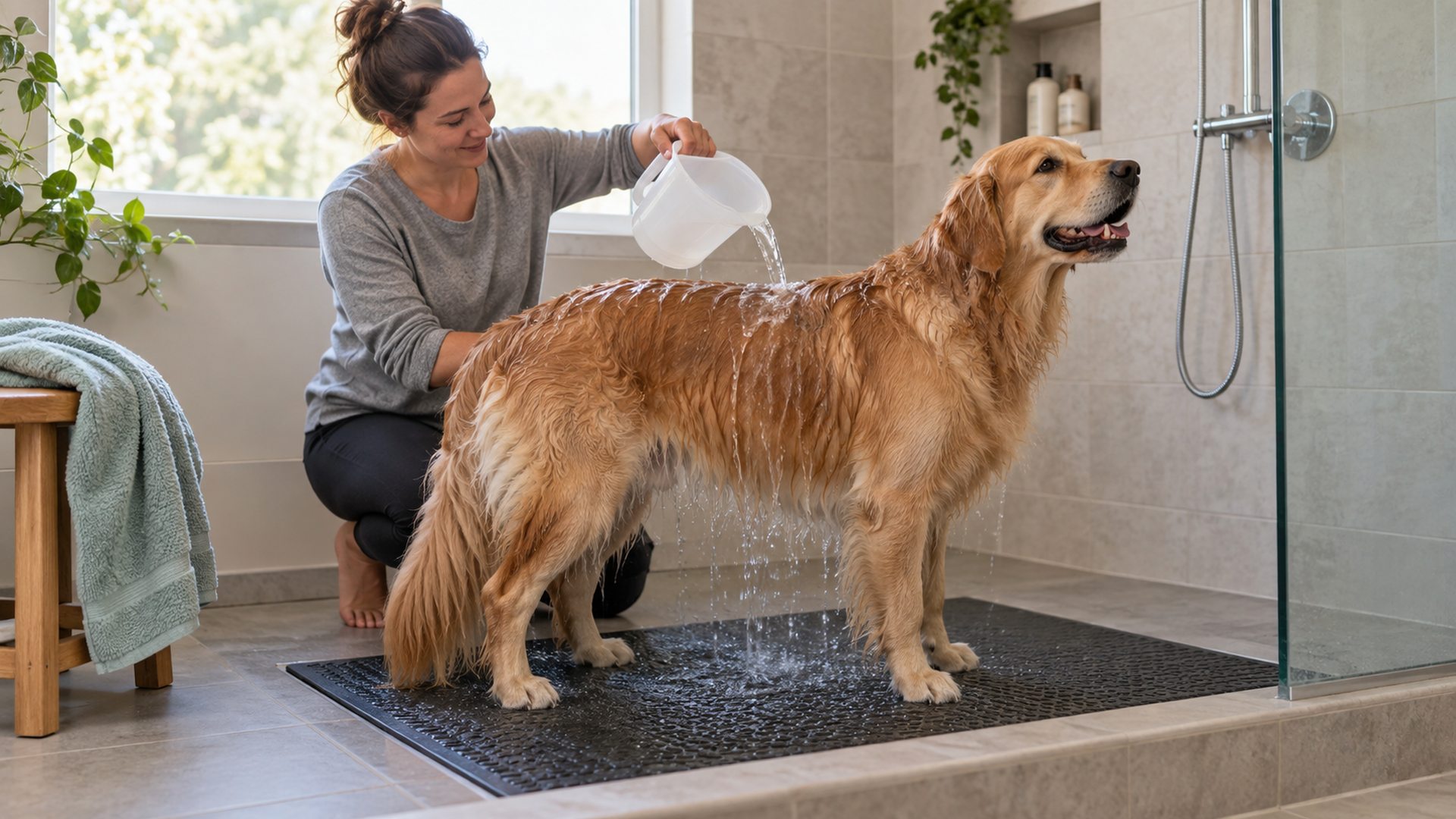
Decide where the wet dog will stand, where clean towels will sit, and how you will reach everything without leaving the dog unattended. A walk-in space may be more workable than lifting a large dog over a high tub edge. If access or handling is difficult, ask a groomer about a suitable setup before attempting it at home.
Brush out loose debris first. For significant mats, stop and get help; bathing can make tangles harder to manage. VCA advises professional care for extensive tangles and warns against scissors for mat removal. Irritated skin underneath a mat belongs with a veterinarian.
For the wash itself, the ASPCA’s bathing guidance supports lukewarm water, careful protection of the eyes and ears, and thorough drying. Keep water and shampoo away from the face, and use a damp cloth for ordinary facial dirt. Use a dog-formulated shampoo, follow its instructions, and rinse thoroughly. A prescribed shampoo has its own directions; do not borrow another dog’s treatment routine.
Drying belongs in the appointment. Cornell explains that a thick coat that remains wet can contribute to hot-spot risk. Ask your groomer to demonstrate a method suited to your dog’s coat and comfort. Avoid hot airflow, and do not assume a dry-looking surface tells you what is happening underneath. If the available time ends at the final rinse, choose another time or arrange help.
When the Bathroom Itself Is the Problem
Some dogs struggle with the approach to the tub before any water touches them. Cornell’s cooperative-care guidance recommends small, rewarded experiences below the dog’s stress threshold, with breaks when the dog becomes uncomfortable.
Practice on a day when cleaning is not urgent. Let the dog investigate the space and equipment, reward easy participation, and finish while things are going well. A first session might involve only approaching a dry mat. Add handling and equipment gradually, without requiring every session to end in a bath.
Freezing, pulling away, or repeated attempts to escape are reasons to pause. If necessary care cannot be completed comfortably, consult your veterinarian and a qualified reward-based trainer or an appropriate groomer. Forcing the whole job through can make the next visit harder. A dog who suddenly objects to previously comfortable handling also deserves a check for pain.
Make a Care Record You Will Actually Use
Try one shared phone note so everyone in the household can see the last cleanup. The following example is fictional; its entries illustrate decisions, not a recommended bathing interval.
| Entry | Example note | Why it helps next time |
|---|---|---|
| Reason | Mud on lower legs after the park | Separates outdoor mess from unexplained odor |
| Action | Legs rinsed and dried; no full bath | Prevents a second caregiver repeating the job unnecessarily |
| Product | Water only; list the exact shampoo when one is used | Gives the groomer or vet something specific to review |
| Handling | Comfortable on the mat; worried by running water | Identifies the next small practice step |
| Follow-up | Coat dry; no new concern noticed | Prompts a check after cleanup, not just during it |
For a full bath, add how long preparation and drying took. Use your own figures to reserve enough time next time. If a professional groom was needed, record the actual local charge and what it included. Put that expense into the Dog Cost Calculator; generic breed estimates cannot know the condition of your dog’s coat or your local prices.
Pros and Cons of Bathing at Home
| Potential advantage | Practical limitation |
|---|---|
| You can deal with ordinary mess without waiting for an appointment | The bathroom, access, and footing must suit the dog |
| Familiar handling can be practiced in small steps | Familiar surroundings do not guarantee a comfortable dog |
| You can track the products and routine closely | Coat problems or recurring symptoms still need professional advice |
| You may reduce paid bathing visits | Equipment, laundry, drying time, and professional coat work remain costs |
Home bathing fits an owner with suitable space, enough time, and a dog whose routine care is manageable there. It is a poor choice as a solo project when lifting is unsafe, the dog panics, or mats and skin problems need assessment. Hiring help can be a sensible part of ownership. If you are choosing a dog, use the Dog Fit Score Cards to consider grooming tolerance alongside space and exercise.
When Another Bath Is the Wrong Next Step
New or persistent itching, hair loss, sore skin, discharge, or recurring odor should change the plan. Cornell’s atopic-dermatitis overview describes how scratching, licking, and secondary infections can accompany skin disease. Those signs do not let an owner diagnose an allergy at home.
Contact your veterinarian and bring the care record, including product names and what changed. Ask promptly about painful, wet, or worsening areas. Avoid adding home remedies while trying to identify the cause. For a healthy dog, choose the next bath by the coat in front of you and the routine you can carry out well. When that routine stops working, investigate why.