
Choose between a Whippet and an Italian Greyhound by comparing the care you can provide, starting with their substantial size difference. The Whippet is a medium-sized sighthound; the Italian Greyhound is a fine-boned toy companion. Both need exercise and secure handling. A smaller dog may fit on your lap more easily without fitting your daily routine more easily.
Picture a wet morning: a coat by the door, a lift ride before the toilet area, and a dog reluctant to leave the warm room. That ordinary journey can tell you more about the match than the size of your sofa. This comparison focuses on the decisions to make before bringing either breed home.
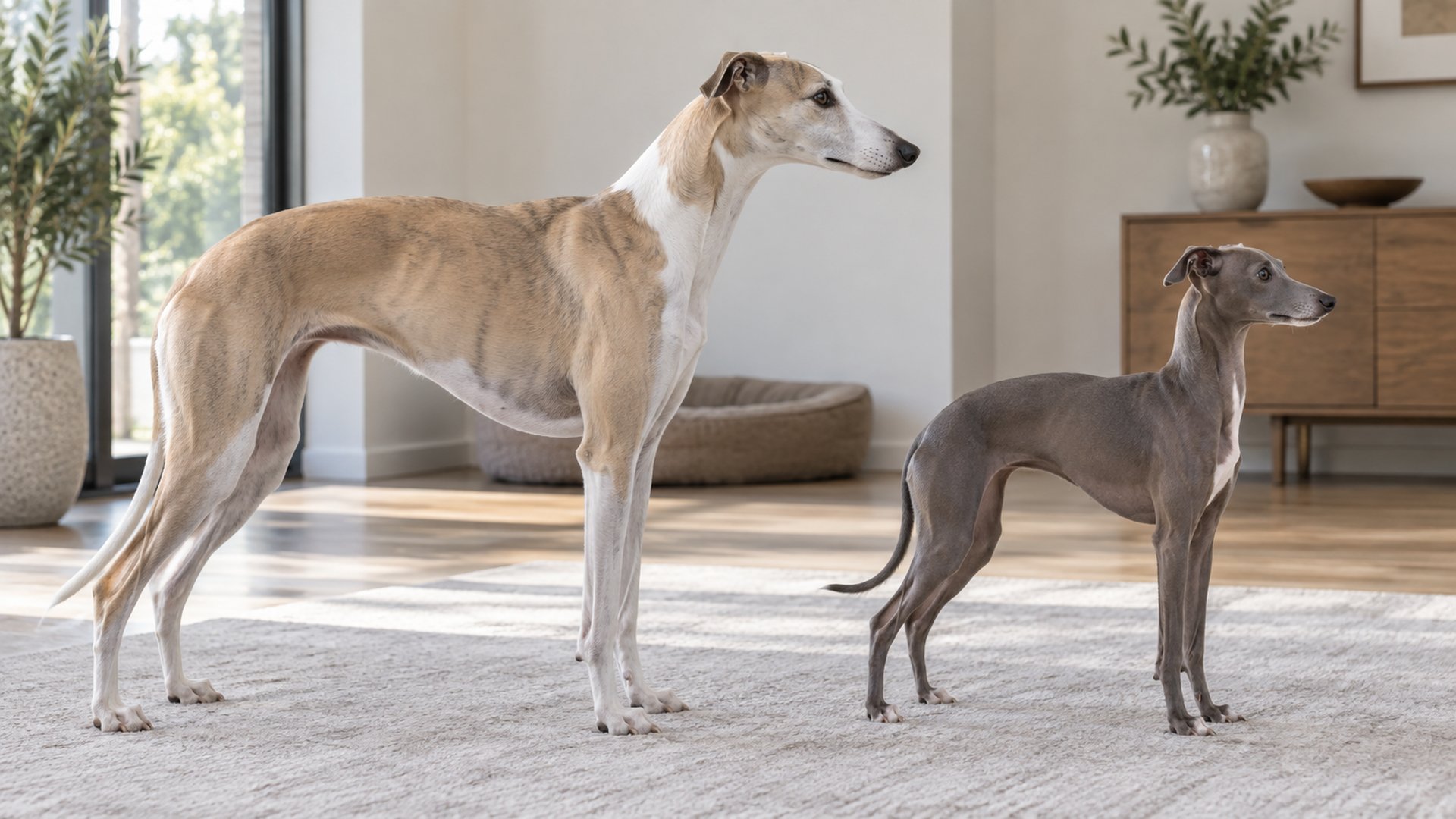
Whippet vs Italian Greyhound Quick Facts
| Decision point | Whippet | Italian Greyhound |
|---|---|---|
| Typical weight in AKC’s comparison | 25-40 lb | 7-14 lb |
| Physical impression | Medium, athletic sighthound | Much smaller, finer-boned sighthound |
| Coat workload | Short coat with relatively little grooming | Short coat; dental care still needs attention |
| Outdoor planning | Secure exercise and cold-weather protection | Secure exercise, weather planning, and careful handling |
| Question before choosing | Can you manage this adult’s size and exercise arrangements? | Can you provide a careful home and consistent toilet routine? |
| Main mistake to avoid | Assuming a relaxed indoor dog has no chase risk | Assuming a toy dog needs little training or activity |
The weight ranges come from AKC’s breed comparison; they describe typical dogs, not a promise about a puppy’s adult size. Both breeds can be affectionate, playful companions. Meet adults instead of comparing isolated puppy photographs, where scale is easy to misread.
Size Changes Handling More Than Floor Space
An Italian Greyhound is easier for many adults to lift, but carrying is a skill and responsibility. Before choosing, ask someone experienced with the breed to demonstrate supported handling. Consider who would lift the dog into a vehicle or help after a veterinary procedure. A lightweight dog still needs a confident, careful handler.
With a Whippet, check the practical dimensions of the proposed setup: transport space, bed location, and the route through narrow doors. Use measurements from an adult dog and the equipment you intend to buy. Buying everything from a puppy’s current measurements can lead to an expensive second shopping trip.
Do the same assessment for both breeds rather than awarding the smaller one an automatic apartment advantage. A ground-floor flat with a straightforward toilet route and suitable care arrangements is a different proposition from a high-rise home with long waits for a lift. Address the actual bottleneck before selecting the dog.
The Front-Door-to-Bed Home Check
Walk through this editorial checklist before visiting a breeder or rescue. It is a planning aid, not a validated suitability score. Record a specific change beside each unresolved item; do not turn several weak answers into an average that looks reassuring.
| Place to inspect | Whippet question | Italian Greyhound question | Evidence to collect |
|---|---|---|---|
| Building exit | Can the adult dog stay securely managed while doors open? | Can you manage the dog without relying on hurried lifting? | Rehearse the route with the responsible adult |
| Toilet route | Is access workable at the times this dog needs? | What is the plan during rain or a lift delay? | Ask the current caregiver about the established routine |
| Main living area | Is there room for a quiet bed away from through-traffic? | Are there uncontrolled leaps, slippery routes, or rough play to manage? | Identify the area you can supervise and adapt |
| Exercise destination | Are fencing and gates suitable for free running? | Is the space suitable for a small dog without rough, larger playmates? | Visit the location and check its actual setup |
| Visitor arrival | Who handles the dog while another person opens the door? | Can visitors follow calm handling rules? | Agree on a door routine before collection |
| Workday care | Who provides company, activity, and toilet access? | Who maintains the same routine when you are absent? | Confirm a caregiver who can meet the individual needs |
For example, imagine a household with a small lift, no private garden, and access to a bookable enclosed field. Those facts do not select a breed on their own. The field may solve an exercise problem, while the toilet route still needs work. Price and test both arrangements rather than calling the home suitable because one box is ticked.
The Rainy-Morning Test
The Italian Greyhound Club of America’s breed guidance highlights house-training demands and sensitivity to wet or cold weather. Treat these as preparation topics, not reasons to label a dog stubborn. Ask how a prospective adult toilets now, where, and with what supervision. For a puppy, plan to teach the routine rather than inherit it.
Work through one morning on paper. Where are the leash and weather-appropriate coat? Who takes the dog out while breakfast is being prepared? If the first outing is unsuccessful, who can supervise and offer another opportunity? The aim is to find the part of the routine that currently depends on wishful thinking.
VCA’s housetraining guidance emphasizes supervision, consistent toilet opportunities, and positive reinforcement. It also describes designated indoor toilet areas as an option. If you need that arrangement, discuss a consistent setup with a qualified reward-based trainer rather than switching locations unpredictably. An indoor toilet does not replace exercise or companionship.
A Whippet needs the same basic teaching and access; choosing one is not a shortcut around puppy supervision. New or persistent accidents, particularly in a previously reliable dog, should be discussed with a veterinarian. Do not assume the cause is breed personality or punish the dog for a care or health problem.
Plan Exercise Around Fences, Not Confidence
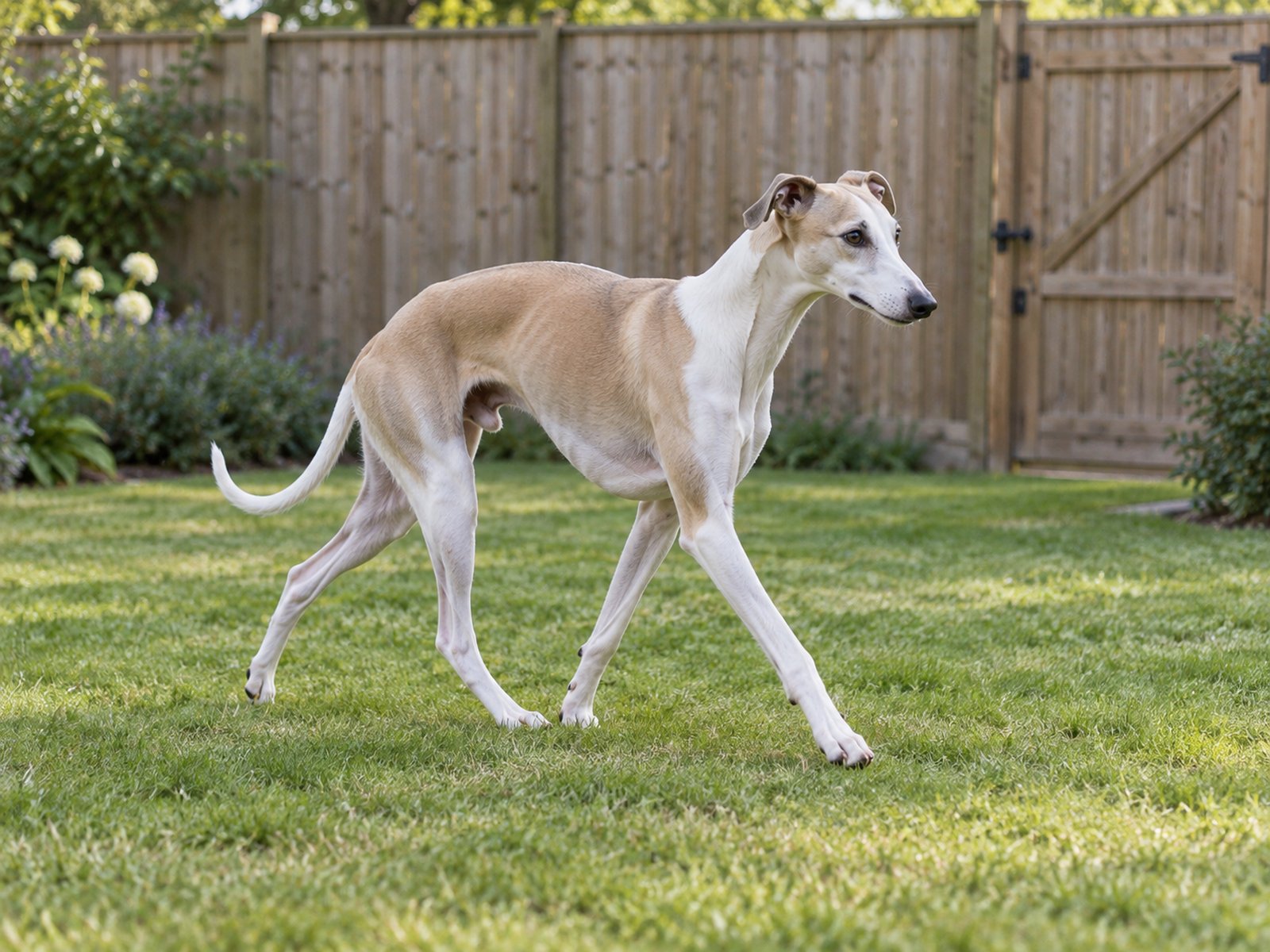
The American Whippet Club recommends a leash or safely fenced exercise area and advises against buried electric fencing. The Italian Greyhound club likewise cautions against off-leash activity in unfenced places. A dog can be attentive during practice and still respond to an unexpected moving animal.
Before committing, visit the place you intend to use. Check physical boundaries, gate closure, sharp obstacles, and who else shares the space. A field advertised as enclosed still needs your inspection. Ask the operator about arrangements for entering and leaving without another dog coming through the gate.
Plan walks, play, and rest around the dog’s age, health, and comfort, with veterinary advice when needed. There is no need to promise daily maximum-speed running or impose one exercise duration on every individual. A smaller sighthound still deserves activity; a larger one still needs opportunities to rest.
Children, Playmates, and the Sofa Deserve Separate Decisions
The Italian Greyhound club cautions that its fine-boned breed may be unsuitable for households with very young or boisterous children or large, active dogs. That is a meaningful limit when the proposed plan depends on rough group play. A Whippet’s extra size does not establish that a particular child-dog or dog-dog match is safe.
Ask the breeder or rescue to discuss your actual household: children’s ages, visiting dogs, busy evenings, and who can supervise. Arrange a protected resting area and prevent interactions you cannot manage. If the adults disagree about handling or supervision, settle those responsibilities before choosing either breed.
For an Italian Greyhound, discuss furniture access and injury prevention with the caregiver and veterinarian. The club’s health guidance specifically calls for monitoring adventurous young dogs. Avoid turning caution into a life without movement; ask how to provide appropriate activity safely. Limping or pain after a fall needs veterinary attention.
Easy Coats Do Not Mean an Empty Care Budget
The Italian Greyhound Rescue Charity’s care guidance recommends daily toothbrushing with suitable canine toothpaste. Have your veterinarian demonstrate appropriate dental care and assess the dog’s needs. A smooth coat makes brushing simpler, but it tells you little about the future veterinary bill.
Compare health records as well as appearances. The Whippet Health Foundation’s screening guidance includes eye, cardiac, and hearing examinations. The Italian Greyhound club recommends patella, thyroid, and eye evaluations, with additional tests for breeders. Ask for the actual dated results relevant to the parents and discuss them with a veterinarian. Screening reduces uncertainty; it cannot guarantee a healthy puppy.
Use the Dog Cost Calculator to build two separate plans. Replace general estimates with quotes for the individual dog’s care, equipment, and any paid exercise space or daytime help. Keep one-time purchases separate from recurring expenses. Smaller food portions cannot settle a comparison that also includes dental care and support while you work.
Pros and Cons for Different Households
| Starting preference | Potential advantage | Trade-off to accept |
|---|---|---|
| Whippet | A medium-sized companion with a simple coat | Larger equipment and transport needs; secure exercise still matters |
| Italian Greyhound | A very small companion that many adults can carry comfortably | Careful handling, toilet planning, and attention to household hazards |
| Either breed | A short coat and an appealing sighthound build | Neither appearance nor size predicts the individual’s care needs |
| Neither yet | Time to resolve a missing caregiver or unsafe exercise arrangement | Postponing collection while you make the plan workable |
A Whippet is worth exploring if you want a medium dog and can meet the individual exercise and care requirements. An Italian Greyhound is worth exploring if you specifically want a toy sighthound and welcome the handling and routine involved. Neither is a good choice when the plan relies on unsupervised rough play, open-park freedom, or a puppy needing almost no daytime attention.
Read our Whippet guide and Italian Greyhound guide for more breed context. The Dog Fit Score Cards can organize broader preferences; bring the home checklist to the matching conversation so those preferences meet real observations about the dog.
Make the Choice in Your Own Doorway
Before choosing, confirm three things: the daily toilet route, a suitable exercise arrangement, and who can provide care when you cannot. Then meet adult dogs and ask the caregiver to describe an ordinary day. The better match is the dog whose needs you can accommodate consistently, including on the wet morning when leaving the sofa looks least appealing.