
A Basenji can be an affectionate, engaging housemate for someone who enjoys an independent dog and can provide secure exercise every day. Its short coat and reputation for being barkless make it look easier than it is. Before picturing those curled tails on your sofa, picture your front door during a grocery delivery: who holds the dog, who opens the door, and where does the dog wait? That small piece of household planning matters as much as the breed’s appearance.
This Basenji breed guide focuses on the decisions behind a workable home: noise, containment, time alone, training, and what to ask before taking responsibility for one.
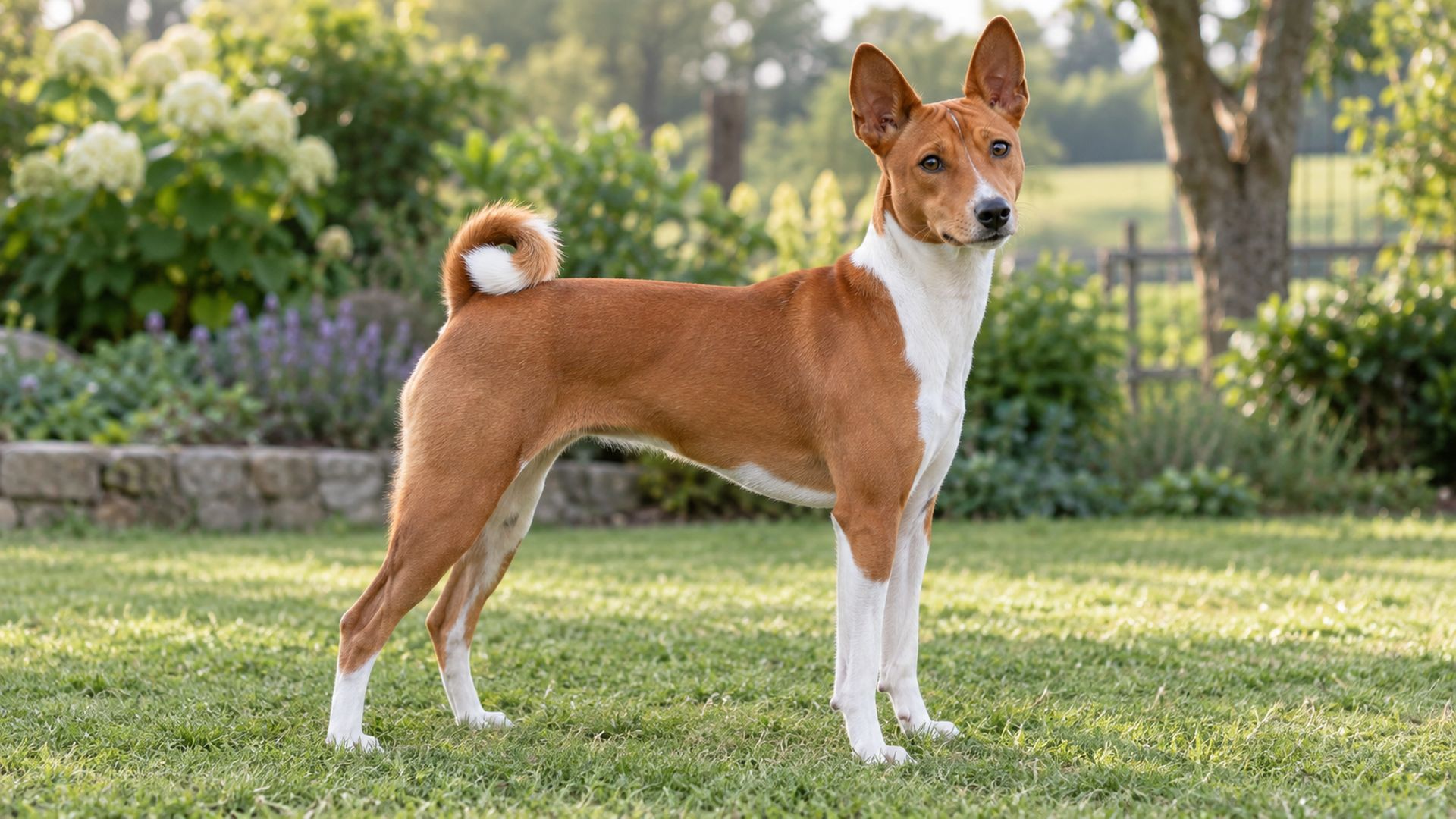
Basenji Quick Facts
| Trait | What to Expect |
|---|---|
| Background | Small hunting hound from Central Africa, using sight and scent |
| Standard size | Ideally about 16 inches and 22 pounds for females; 17 inches and 24 pounds for males |
| Appearance | Fine short coat, erect ears, forehead wrinkles, and a high curled tail |
| Temperament | Independent, alert, affectionate with familiar people; may be reserved with strangers |
| Exercise | Daily activity and opportunities to explore safely; requirements vary with age and health |
| Coat care | Modest brushing and bathing needs, plus routine nails and dental care |
| Ownership pressure | Secure exits, chase management, patient training, and documented health screening |
Size figures describe the AKC breed standard, not a target weight for every individual. Your veterinarian should assess your dog’s body condition.
Barkless Still Leaves Room for a Loud Housemate
The Basenji Club of America’s breed introduction describes yodeling, whining, growling, and screaming. A quiet visit with an adult dog cannot tell you exactly how a puppy will sound when excited or alone.
For an apartment, ask practical questions before treating the breed as a noise solution. Can you arrange daytime care during the settling-in period? Is the main entrance a busy shared hallway? Can the dog rest away from passing feet and door activity? A small floor plan may be manageable; a schedule with no room to respond to problems is harder.
When meeting an available adult, ask its current caregiver about departures, visitors, and the times it becomes vocal. Specific examples are more useful than a description such as quiet or catlike. Treat apartment suitability as an individual assessment, not a breed-wide endorsement.
The Front Door and Fence Deserve a Rehearsal
The breed club’s home-safety guide identifies escaping through doors, digging below fences, and climbing as concerns. Inspect the whole boundary, including the space beneath gates. A fence’s height alone does not tell you whether it is secure.
Our practical starting checklist is short:
- Choose a separate, secure room for the dog while deliveries or maintenance visits are happening.
- Walk the garden boundary and check latches, loose panels, digging gaps, and nearby climbing aids.
- Check walking equipment for fit before using it outside; get help if the dog can back out of it.
- Give sitters the same door procedure that household members use.
Practice the handoff before the first busy arrival. Teaching a wait at the door is useful, but keep physical management in place while the door is open. For loose exercise, choose a securely enclosed area. An open park is a poor place to test whether a hunting dog will ignore a passing rabbit.
Exercise That Fits a Hunting Dog’s Interests
The AKC’s Basenji profile emphasizes exercise and the challenge of training an independent hunter. Budget for active involvement each day, with rest between activities. A garden provides space, but your daily plan should also include shared outings and things to learn.
The following is an illustrative routine to adapt with your veterinarian or trainer, not a prescribed exercise quota:
| Part of the day | A useful option | What to watch |
|---|---|---|
| Morning | A leashed walk with time to investigate scents | Routes with room to move away from wildlife |
| Midday | A toilet break and a supervised food-search game | Whether a caregiver is needed during work hours |
| Evening | Another outing or play in a checked enclosure | Fatigue, weather, and the individual dog’s fitness |
| Between outings | A quiet resting place and brief skill practice | Whether the dog can settle comfortably |
Start scent games simply, with part of the measured meal in easy-to-find places while you supervise. Avoid making every activity a race. Puppies, seniors, and dogs with medical concerns need a plan suited to their development or condition, not an adult dog’s exercise schedule.
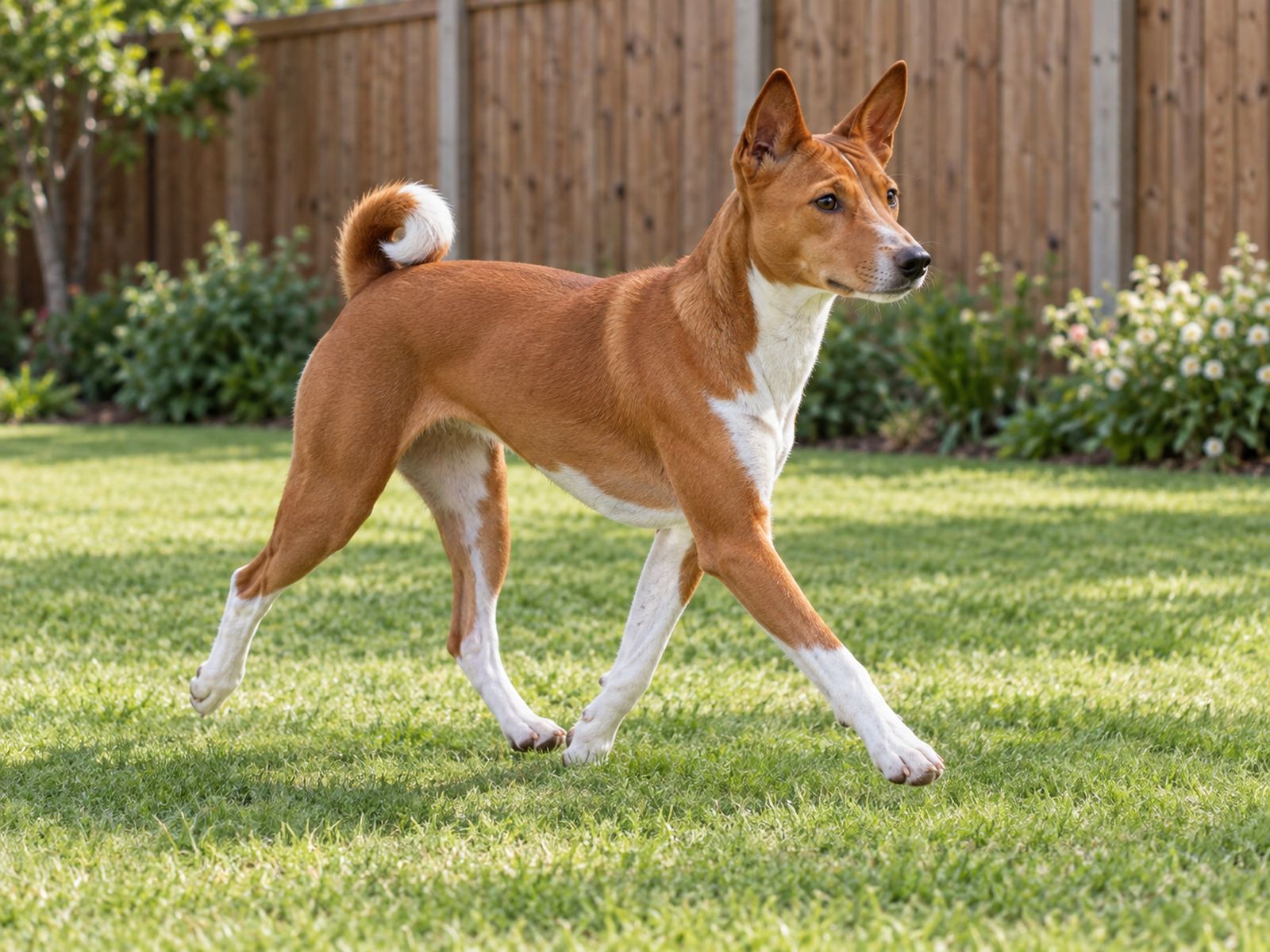
Training an Independent Dog Without a Contest
Independence does not mean a Basenji cannot learn. It does mean that a cue should be taught clearly and practiced at a manageable level. The AVSAB humane-training statement supports reward-based teaching and environmental management.
Begin with skills that make care easier: coming toward you indoors, touching a hand target, moving to a mat, and accepting brief handling. Reward the response you wanted. If the dog struggles, reduce distractions or make the task smaller before trying again. A few successful repetitions give you something to build on.
For example, practice moving to a mat while another adult walks toward a closed front door. Add difficulty gradually. The point is to teach a useful action before a real delivery creates excitement. If fear, guarding, or aggression appears, consult a veterinarian and a qualified reward-based trainer instead of treating it as stubbornness.
Alone Time Is a Separate Skill
Being independent during training does not establish that a dog is comfortable without company. Cornell’s guidance on anxious behavior recommends gradual practice and an approach matched to the cause of distress.
Begin with brief, manageable absences while you are available to return. Observe how the dog responds, using a camera if helpful. Persistent pacing, vocalizing, or attempts to escape deserve attention. Destruction alone does not diagnose separation anxiety, and a longer walk is not a treatment plan for panic. Seek veterinary or qualified behavioral help if the dog cannot settle or risks injury.
Before adoption, identify who could cover a workday if alone-time training takes longer than expected. A specific caregiver and an affordable backup arrangement are more useful than hoping the dog adjusts by Monday.
Children, Cats, and the Right Individual
Family fit depends on the dog and the household’s ability to manage interactions. Cornell’s dog-bite prevention guidance emphasizes supervision and teaching people appropriate ways to approach dogs. Adults should supervise children actively and provide a resting space where the dog can be left undisturbed. Protect meals and chews from interference.
Ask a breeder or rescue about actual experience with children, handling, and other animals. For a home with cats, distinguish calm familiarity with a particular resident cat from a general claim that the dog is safe around cats. The Basenji’s hunting background calls for careful introductions and separation where needed. Small pets need secure protection from access.
An adult whose habits are known may give you more information for this decision than a puppy. Meet the individual without expecting affection, sociability, or recall to follow automatically from its breed label.
The Easy Coat Still Needs Hands-On Care
The breed club’s grooming guide describes light shedding, with more noticeable seasonal periods, and simple coat care using a grooming mitt. Check the coat regularly and bathe when needed with a suitable dog shampoo. A short coat still leaves hair on fabric.
Make nails and teeth part of the routine. Ask a veterinarian or groomer to demonstrate gentle nail care if you are unsure, and introduce dental handling in small steps. The time saved on clipping a long coat can go toward these less visible jobs. Basenjis are not hypoallergenic; discuss allergy concerns with a clinician before committing to a dog.
Health Records to Read Before You Commit
The Basenji Club of America’s health page highlights Fanconi syndrome and progressive retinal atrophy, including available DNA tests. Fanconi affects kidney handling of nutrients and electrolytes; PRA can cause progressive vision loss. A test for PRA-BJ1 covers one form of PRA, so an individual result does not establish freedom from all eye disease.
Request the parents’ identifiable Fanconi and PRA-BJ1 results, eye examination records, and the hip and thyroid screening discussed by the club. Ask your veterinarian to help interpret the records. A routine puppy examination and parental screening answer different questions.
At home, increased thirst or urination, unexplained weight loss, or changes in vision warrant veterinary advice. These signs have several possible causes; do not diagnose Fanconi from symptoms or start supplements as a precaution. Screening informs a decision but cannot guarantee lifelong health.
Feeding and Costs: Put a Price on Your Actual Schedule
Choose a complete and balanced diet appropriate to life stage, and work with your veterinarian on portions and body condition. Virginia Tech’s veterinary nutrition guidance explains why feeding amounts need adjustment for the individual. Measure food and count training rewards in the daily intake. Avoid selecting a fixed cup amount from breed size alone.
A manageable grooming bill does not make ownership inexpensive. Get local quotes for veterinary care, training, insurance if wanted, daytime help, and boarding. Price any necessary fence or entrance work before paying a deposit. These costs depend on where you live and what your home already provides, so a single worldwide Basenji price would be misleading.
Use the Dog Cost Calculator to compare your current plan with one that includes paid weekday care. Then use the Dog Fit Score Cards to discuss time, household activity, and training expectations. Tool estimates support planning; they do not predict an individual dog’s behavior or medical bills.
Pros and Cons
| Potential advantage | Commitment to weigh |
|---|---|
| Compact size and straightforward coat care | Daily activity and household management still take time |
| Alert, affectionate companionship | Reserve with strangers may require patient introductions |
| An inquisitive dog for owners who enjoy teaching | Independent choices make consistent training worthwhile |
| Little conventional barking | Other vocal sounds can still affect neighbors |
| A distinctive hunting companion | Secure exercise and thoughtful management around small animals |
Is a Basenji Right for You?
A promising home enjoys daily walks, can manage entrances consistently, and has enough flexibility to teach alone time. It also has room in the budget for help when needed. A difficult match is a household choosing primarily for silence, planning long unattended days from arrival, or expecting unrestricted off-leash walks.
Before deciding, write down your morning outing, midday caregiver, door procedure, and backup care arrangement. Leave any unresolved item visible. If the plan only works when everyone is home and nothing interrupts the schedule, keep researching.
Compare the Shiba Inu guide and Whippet guide for other perspectives on independent dogs and chase management. For a Basenji, the strongest reason to proceed is that you want the daily life described here, including the practical work behind that neat coat and curled tail.