
An Australian Cattle Dog can live well without a farm when its owner wants daily training and active companionship. It is a demanding choice if you mainly want an easy dog to fit around an already full schedule. Picture the busiest hour in your home: shoes going on, children heading outside, a delivery at the door. For a dog bred to move cattle, that movement deserves a plan before the puppy arrives.
This Australian Cattle Dog breed guide focuses on the practical question behind the Blue Heeler’s appeal: can you provide useful activity, safe boundaries, and quiet time throughout the week?
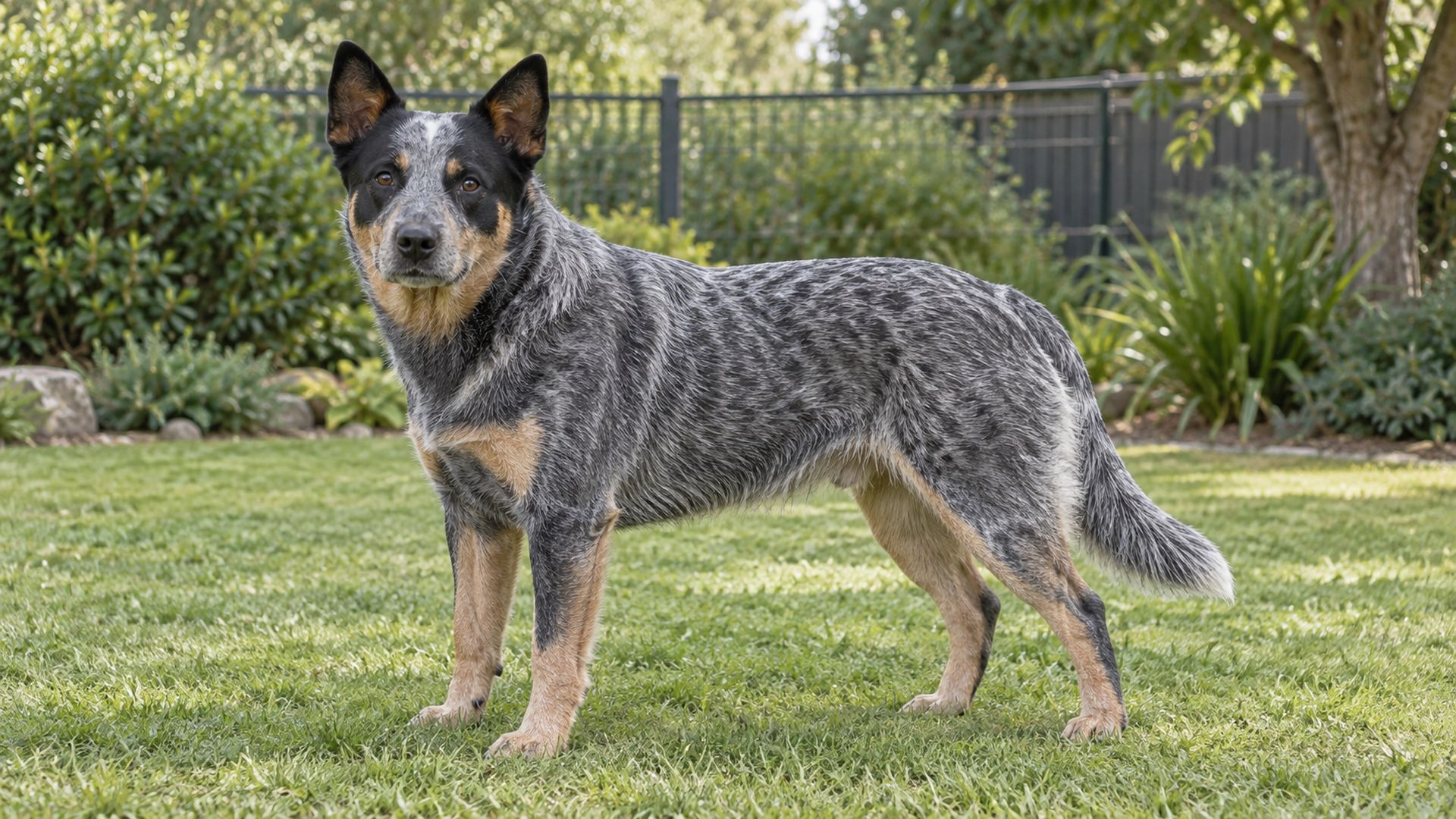
Australian Cattle Dog Quick Facts
| Trait | What to Expect |
|---|---|
| Background | Australian working breed developed to control cattle |
| Other names | Blue Heeler, Red Heeler, Queensland Heeler |
| Standard height | Males about 18–20 inches; females about 17–19 inches at the shoulder |
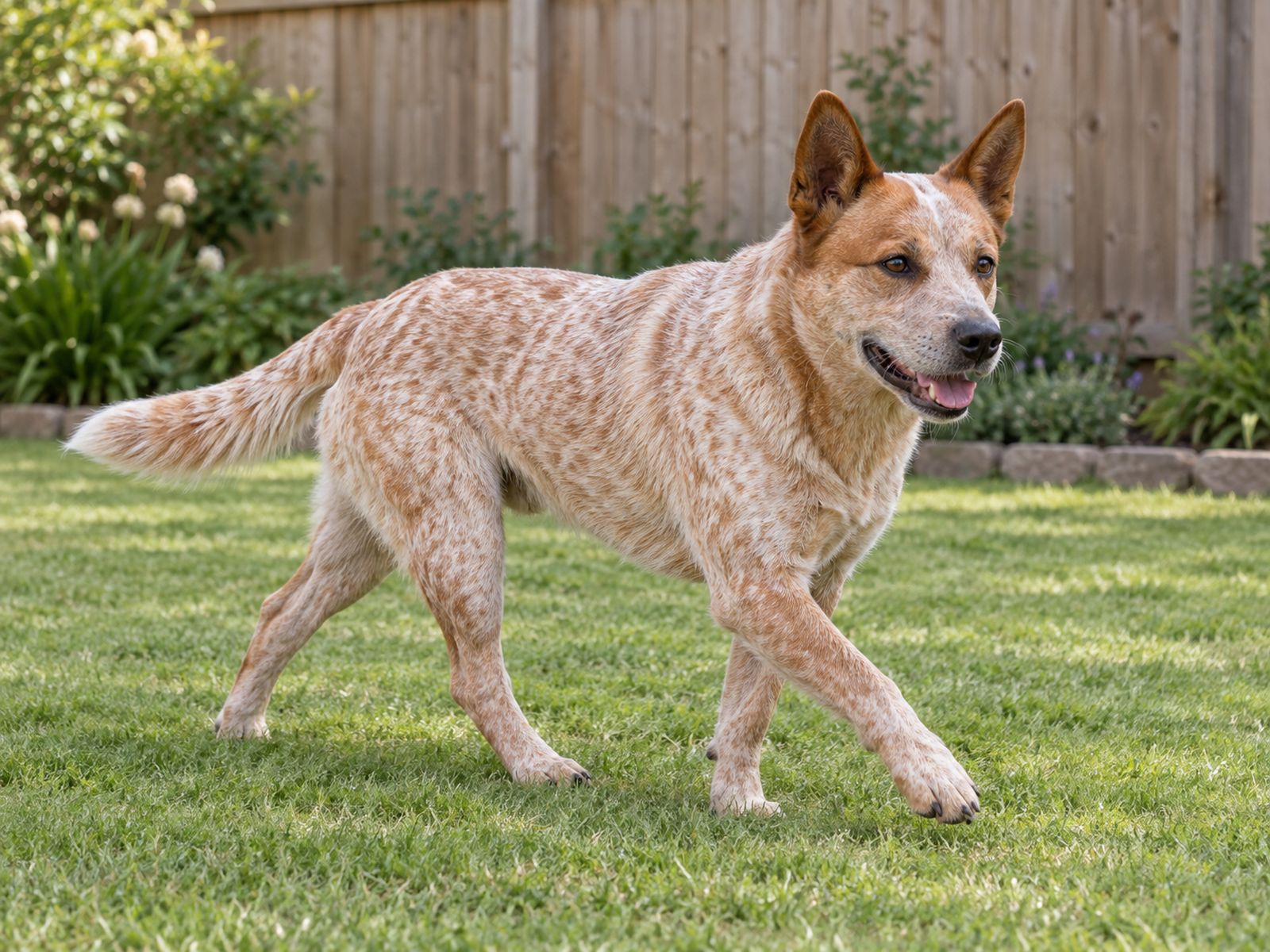
| Build and coat | Compact, muscular body; short double coat; blue or red speckling; natural long tail |
| Temperament | Alert and devoted to familiar people; may be wary of strangers |
| Daily commitment | Physical activity, learning, companionship, and time to rest |
| Main planning concerns | Chasing and nipping, household movement, secure exercise, and health records |
The size and appearance details come from the official breed standard. A standard describes the breed’s intended type, not a promise about an individual dog’s behavior.
A Pet Heeler Needs a Purpose You Can Actually Provide
The breed club’s owner introduction describes a close human bond and a need for physical and mental work. It names activities such as tracking, rally, and obedience as possible outlets. Livestock ownership is not a prerequisite for companionship, but leaving the dog to entertain itself outdoors is a weak starting plan.
Before choosing a sport, check what is available nearby. A class advertised across town is only useful if you can attend it regularly. Ask whether the instructor has experience with herding dogs, how beginners are introduced, and what happens if a dog struggles around other dogs.
You do not need to buy an entire agility course. Start with access: a suitable walking route, a safe place to practice, an instructor you can reach, and a household willing to participate. The expensive equipment can wait until you know which activity you and your dog enjoy.
Chasing Feet Is a Household Safety Issue
The cattle dog’s working history includes moving cattle by heeling. At home, chasing and nipping need early attention. A label such as instinct or play does not make contact with a child’s ankle harmless.
Cornell’s guidance on reactive behavior recommends identifying triggers, avoiding repeated exposure that overwhelms the dog, and working at a comfortable distance. Apply that principle to your home before asking for a difficult response in a busy doorway.
For example, arrange a separate space for the dog before children start an energetic game. On walks, choose routes where you can move away from bicycles or runners. If your dog is lunging or fixating, increase distance and get professional help with a suitable plan. Do not recruit a child to act as a moving training target.
Bring specific observations to a qualified reward-based trainer: what moved, how far away it was, what the dog did, and how long recovery took. Repeated nipping, fear, guarding, or aggression also merits veterinary advice. Those details help a professional distinguish problems that a breed stereotype cannot explain.
Plan Activity, Learning, and Rest as Separate Needs
Exercise matters, but exhaustion is a poor daily objective. Cornell’s advice on ball play highlights injury risks from repeated leaps, abrupt turns, and playing when tired. Mix activities and stop before fatigue makes movement sloppy. Ask your veterinarian about safe progression for running, hiking, or sports; growing puppies need particular care.
Here is an illustrative planning sheet, not a prescribed timetable or exercise minimum:
| Part of the day | What to arrange | The question to answer |
|---|---|---|
| Before work | An outing suited to the dog, plus a brief practice session | Who has time even when the morning starts late? |
| Midday | Toilet access, company, and care as needed | Who covers a delayed return from work? |
| Evening | Another outing or suitable activity | Where can you go when the usual route is crowded? |
| Between activities | A comfortable resting area away from household traffic | Can the dog be left undisturbed there? |
| Weekly | A class or shared activity you can maintain | Does the travel time fit the budget and calendar? |
Write names beside the first two rows. Then plan a version for a wet day and one for a week when you are unwell. If every backup depends on the same busy person, the plan still has a gap.
Teach Useful Responses Before Adding Distractions
The AVSAB humane-training statement supports teaching with rewards and managing the environment. The cattle dog’s determination does not justify painful corrections or a contest over dominance.
Useful starting skills include coming toward you indoors, walking with a loose leash, going to a mat, and accepting gentle handling. Teach each in an easy setting, reward a successful response, and increase difficulty gradually. Going to a mat in an empty room is a different challenge from doing it while guests arrive.
Choose a small set of cues everyone will use. Write down what each cue means so one person is not rewarding a behavior another person keeps changing. A shared vocabulary is free, and it gives your instructor a clearer picture when something needs adjusting. Seek professional support when safety or distress is involved.
Family Fit Depends on the Busiest Moments
Cornell’s child-and-dog safety guidance emphasizes adult supervision, protected meals and rest, and avoiding games that provoke chasing. Children need space to behave like children without being responsible for controlling the dog.
Consider your actual household traffic. Where will the dog be during a birthday party? Can adults separate dog play from children’s running games? Is there a quiet retreat visitors will respect? If separation is impractical, enthusiasm for an active breed may not be enough to make the setup workable.
For cats or other dogs, request an account of the individual dog’s previous interactions. A friendly meeting gives limited information about sharing food, resting places, or fast-moving play. Arrange introductions with appropriate guidance and keep animals separated when safety is uncertain. A rescue adult with a documented household history may offer more useful information than predictions about a young puppy.
Apartment Life and Alone Time Need Different Checks
A garden is convenient, but an apartment decision also involves hallway traffic, barking, and easy access to outdoor space. Walk the route from your door to the street at the time you would normally leave. Note narrow passages, busy lifts, and places where moving away from another dog would be difficult.
Then assess your absence schedule separately. Cornell’s anxious-behavior overview explains that pacing, vocalizing, and destruction can accompany distress and require attention to the cause. Gradual practice and observation are more informative than assuming an active dog will sleep through a workday after exercise. Seek veterinary help if the dog cannot settle or attempts to escape.
Before committing, identify a caregiver who can handle the actual dog. Ask about availability, introductions, and individual walks. A care plan based entirely on group daycare may fail if that environment does not suit your dog.
Short-Coat Care Still Includes Shedding
DOGS NSW’s breed profile describes straightforward brushing and bathing as needed, with seasonal coat shedding. Expect loose hair on clothes and furniture. The short coat reduces grooming complexity, but it does not remove routine care.
Set aside time for brushing, nail checks, and dental care. Ask your veterinarian or groomer to demonstrate handling if you are unsure. Practice gently before a paw or ear needs attention. Keep the brush and suitable supplies somewhere convenient; a routine that requires searching three cupboards is easy to postpone.
Read the Health Results Behind the Puppy Advertisement
The ACDCA’s screening guidance lists hip and elbow evaluations, specialist eye examinations, DNA tests for prcd-PRA and primary lens luxation, and BAER hearing testing. PRA affects vision; lens luxation involves displacement of the eye’s lens. BAER assesses hearing in each ear, including in puppies.
Request identifiable parental records and ask about the puppy’s own hearing result. Check dates and identities, then ask your veterinarian to interpret them. A DNA panel does not replace joint evaluations, hearing testing, or an eye examination.
The OFA explains CHIC numbers as confirmation that required testing was completed and results made public, not that every result was normal. Read the results themselves. Neither screening nor a routine puppy examination guarantees lifelong health.
Arrange veterinary assessment for persistent lameness, suspected hearing changes, or vision concerns. Do not dismiss a new reluctance to move or respond as stubbornness.
Budget for Time and Keep Training Food Accounted For
Use a complete and balanced diet appropriate to life stage, with portions adjusted to the individual. Virginia Tech’s nutrition guidance explains why weight, body condition, and activity matter more than a fixed breed-based cup amount. Training treats contribute calories; part of the measured daily food can also serve as rewards. Discuss unexpected weight or appetite changes with your veterinarian.
For costs, collect local quotes instead of relying on a universal Blue Heeler price. List routine veterinary care, food, training, walking or sitting help, boarding, insurance if wanted, and an emergency reserve. Include transport to classes and any gate or fence work. A low grooming bill does little to offset paid care several days a week.
Compare two plans in the Dog Cost Calculator: one using your current availability and another including backup weekday care. Use the Dog Fit Score Cards to discuss time, activity, and household fit. Treat the tools as planning aids, not predictions of behavior or medical bills.
Pros and Cons
| Potential benefit | Commitment to weigh |
|---|---|
| Engaged companion for someone who enjoys training | Daily involvement must survive busy weeks |
| Athletic partner for suitable activities | Fitness and joint-safe progression need attention |
| Close attachment to familiar people | Time alone and visitor routines need preparation |
| Straightforward coat maintenance | Shedding, nails, teeth, and handling remain routine jobs |
| Compact working build | Size does not make chasing or nipping a minor concern |
Is an Australian Cattle Dog Right for You?
A promising owner enjoys the practice as much as the finished skill, has reliable daily care, and can manage household movement calmly. A difficult match is someone choosing for intelligence while hoping training will be brief, or relying on weekend hikes to carry the whole week.
Compare the Australian Shepherd guide and Border Collie guide before settling on a working breed. Ask breeders or rescues about a particular dog’s needs and your actual schedule. You can provide a good home without owning cattle; the decision is whether you want the daily work that comes with this companion.