
The Appenzeller Sennenhund is an athletic Swiss cattle dog with a quick mind, an alert voice, and little patience for an empty routine. It can be an excellent partner for someone who likes training and can provide a job every day. It can also become loud, chasey, and hard to settle when its energy is treated as a problem to tire out once a week. The right decision is about whether your household can give direction to a working dog, not whether you have a garden.
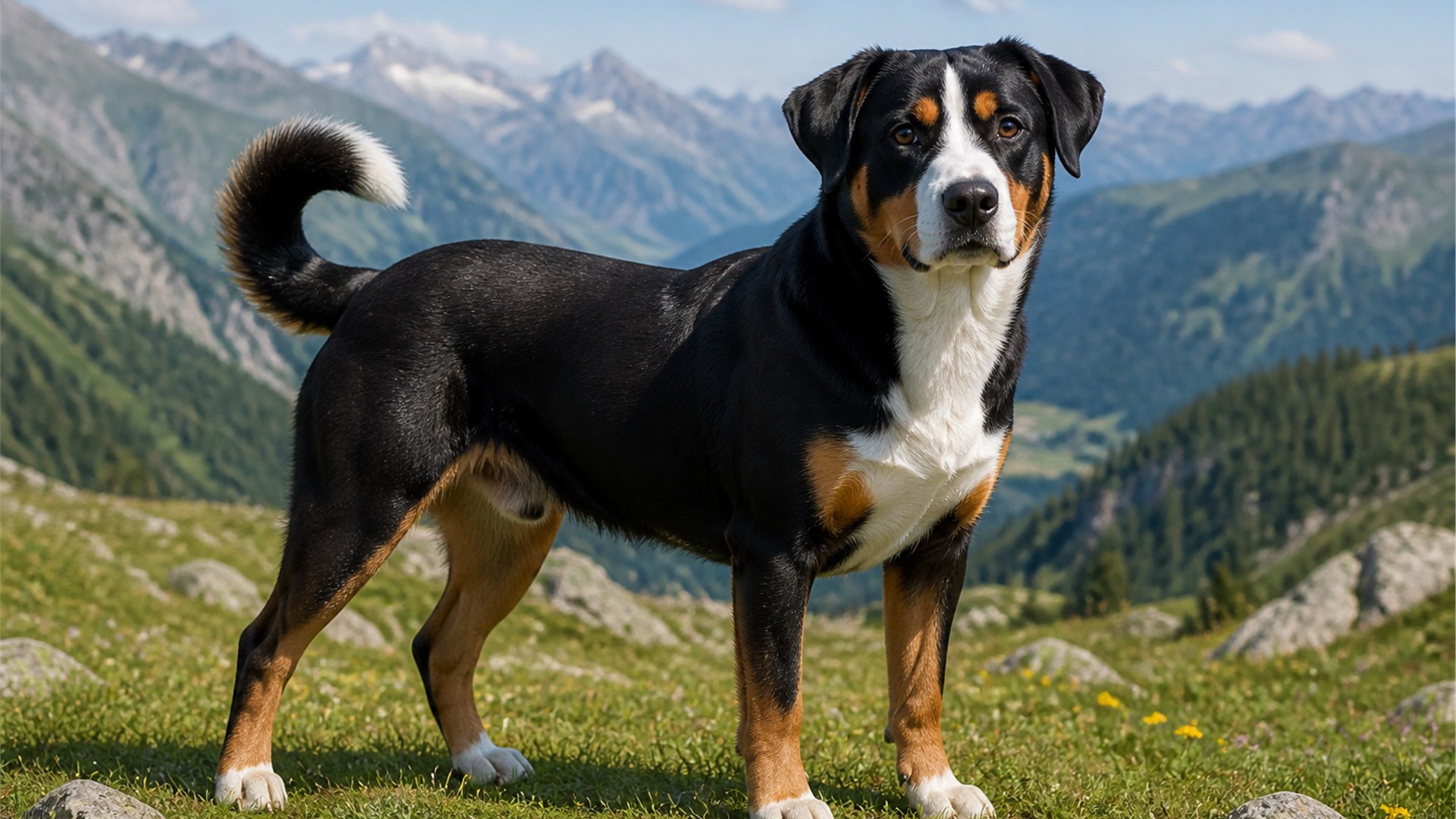
A Cattle Dog Needs More Than Distance
Long walks matter, but pure mileage is not the whole answer. This breed benefits from learning how to think with its owner: a short heel pattern, a hand target, a scent search, controlled tug, a recall, and a release to rest. Vary the work so the dog learns that action has structure and that stopping is also part of the job.
An under-directed cattle dog may watch every moving object, chase children, bark at the window, or patrol the garden. These are not signs of a bad dog. They are signals that the dog has found work without an owner-approved plan. Start impulse-control skills before adolescence, when fast movement and excitement can become self-rewarding habits.
Appenzeller Sennenhund Quick Facts
| Trait | What to Expect |
|---|---|
| Type | Medium Swiss cattle dog with a high activity and alertness level |
| Daily routine | Exercise, skill work, mental challenges, and a consistent settle routine |
| Social style | Often engaged with its household and watchful around change |
| Noise | Alert barking can become a household issue without early management |
| Coat | Short double coat with simple brushing and seasonal shedding |
| Main planning concerns | Chasing, barking, visitor routines, exercise time, and training consistency |
The First Hour Home Sets the Tone
For this breed, the handoff from an active outing to quiet time matters. Teach a mat cue, use food or a chew for calm recovery, and avoid greeting the dog with more excitement every time you return. A dog that learns only action can demand action. A dog that learns a clear on-and-off routine is easier to live with.
Visitor routines deserve the same attention. A barking cattle dog at a door does not need to be introduced to everyone. Put a barrier between the dog and the entry, reward it for moving away from the trigger, and make family members follow the same procedure. This is more effective than scolding after the dog has practiced the behavior for several minutes.
Apartment, House, and Farm Are Different Jobs
Apartment life is possible only for an unusually committed owner with a substantial daily training and exercise schedule, calm shared-entry skills, and neighbors who can tolerate occasional alert noise. Most people will find a house with secure outdoor access easier, but a yard is a management tool, not an answer. Fence-running and constant barking at passersby are not healthy substitutes for a directed walk.
Farm-like or rural settings can offer useful space, yet they also bring vehicles, livestock, and moving equipment. Do not assume herding heritage makes every dog safe around every animal. Introduce environments gradually, use physical management, and get qualified help before allowing a dog to practice chasing or nipping behavior.
Family Rules Should Be Visible
The Appenzeller can enjoy family participation, but adults should take responsibility for training and high-excitement moments. Children need clear rules: do not run screaming through a dog that is already aroused, do not disturb it during rest or meals, and do not handle the dog around gates or traffic. Give children structured ways to help, such as tossing a treat to a mat under adult direction.
Ask breeders about health history and documented screening, then maintain lean body condition and age-appropriate activity. The coat itself is straightforward: regular brushing, nail care, and checks after outdoor work. The larger cost is often time, class support, enrichment, and a plan for professional help when behavior begins to slide.
Common Misconceptions
One myth is that high intelligence means a dog trains itself. A clever dog learns quickly from accidental rewards too, including barking, chasing, and opening opportunities at a door.
Another is that a yard solves exercise. Without owner interaction, a yard can simply become a place to rehearse over-arousal.
The final myth is that herding behavior is harmless fun around children. Chasing and nipping should be redirected early, not accepted because the breed has working ancestry.
Use the dog cost calculator to include training classes, secure equipment, enrichment, grooming basics, and emergency savings. The dog fit score cards help assess working hours, access to safe exercise, visitor traffic, children, other pets, and comfort with a loud alert dog. Compare the Australian Shepherd guide and the Border Collie guide for different ways a working-dog routine can succeed or fail.
Adolescence Is the Time to Tighten the Routine
An energetic adolescent may look as though it has forgotten every useful skill. Treat that period as a reason to lower difficulty and increase consistency, not to abandon the routine. Practice short sessions around manageable distractions, prevent rehearsals of chasing and door rushing, and reward the dog for choosing calm behavior. If pulling, barking, or nipping starts to increase, arrange qualified training support early. Waiting for a working dog to outgrow a practiced habit usually makes the next stage harder.
The Appenzeller Sennenhund Decision
Choose this breed when you actively want to train, can offer physical and mental work most days, and value a dog that has a clear role in family life. Choose another breed if your ideal is a quiet pet that can make do with occasional activity. An Appenzeller Sennenhund thrives with direction; without it, the same enthusiasm can overrun the household.