
The Anglo-Francais de Petite Venerie is a French pack hound whose name can mislead English-speaking readers. “Petite venerie” describes the traditional hunt, not a small companion dog. Daily life with this breed is shaped by endurance, scent, company, and a voice that may carry well beyond a garden fence. It suits a person who wants to organize life around an active hound, not someone attracted mainly by a rare name or a short coat.
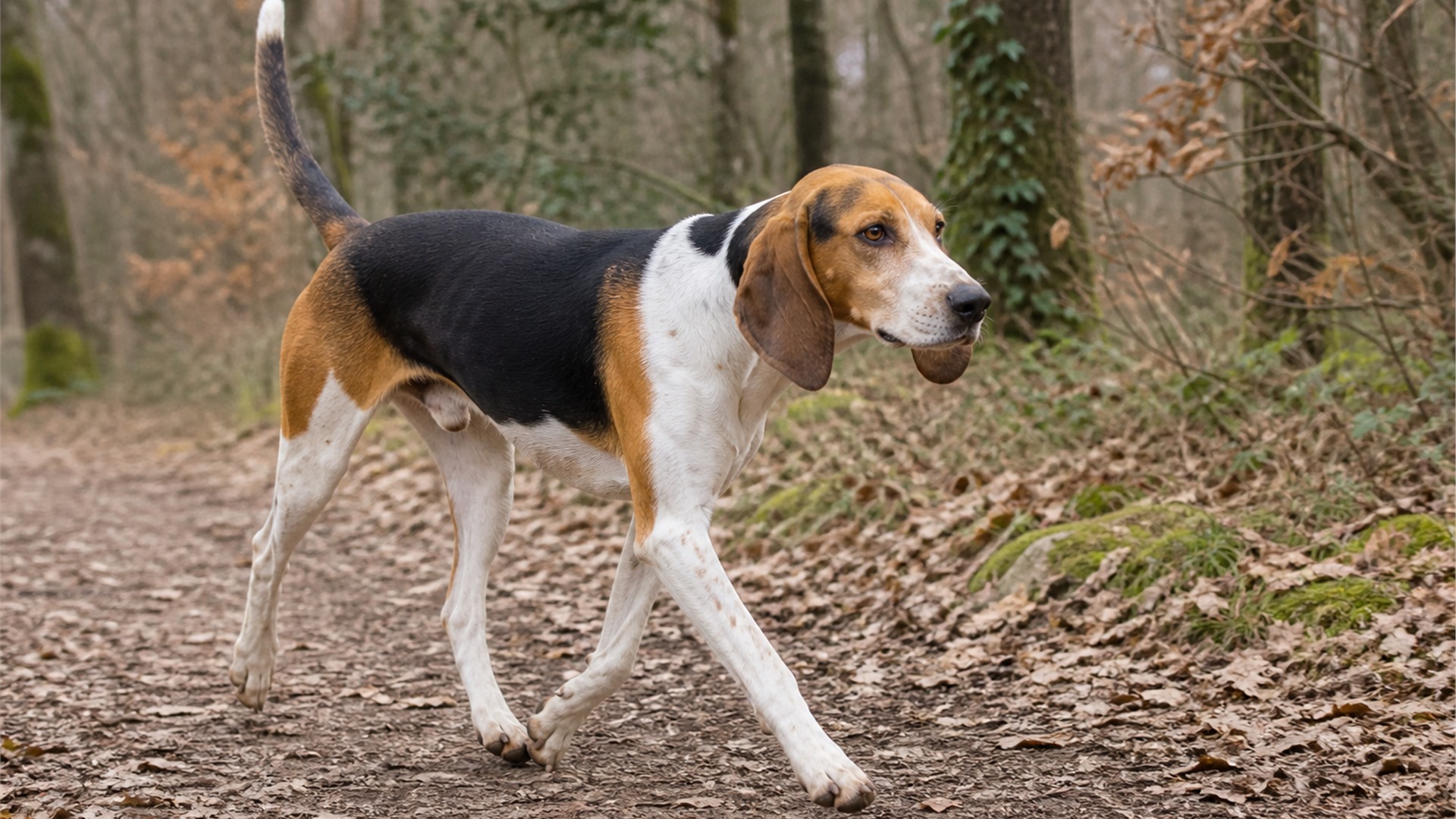
Pack Hound Habits Change the Household
This is a dog developed for coordinated work with other hounds, following scent over distance. That background can make a compatible canine companion appealing, but it does not guarantee easy group living or eliminate the need for introductions, food management, and adult supervision. What it does make clear is that isolation and a few rushed walks are poor substitutes for a structured day.
Plan for steady mileage, controlled sniffing, and a place to recover indoors. A dog that spends all day watching a fence line may invent its own work: tracking wildlife, baying at movement, digging, or attempting to leave. Give the nose a safe outlet through long-line walks, simple tracks, or hidden-food games. Training should build cooperation without pretending that a working hound will make every decision like a retriever.
Anglo-Francais de Petite Venerie Quick Facts
| Trait | What to Expect |
|---|---|
| Type | Medium-to-large French pack hound built for scent and endurance |
| Daily routine | Long walks, controlled tracking, companionship, and calm recovery |
| Noise | Hound vocalization can carry far in dense neighborhoods |
| Recall | Physical management remains necessary around scent and wildlife |
| Coat | Short coat with simple brushing but regular outdoor checks |
| Main planning concerns | Secure boundaries, noise, mileage, small animals, and training time |
Noise Comes Before the Fence Question
A fence matters, but the first housing question is whether neighbors can tolerate a hound voice. Baying can be triggered by scent, another dog’s noise, fence-line activity, or frustration. It is unrealistic to buy a hound and promise a silent neighborhood. Teach an indoor settle, avoid leaving the dog alone outside for long periods, interrupt rising excitement early, and choose a setting with enough space and tolerance for sound.
An apartment makes both sound and distance difficult. Hallways and elevators create close encounters with dogs and people, while shared walls make vocal behavior everybody’s problem. A suburban house may still be a poor fit if gardens are small and neighbors are close. Rural space is easier only when it is securely managed; open land is not a safe alternative to fencing for a dog following scent.
Scent Safety Is a Daily Skill
Hounds can travel quickly and far once they are committed to a trail. Use secure gates, visible identification, a well-fitted harness, and a long line in unenclosed areas. Recall practice is valuable, but it should not be treated as a guarantee. A responsible owner chooses a route where success is possible rather than proving a point near livestock, roads, or wildlife.
The short coat reduces grooming time, not care time. Check feet, ears, and skin after field walks; keep nails maintained; and budget for parasite prevention, secure equipment, training, and a veterinary reserve. Discuss health history and appropriate screening with a breeder, rescue, and veterinarian before selecting a dog. Breed-level notes cannot predict one individual’s health.
Family and Other Pets Need an Honest Plan
An active hound can enjoy a family that spends time outdoors, but children should not handle a strong, excited dog near roads, gates, or food. Teach them to leave the dog alone while resting and to ask an adult before joining a game. Movement can be highly stimulating for a scent-driven dog, so adults set the rules around chase and play.
Cats and smaller animals should never be treated as a simple yes-or-no breed label. Individual history, management, introductions, and physical separation all matter. Start cautiously and keep the arrangement safe when no adult is present.
Three Assumptions to Drop
First, a hound with a short coat is not automatically easy. The coat is easy; the daily work is not.
Second, a large rural property does not create a reliable off-leash dog. It gives a scent hound more directions to leave in unless boundaries are secure.
Third, sociability with other hounds does not mean every dog park or public greeting is a good idea. Calm, neutral behavior is often the safer target.
Use the dog cost calculator to account for fencing, long-line equipment, training, travel, parasite prevention, and emergency care. The dog fit score cards can help assess noise tolerance, safe outdoor access, the presence of small pets, and the time available for purposeful walks. Compare the Basset Hound guide and the Beagle guide for other examples of how scent affects daily decisions.
Boarding and Travel Need a Trial Run
This is not a dog to leave with an unfamiliar carer after a hurried handover. Before a holiday or an emergency, identify a kennel, sitter, or family member who can manage a strong hound on a lead and follow your containment rules. Arrange a short daytime trial, share the feeding and gate routine in writing, and explain that off-leash freedom is not part of the plan. A good backup arrangement protects the dog and prevents a last-minute choice based only on availability.
The Anglo-Francais Decision
This breed belongs with an owner who values outdoor work, can manage a hound’s voice, and treats fencing as safety equipment rather than decoration. It is not a practical choice for a quiet, highly urban lifestyle or for a household that needs effortless off-leash convenience. Give the dog a secure route and a real outlet, and its working qualities become a strength instead of a daily conflict.