
An Affenpinscher can be an excellent small-home companion when you want a sturdy, funny little dog rather than a silent ornament. The breed is compact enough for an apartment, but its terrier confidence shows up in barking, alertness, and a willingness to investigate every noise. The practical question is not whether an Affenpinscher can fit in a small space; it is whether you can give a small dog clear boundaries, safe handling, and enough company to prevent nuisance habits.
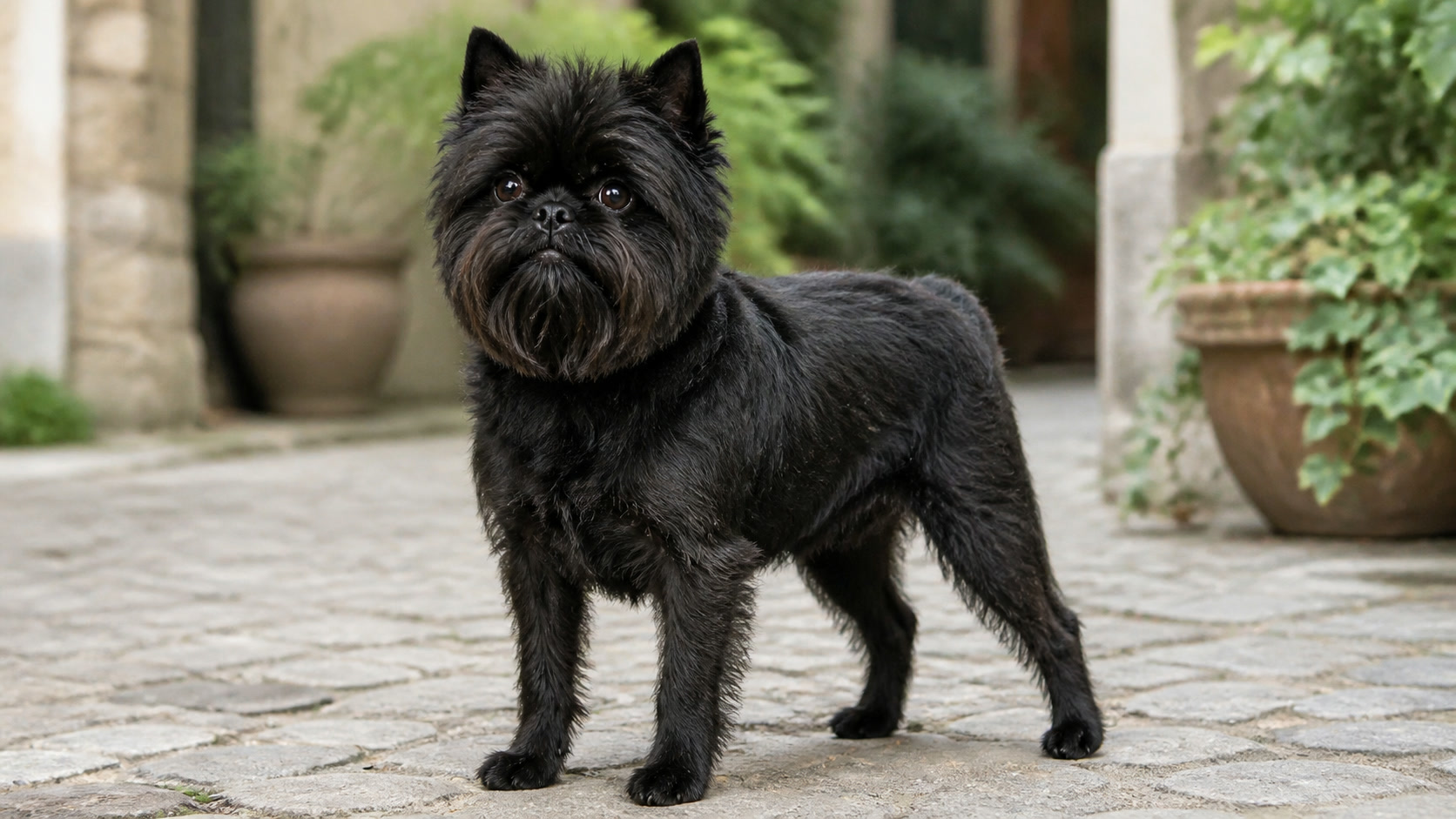
The Affenpinscher Household Test
This is a good match for an owner who enjoys an involved companion, can tolerate some watchdog commentary, and will keep training light but consistent. It is a weaker match for a home with toddlers who grab, a long daily absence, or a desire for a dog that accepts every stranger without an opinion. The Affenpinscher is small, not passive.
Apartment living can work well because the breed does not need a yard to run laps. Still, a thin-walled building changes the decision. A dog that barks at hallway sounds can create more conflict than a larger, quieter dog. Start with door and elevator routines, reward calm observation, and give the dog a predictable place away from the entry.
Affenpinscher Quick Facts
| Trait | What to Expect |
|---|---|
| Size | Small toy companion with a compact, sturdy frame |
| Temperament | Curious, alert, confident, playful, and terrier-like |
| Daily activity | Short walks, play, sniffing, and brief training sessions |
| Coat | Wiry and rough; regular brushing and coat maintenance |
| Noise | Can be vocal when noticing visitors, movement, or unfamiliar sounds |
| Family fit | Best with respectful older children and calm handling |
| Main planning concerns | Dental care, patella screening, eye checks, barking, and safe handling |
The Terrier Brain Behind the Funny Face
The Affenpinscher’s expression makes people expect a toy dog that exists mainly to sit on a lap. In practice, it often behaves like a small terrier with a large sense of responsibility. It may patrol the room, inspect bags, challenge a suspicious noise, or decide that a household object needs immediate investigation. That curiosity is entertaining when guided and exhausting when the dog has no alternative activity.
Training works best when sessions stay short and specific. Teach a hand target, a mat settle, a quiet cue, and a release cue for play. Do not repeat a cue ten times while the dog negotiates. A confident little dog learns quickly that persistence can earn attention, so the owner needs to reward the behavior they actually want.
Coat, Teeth, and Handling Are the Real Routine
The rough coat is not a wash-and-wear coat. Brush often enough to prevent tangles around the legs, beard, and ears, and agree with a groomer on whether the coat will be hand-stripped or clipped. The choice changes texture and maintenance, so it is worth deciding before the first appointment instead of reacting to a mat.
Dental care deserves more attention than the dog’s size suggests. Small mouths can crowd teeth, and a tiny dog with bad breath is not simply being “old.” Ask a veterinarian how to introduce brushing, use a brush that fits the mouth, and keep routine oral checks in the annual-care budget. Nail handling, ear inspection, and being lifted safely should begin when the dog is young.
Three Decisions That Change the Match
Apartment versus house
An apartment is workable if the dog has daily outdoor sniffing, quiet-time training, and a plan for hallway triggers. A house with a yard is not automatically easier. Fences, gates, and windows can become a full-time alarm system if the dog rehearses barking at every passerby. Choose the home where you can control exposure, not merely the one with more square footage.
First-time owner versus experienced owner
A first-time owner can succeed with help from a force-free trainer and a clear routine, but should not mistake the breed’s size for simplicity. An experienced owner may give the dog more freedom, but still needs to protect recall around small animals and prevent “cute” pushy behavior from becoming a household rule.
Children and larger pets
Older children who can sit still, respect a dog’s bed, and follow an adult’s instructions may enjoy the breed. Rough handling is unsafe. Around larger dogs, supervise play because a small, bold dog can misread a bigger dog’s warning and be injured even without malicious intent.
Common Affenpinscher Misconceptions
The first myth is that a tiny dog needs no training. The opposite is often true: clear early habits prevent barking, guarding, and handling battles from becoming difficult once the dog feels established.
The second myth is that low shedding means no grooming. The wiry coat still tangles, and a beard that collects food and moisture needs routine cleaning.
The third myth is that a confident small dog is automatically safe with children. Confidence does not remove fragility. Supervision and gentle interaction remain part of responsible ownership.
Use the dog cost calculator to plan grooming, dental care, training, pet sitting, and an emergency reserve for a small breed. The dog fit score cards help compare apartment noise, child handling, time alone, other pets, and your willingness to maintain a terrier’s boundaries. For a different small-dog temperament, compare the Schnauzer guide and Italian Greyhound guide.
Is an Affenpinscher Right for You?
Choose an Affenpinscher if you want a compact companion with personality, enjoy teaching household manners, and can accept some alert barking and terrier independence. Look elsewhere if you need a completely quiet dog, have very young children who cannot yet handle a small animal gently, or expect a low-maintenance pet simply because it weighs little.
The breed’s appeal is its combination of portability and character. The trade-off is that the owner must take small-dog behavior seriously. A well-managed Affenpinscher can be an easy travel size and a lively home companion; an indulged one can turn every sound, object, and visitor into a personal assignment.
The Affenpinscher Decision
This is a small dog for an attentive owner, not a small amount of dog. Make room for training, teeth, coat care, quiet routines, and careful social exposure. When those pieces are in place, the Affenpinscher offers a distinctive, engaging partnership without requiring a large home or intense athletic schedule.