
The Wirehaired Pointing Griffon, sometimes called the Korthals Griffon after the man who developed it, was bred to be a thinking person’s gundog: a close-working, methodical hunter that points, retrieves on land and from water, and does it all at a deliberate, trackable pace. The look is unmistakable, a steel-and-brown harsh coat, bushy eyebrows, and a full beard and mustache that earn the breed its “supreme gundog” reputation and a slightly comical, dignified expression.
Compared to the flashier, faster pointing breeds, the Griffon is prized for being biddable and people-focused, a hunting dog that genuinely wants to partner with its handler rather than range out of sight. That same trait makes it a warm, affectionate housemate, provided you can meet its substantial need for exercise and companionship. This is a sensitive dog that does not thrive when left out of family life.
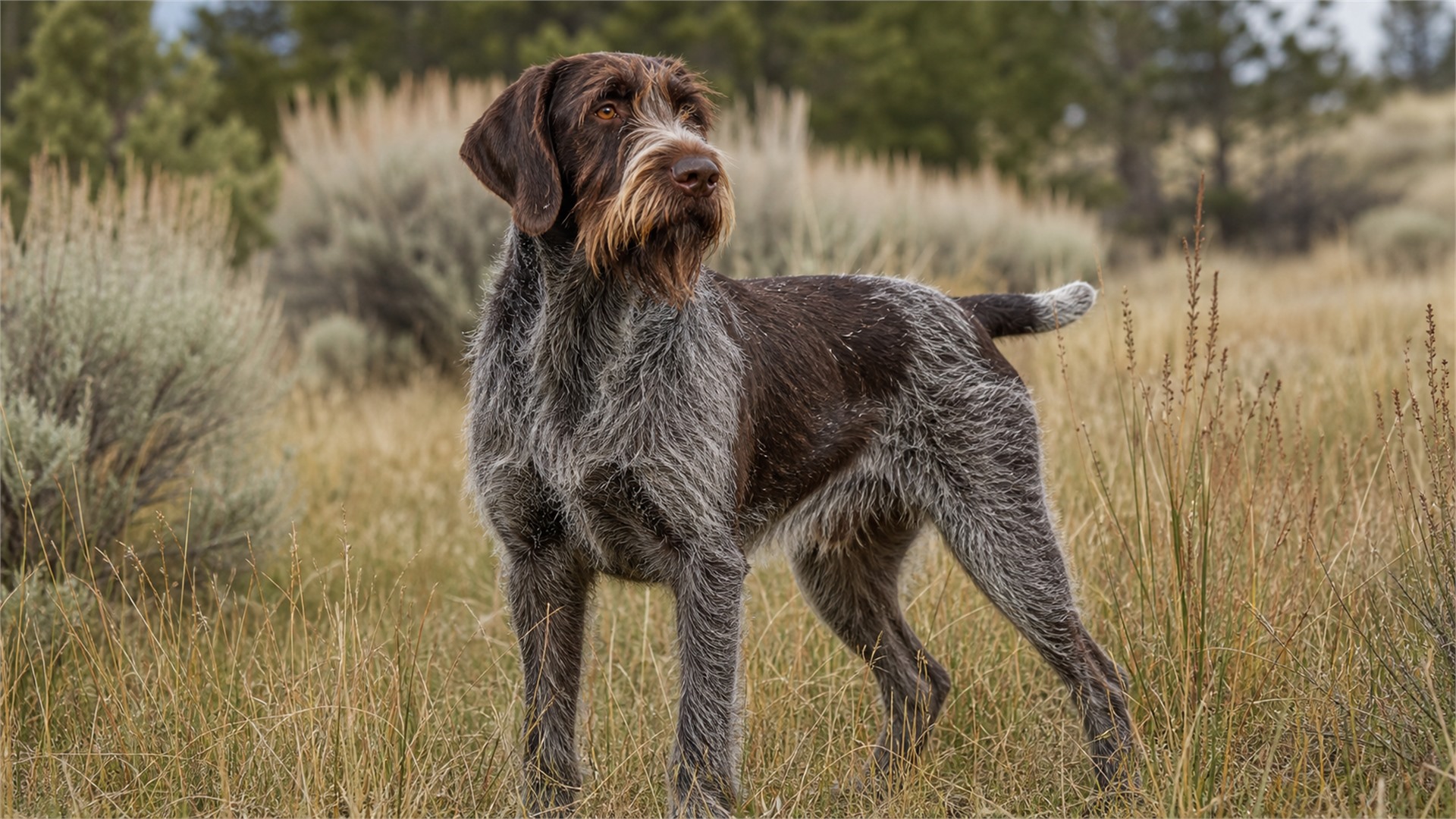
A Gundog That Brings the Outdoors Indoors
| Fit Factor | Score | What It Means | |—|—|—| | Apartment Fit | 2/5 | Possible only with committed exercise, training, and careful neighbor management. | | First-Time Owner Fit | 2/5 | Challenging for new owners unless they have strong support and training plans. | | Family Fit | 3/5 | Can suit the right family when children, space, and routines are managed. | | Exercise Demand | 5/5 | High-drive breed; under-exercise can quickly create behavior problems. | | Grooming Difficulty | 3/5 | Moderate grooming or shedding; plan for regular brushing and basic upkeep. | | Training Difficulty | 4/5 | Can be stubborn, intense, or independent; structure matters. |
Wirehaired Pointing Griffon Quick Facts
| Trait | What to Expect |
|---|---|
| Size | Medium; roughly 35 to 70 pounds, 20 to 24 inches tall |
| Temperament | friendly, biddable, sensitive, eager, and affectionate |
| Energy level | High |
| Exercise needs | one to two hours daily of field work, retrieving, running, and training |
| Grooming needs | weekly brushing of a harsh coat, with periodic hand-stripping |
| Apartment friendly | Possible only with serious daily exercise and a close bond |
| Good with families | Excellent; gentle and devoted with children |
| Common concerns | hip dysplasia, ear infections, hypothyroidism, and bloat in deep-chested dogs |
| Best for | active, outdoorsy owners wanting a close-working companion gundog |
| Not ideal for | sedentary homes or owners away from the dog for long hours |
Wirehaired Pointing Griffon Temperament
The defining word for this breed is biddable. Griffons were bred to hunt close and check in with their handlers, and that cooperative wiring carries straight into home life. They are friendly, gentle, and notably affectionate, often forming intense attachments to their families and preferring to be in the same room as their people.
That devotion comes with sensitivity. Griffons read their handlers closely and do not respond well to harshness; a sharp tone goes a long way, and heavy-handed correction can wound a soft dog and stall its training. They tend to be sociable with people and other dogs and are usually patient and gentle with children, which makes them one of the more family-suited pointing breeds.
The flip side of all that attachment is a low tolerance for isolation. A Griffon left alone too often can grow anxious, and combined with their working energy, that loneliness frequently surfaces as destructive or restless behavior.
How a Wirehaired Pointing Griffon Uses Its Energy
This is a high-stamina gundog, and it needs more than a walk around the block. A Griffon wants vigorous daily exercise that works its nose and body together. Field-style activities, long off-leash rambles in safe areas, fetch, and swimming all play to its hunting heritage and burn energy productively.
A satisfying day for a Griffon often includes:
- A long hike, run, or off-leash outing where the nose can work.
- Retrieving games on land or in water, which the breed loves.
- A training or scent-work session to engage the mind alongside the body.
- Dog sports like agility, tracking, or hunt tests for owners who want structure.
Scale the intensity to the dog’s age and the weather. Growing puppies should avoid repetitive hard impact until their joints mature, and the harsh weatherproof coat handles cold and brush well but still calls for sensible heat precautions in summer. A mentally and physically tired Griffon is a calm, well-mannered companion at home.
Coat Care in a Wirehaired Pointing Griffon Home
The Griffon’s harsh, wiry outer coat over a softer undercoat is genuinely weatherproof, designed to shrug off cold water, thorns, and rough cover. It sheds relatively little, but it is not maintenance-free. Brush weekly to remove loose hair and prevent the beard and leg feathering from tangling, and clean the beard often, since it picks up food, water, and mud.
To keep the coat doing its job, many owners hand-strip it a couple of times a year, plucking out dead hair to make room for the harsh new growth. Clipping is easier but softens the texture over time and reduces the coat’s weatherproofing, so hand-stripping is preferred for dogs that work or show. A groomer experienced with wire coats can do this or teach you.
Other grooming priorities for this breed:
- Clean and dry the drop ears regularly, as they trap moisture and the breed is prone to ear infections.
- Trim nails on a steady schedule.
- Brush teeth several times a week.
- Check the beard, feet, and skin after field outings for burrs and debris.
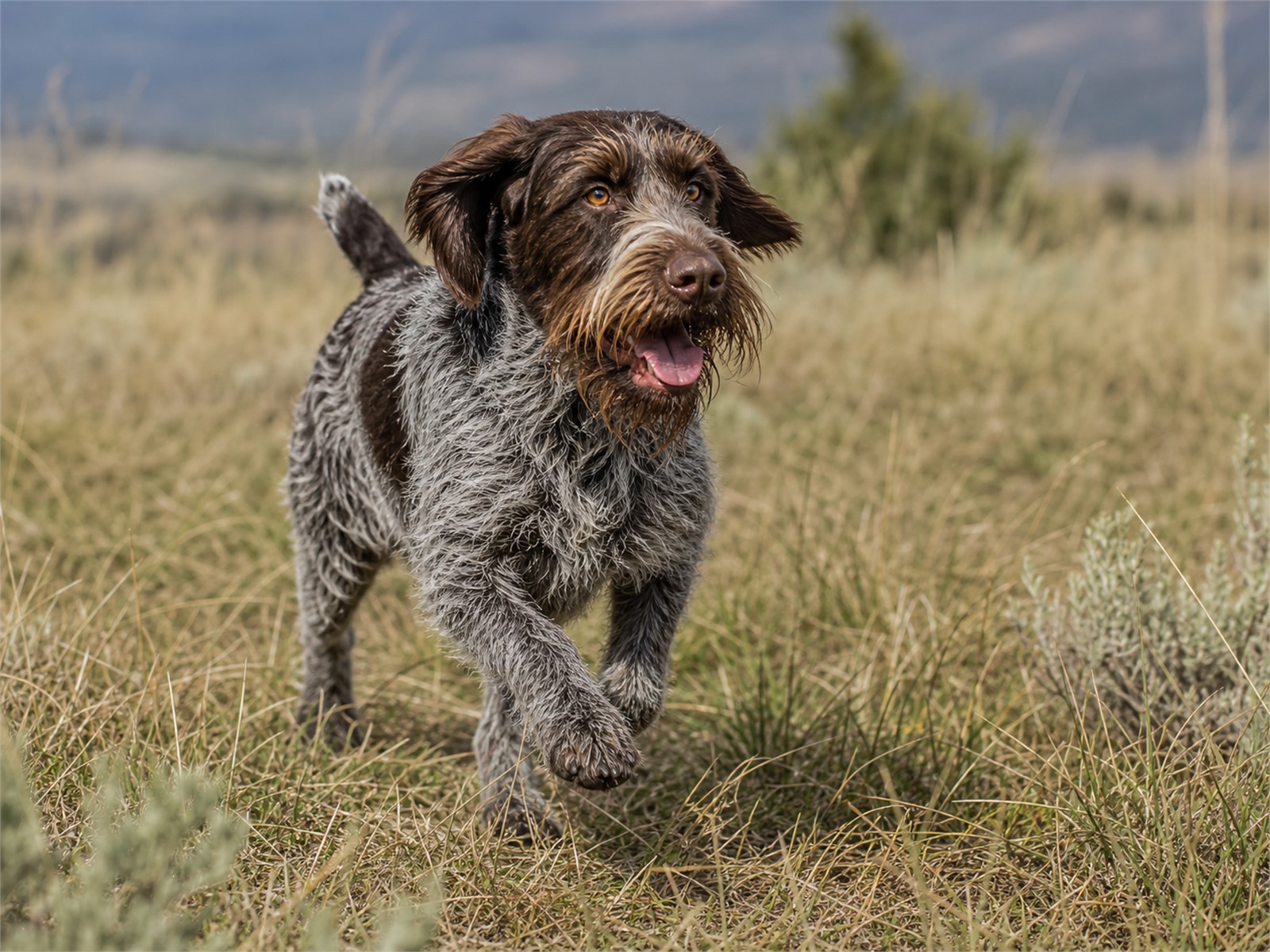
Common Wirehaired Pointing Griffon Health Issues
The Wirehaired Pointing Griffon is generally a sturdy, healthy breed, but a few conditions warrant attention. Hip dysplasia is the most common orthopedic screening concern, and the drop ears make ear infections a recurring practical issue. Hypothyroidism and certain eye conditions appear in some lines, and as a moderately deep-chested breed, the Griffon carries some risk of bloat (gastric dilatation-volvulus), a sudden, life-threatening emergency.
A responsible breeder screens hips and eyes, discusses thyroid history, and can speak knowledgeably about the line’s longevity and temperament. Because the breed values cooperative working ability, good breeders also select for the steady, biddable nature that defines it. Ask to see clearances and meet the parents; a breeder confident in their dogs will welcome the questions.
A distended or painful abdomen with unproductive retching is a bloat emergency requiring immediate care; persistent ear odor, unexplained lethargy with weight gain, or sudden lameness also call for a prompt veterinary visit.
Meals and Body Condition for a Wirehaired Pointing Griffon
A lean Griffon hunts longer, moves more soundly, and lives more comfortably. For a deep-chested breed with some bloat risk, feeding management matters beyond just calories. Feel for the ribs under the coat and look for a clear waist; the wiry coat and feathering can hide a few extra pounds.
Feeding practices that suit this breed:
- Feed two measured meals a day rather than one large bowl, which is gentler on a deep-chested dog.
- Avoid heavy exercise right before and after meals, a sensible bloat precaution.
- Portion a quality diet to the dog’s real workload and dial it up or down with hunting season.
- Count training treats toward the daily total, since this trainable breed earns plenty.
- Reassess condition by hand every few weeks, since the coat masks weight changes.
Teaching a Wirehaired Pointing Griffon Useful Habits
Griffons are a joy to train for owners who use the right approach. Their biddable, handler-focused nature means they pick things up quickly and genuinely want to work with you, but their sensitivity means the method must be gentle. Positive reinforcement and a calm, encouraging tone bring out the best; harsh corrections or anger shut a soft dog down fast.
Approaches that work well for this breed:
- Lean on rewards and praise, and keep your frustration out of training sessions entirely.
- Build a strong recall and steadiness around birds and game early, before instincts run the show.
- Channel the powerful nose into tracking, scent games, or hunt training rather than fighting it.
- Socialize thoroughly so the breed’s friendliness extends to new people, dogs, and places.
- Teach gradual independence and alone-time to soften the breed’s tendency toward separation stress.
Because they hang on their handler’s cues, Griffons can be sensitive to inconsistency, so the whole household should keep rules and signals the same. Reward generously and these dogs will work their hearts out for you.
Pros and Cons of Wirehaired Pointing Griffons
| Pros | Cons |
|---|---|
| Biddable, handler-focused, and eager to please | Needs serious daily exercise, not a casual walk |
| Gentle and affectionate, genuinely good with kids | Prone to separation stress when left alone too long |
| Weatherproof coat sheds relatively little | Coat benefits from periodic hand-stripping |
| Versatile hunter on land and in water | Drop ears require regular cleaning to avoid infection |
| Close-working and people-loving at home | Sensitive nature is easily damaged by harsh handling |
Griffon Owners Bring the Outdoors Back in the Beard
Field energy and household attachment travel together in many Wirehaired Pointing Griffons. Owners manage burrs, mud, beard water, ears, and a dog that may struggle when left after spending every weekend at a person’s side. The rough coat looks self-maintaining but still needs hands-on care. A good family reputation does not reduce prey drive or the need for purposeful weekday exercise.
Griffon Advice by Home and Hunting Experience
An apartment requires a field-sized schedule
A mature individual may settle after substantial work, but long isolation and short leash loops are poor fits. Plan drying and debris cleanup. Elevators and lobbies require control around dogs and moving distractions.
A rural house still needs fencing and weekdays
Land is useful only when boundaries and recall are managed. Use the yard for training, not unattended roaming. Check coat, feet, and ears after cover, and maintain activity when hunting season ends.
A beginner should plan beyond weekend adventures
Train recall on a long line, cooperative grooming, and calm alone time. Ask about working intensity in the line. A family that hikes occasionally should not assume the breed will quietly wait between trips.
Experienced sporting homes should protect recovery
Pointing and retrieving work can meet the dog well, but steadiness, body care, and rest remain important. Track feet, ears, and condition. Avoid replacing varied work with repetitive high-speed exercise.
Wirehaired Pointing Griffon Myths That Miss Weekdays
A good weekend hunt will satisfy the dog all week
Working dogs need a sustainable weekday routine with walking, scent, training, and social contact. One intense outing does not balance several empty days.
The harsh coat needs almost no grooming
The coat collects seeds and debris, the beard stays wet, and ears need attention. Brushing, checking, bathing, and occasional coat work remain part of field care.
For a practical planning check, use the dog cost calculator to include training, field access, walkers, grooming and ear care, travel, secure fencing, boarding, and injury reserves. The dog fit score cards can help you compare weekday exercise, prey animals, time alone, recall expectations, mud tolerance, and access to safe sporting outlets.
Is a Wirehaired Pointing Griffon Right for You?
This breed suits an active, outdoorsy owner who wants a hunting partner or athletic companion that bonds closely and works with, rather than away from, its handler. If you can offer daily vigorous exercise, gentle reward-based training, and plenty of togetherness, the Griffon repays you with affection, versatility, and an easygoing manner around the family.
It is the wrong fit for a sedentary household or one where the dog would spend long days alone. The breed’s exercise needs and its deep attachment to its people are not negotiable, and ignoring either leads to an unhappy, restless dog.
For comparison, read the more intense German Wirehaired Pointer guide, the birdy English Springer Spaniel guide, or the scent-driven Beagle guide. Comparing gundogs and scent hounds clarifies real differences in drive, trainability, and grooming.
The Wirehaired Pointing Griffon Decision
The Wirehaired Pointing Griffon is a versatile, affectionate, eager-to-please gundog that doubles as a wonderful family companion for the right home. Give it the exercise, gentle training, and close companionship it craves, and you gain a devoted partner equally at home in the field and on the couch beside you.
If your days are mostly sedentary or the dog would be home alone for long hours, this sensitive, high-energy breed will struggle. Be candid about your lifestyle and pick the dog whose needs genuinely line up with the home you can offer.