
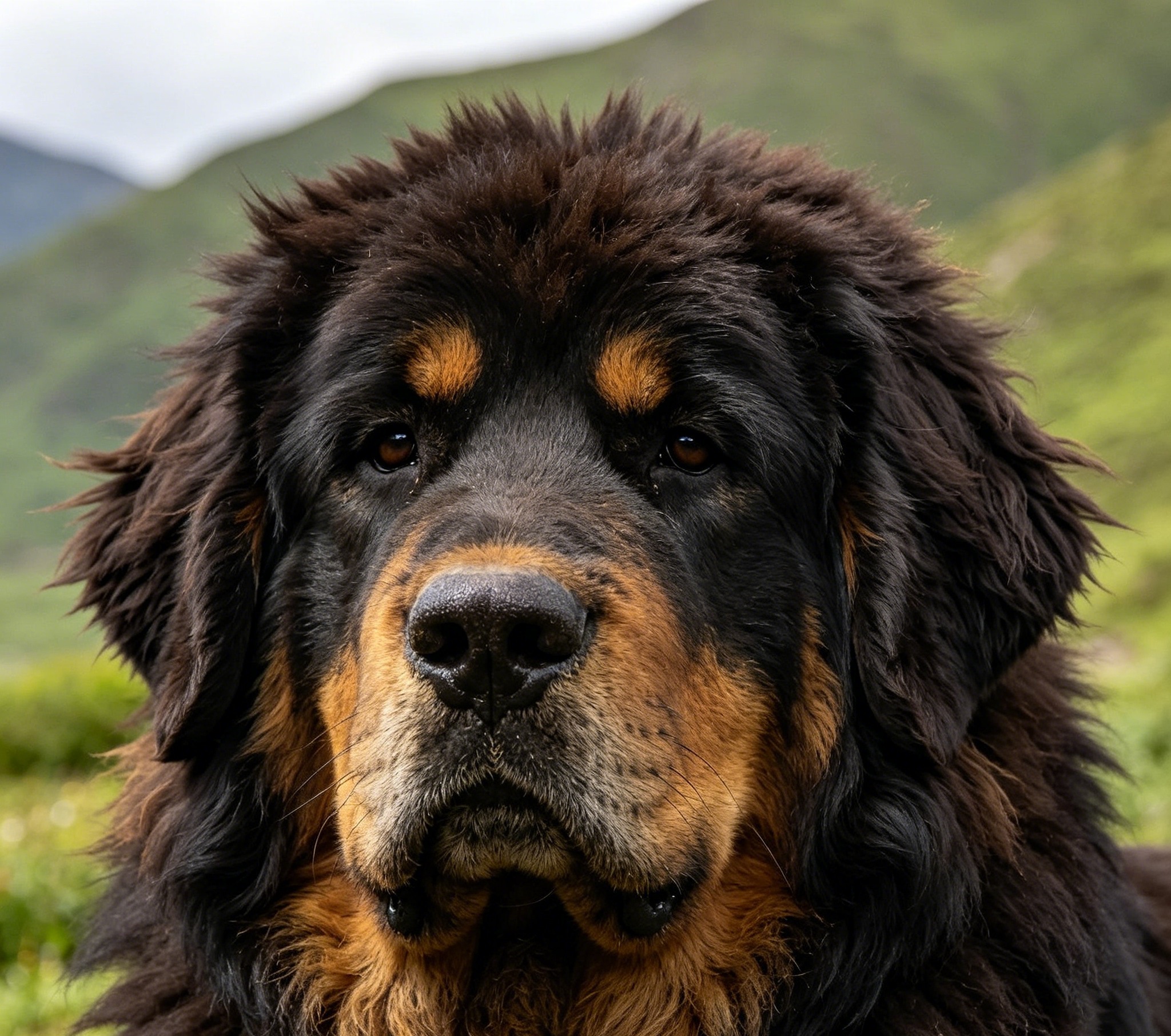
The Tibetan Mastiff looks like a creature out of legend, and in a sense it is. For thousands of years it guarded monasteries, villages, and herds across the high Himalayan plateau, working through bitter cold and long nights with no human directing it. The result is a dog of immense presence and dignity, crowned by a thick lion-like mane, that remains one of the most independent and primitive guardian breeds you can own.
This is a large to giant dog, with males commonly weighing 90 to 150 pounds and females somewhat less, built heavy-boned beneath an enormous double coat. It is calm and aloof rather than busy, content to survey its domain by day and patrol it by night. That ancient watchfulness, and the stubborn self-reliance behind it, defines what living with one is really like.
Night Noise, Boundaries, and Visitor Management
| Fit Factor | Score | What It Means | |—|—|—| | Apartment Fit | 1/5 | Poor apartment fit; space, noise, size, or management needs can be difficult. | | First-Time Owner Fit | 2/5 | Challenging for new owners unless they have strong support and training plans. | | Family Fit | 3/5 | Can suit the right family when children, space, and routines are managed. | | Exercise Demand | 3/5 | Moderate daily activity and mental work keep this dog easier to live with. | | Grooming Difficulty | 4/5 | High grooming or shedding load; brushing and professional help may be needed. | | Training Difficulty | 4/5 | Can be stubborn, intense, or independent; structure matters. |
Tibetan Mastiff Quick Facts
| Trait | What to Expect |
|---|---|
| Size | Large to giant guardian, 70–150 lb |
| Temperament | Aloof, dignified, fiercely loyal, and very independent |
| Energy level | Low to moderate; calm by day, alert at night |
| Exercise needs | Moderate daily walks plus a secure space to roam |
| Grooming needs | High during the once-a-year coat blow; moderate otherwise |
| Apartment friendly | No |
| Good with families | Devoted to its family; reserved and wary with strangers |
| Common concerns | Hip/elbow dysplasia, CIDN (a nerve disorder), hypothyroidism, bloat |
| Best for | Experienced owners with secure property and tolerance for night barking |
| Not ideal for | First-timers, close neighbors, or anyone needing an obedient dog |
Tibetan Mastiff Temperament
The Tibetan Mastiff’s character is best described as aloof and self-possessed. Within its family it is loyal, affectionate in its own reserved way, and quietly devoted, but it does not fawn and it does not live to please. Toward strangers it is naturally suspicious and territorial, sizing up newcomers with cool detachment and accepting them slowly, if at all. This is a guardian to its bones, not a social butterfly.
What surprises many new owners is the depth of the independence. Bred to make life-and-death decisions alone on the plateau, the Tibetan Mastiff thinks for itself and obeys when it judges a command worthwhile, not reflexively. It is intelligent but stubborn, and it responds to respect and partnership rather than domination or repetitive drilling. An owner expecting prompt obedience will be perpetually frustrated.
A defining practical trait is nocturnal alertness. Tibetan Mastiffs were night guardians, and the instinct persists: many will patrol and bark through the night at every sound, which is wonderful on an isolated farm and a nightmare next to neighbors. Most owners bring the dog indoors at night specifically to manage this. The breed is also escape-prone and territorial with strange dogs, so secure containment is essential.
How a Tibetan Mastiff Uses Its Energy
For such a large dog, the Tibetan Mastiff’s exercise needs are moderate and unhurried. It is not an athlete or a jogging partner; it is a guardian that conserves energy and moves with deliberate calm. A daily walk or two plus the run of a securely fenced area to patrol generally keeps it content and fit.
A realistic routine includes:
- One or two relaxed daily walks, which also provide controlled exposure to the world.
- Access to a large, very secure yard the dog can survey and patrol.
- Calm, low-impact activity, especially while a heavy puppy’s joints are still forming.
- Cooler-weather timing for activity, since the dense coat makes heat a serious hazard.
- Mental engagement through novelty and a sense of purpose, which matters as much as physical effort.
Two cautions stand out. First, the fencing must be high and solid: Tibetan Mastiffs are notorious climbers and diggers when motivated, and they take their territorial duties seriously. Second, this breed genuinely struggles in heat. Adapted to the cold plateau, it can overheat dangerously, so exercise belongs in the cool parts of the day in warm climates.
Coat Care in a Tibetan Mastiff Home
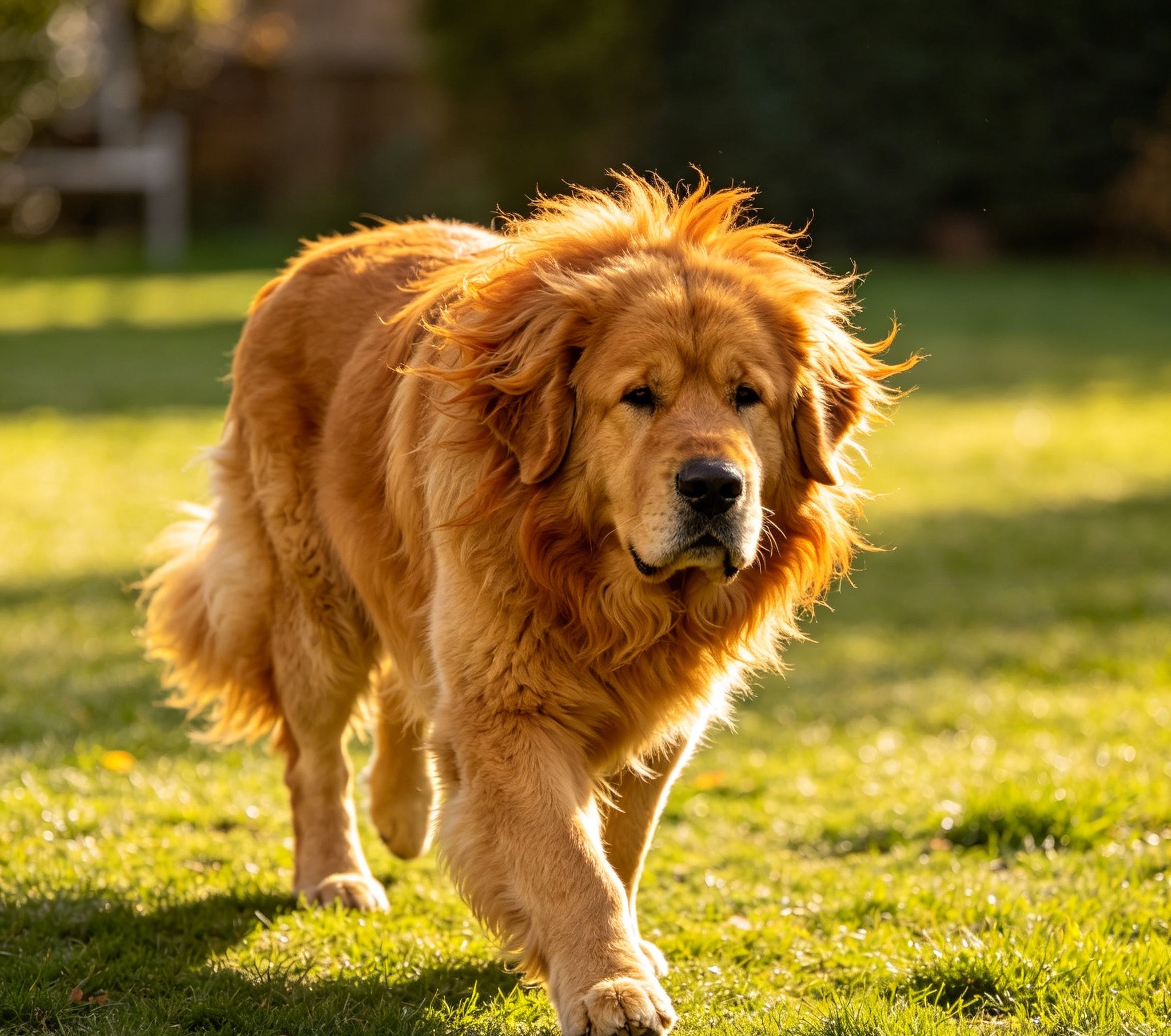
Most of the year, the Tibetan Mastiff’s coat is more manageable than its volume suggests. Unlike many double-coated breeds, it does not shed heavily year-round; instead it “blows” its entire undercoat once a year, usually in spring, in a dramatic, weeks-long molt. During that period you will brush daily and still find drifts of hair everywhere; the rest of the year, weekly brushing keeps the coat and mane in order.
Your grooming plan:
- Brush weekly for most of the year to prevent mats, with extra care for the mane and the dense rear and tail.
- Brush daily and thoroughly during the annual coat blow to clear the shedding undercoat.
- Trim nails on those large feet regularly, conditioning the dog to accept handling from puppyhood.
- Check and clean the ears.
- Bathe occasionally; the coat is fairly dirt- and odor-resistant the rest of the time.
The single biggest grooming event is that yearly molt, and owners who are unprepared for the sheer quantity of undercoat that comes out are always startled the first time. Plan for it, and the breed is otherwise reasonably low-fuss between blows.
Common Tibetan Mastiff Health Issues
The Tibetan Mastiff is a relatively hardy ancient breed, but it carries several important concerns. Hip and elbow dysplasia are the leading orthopedic worries for a heavy dog, and good breeders screen for them. The breed has a specific inherited neurological condition, canine inherited demyelinative neuropathy (CIDN), which good lines DNA-test to avoid. Hypothyroidism is fairly common, and like other deep-chested giants, the breed can be at risk for bloat.
If you seek a puppy, deal only with a breeder who screens for hips and elbows, tests for CIDN, and is candid about thyroid health and temperament in their lines. Temperament stability is critical in a guardian breed, so a breeder who discusses both the dogs’ health and their character honestly is exactly who you want. Avoid anyone breeding only for an exaggerated mane or maximum size.
Because bloat can be fatal within hours, learn its signs (a distended belly, unproductive retching, restlessness and distress) and treat any suspicion as an emergency.
Meals and Body Condition for a Tibetan Mastiff
Interestingly, many Tibetan Mastiffs are modest, even picky eaters who self-regulate and may skip meals, sometimes eating noticeably less in warm months. Even so, keeping the dog lean is vital for its joints, and the heavy coat makes it easy to miss creeping weight gain, so hands-on body checks matter more than the silhouette.
Feeding guidance:
- Use a large- or giant-breed diet during the long, slow growth phase to support controlled bone development.
- Feed measured meals split across the day, and avoid hard activity right around mealtimes to reduce bloat risk.
- Do not panic over an occasional skipped meal or seasonal appetite dip, which is normal for the breed, but do consult your vet if a dog stops eating persistently.
- Count treats toward the daily total.
- Confirm an ideal body condition with your veterinarian by feel, since the coat hides the frame.
The combination of a sometimes-finicky appetite and a heavy coat means owners should judge condition by touch and by their vet’s input rather than assuming the dog is fine because it looks substantial.
Teaching a Tibetan Mastiff Useful Habits
Training a Tibetan Mastiff is an exercise in patience, respect, and early socialization rather than obedience polish. This is one of the more challenging breeds to train precisely because it is so independent and was bred to ignore direction and act on its own judgment. Harsh methods and repetitive drills fail badly; calm, consistent, motivating work that respects the dog’s intelligence does far better, though even then you should expect selective obedience.
Where to focus:
- Extensive, positive socialization from puppyhood so the dog’s wariness stays measured and appropriate.
- Basic control and a recall taught early, while the puppy is still a manageable size, with the understanding that off-leash reliability will always be limited.
- Calm, fair leadership and clear household rules.
- Grooming and handling tolerance, conditioned young.
- Containment training and respect for boundaries, given the escape instinct.
Accept the breed for what it is. A Tibetan Mastiff will never be a snappy, reliably obedient dog, and trying to force that produces conflict, not cooperation. The goal is a well-socialized, manageable guardian whose strong instincts you can live with. This is a breed best suited to experienced owners.
Pros and Cons of Tibetan Mastiffs
| Pros | Cons |
|---|---|
| Majestic appearance and dignified presence | Independent, stubborn, and hard to train |
| Deeply loyal and protective of family | Night barking can be relentless near neighbors |
| Calm and relatively low-energy indoors | Wary of strangers; not casually social |
| Coat sheds heavily only once a year | Heavy annual coat blow and heat intolerance |
| Hardy, primitive constitution | Giant-breed health risks and escape-prone nature |
Tibetan Mastiff Owners Arrange Nights and Visitors First
A Tibetan Mastiff’s quiet afternoon says little about the coming night. The dog may become alert and vocal after dark, following a guardian’s natural schedule. Owners also manage independent decisions, seasonal coat, heat, gates, and a narrow circle of accepted people. Repetition does not create eager obedience, and casual visitors cannot be left to negotiate with the dog at the door.
Tibetan Mastiff Advice by Property and Handler
An apartment is the wrong experiment
Night noise, giant size, territorial behavior, elevators, and shared access make this a poor fit. Even a calm individual leaves little margin for management error or changing neighbors.
A house needs secure zones and a night plan
Use tall fencing, locked gates, indoor separation areas, and predictable visitor entry. Bring the dog into an appropriate secure area when barking would disturb neighbors. Cooling remains necessary in warm weather.
A first owner should not learn on this breed
Choose a more cooperative dog. Prospective owners need relevant guardian experience, legal and insurance review, and qualified support. A dramatic puppy appearance is not a reason to accept an unsuitable adult temperament.
Experienced owners work with independence
Build cooperative handling, muzzle comfort, transport, and calm confinement. Avoid dog parks and informal guarding games. Experience is shown through prevention, not by proving control in risky situations.
Tibetan Mastiff Myths That Ignore the Night Shift
Tibetan Mastiffs are lazy giant house dogs
They may conserve energy, but guardian alertness, roaming, night barking, and territorial decisions create substantial work. Low visible motion does not equal low management.
Obedience training can remove guardian behavior
Training improves communication and handling but does not erase the breed’s purpose. Property, visitors, and containment must fit the dog rather than relying on commands alone.
For a practical planning check, use the dog cost calculator to include secure fencing, gates, giant food and medication, coat tools, cooling, professional training, insurance, transport, and specialist boarding. The dog fit score cards can help you compare neighbor distance, night noise, visitor frequency, guardian experience, climate, other animals, and legal or housing restrictions.
Is a Tibetan Mastiff Right for You?
The Tibetan Mastiff suits an experienced owner with a secure, spacious property, ideally away from close neighbors, who values a dignified, independent guardian and does not need a dog that obeys on command. People who appreciate the breed’s aloof loyalty and can manage its barking, coat, and willfulness find it a deeply rewarding, almost mythic companion.
It is a poor fit for first-time owners, for apartments or homes with neighbors nearby (the night barking alone can end the relationship), and for anyone hoping for an eager, trainable family pet. Underestimate the independence, the noise, or the security needs, and both you and the dog will struggle.
If you are comparing guardians, look at the Caucasian Shepherd Dog for an even more intense livestock guardian, the gentle Newfoundland for a softer giant, or the quiet little Japanese Chin at the opposite end of the size and temperament spectrum.
The Tibetan Mastiff Decision
The Tibetan Mastiff is a breed apart, ancient, dignified, fiercely loyal, and utterly its own dog. For the experienced owner with the right property and realistic expectations, it offers a guardianship and a presence that few breeds can match.
But it is not a dog you bend to your will, and it is not a dog for tight quarters or close neighbors. The independence, the night barking, and the giant-breed care needs are permanent features, not problems to fix. Accept them fully, and you gain a magnificent partner; ignore them, and the breed will overwhelm an unprepared home.