
The Alpine Dachsbracke, also called the Alpenlandische Dachsbracke, is a short-legged hunting hound with a working dog’s priorities. Its compact outline can tempt people to compare it with a casual small companion, but that is the wrong starting point. This breed was developed to follow scent over difficult ground. The useful question is whether your life has room for secure outdoor work, patient leash handling, and a dog whose nose can become more important than the conversation at the other end of the leash.
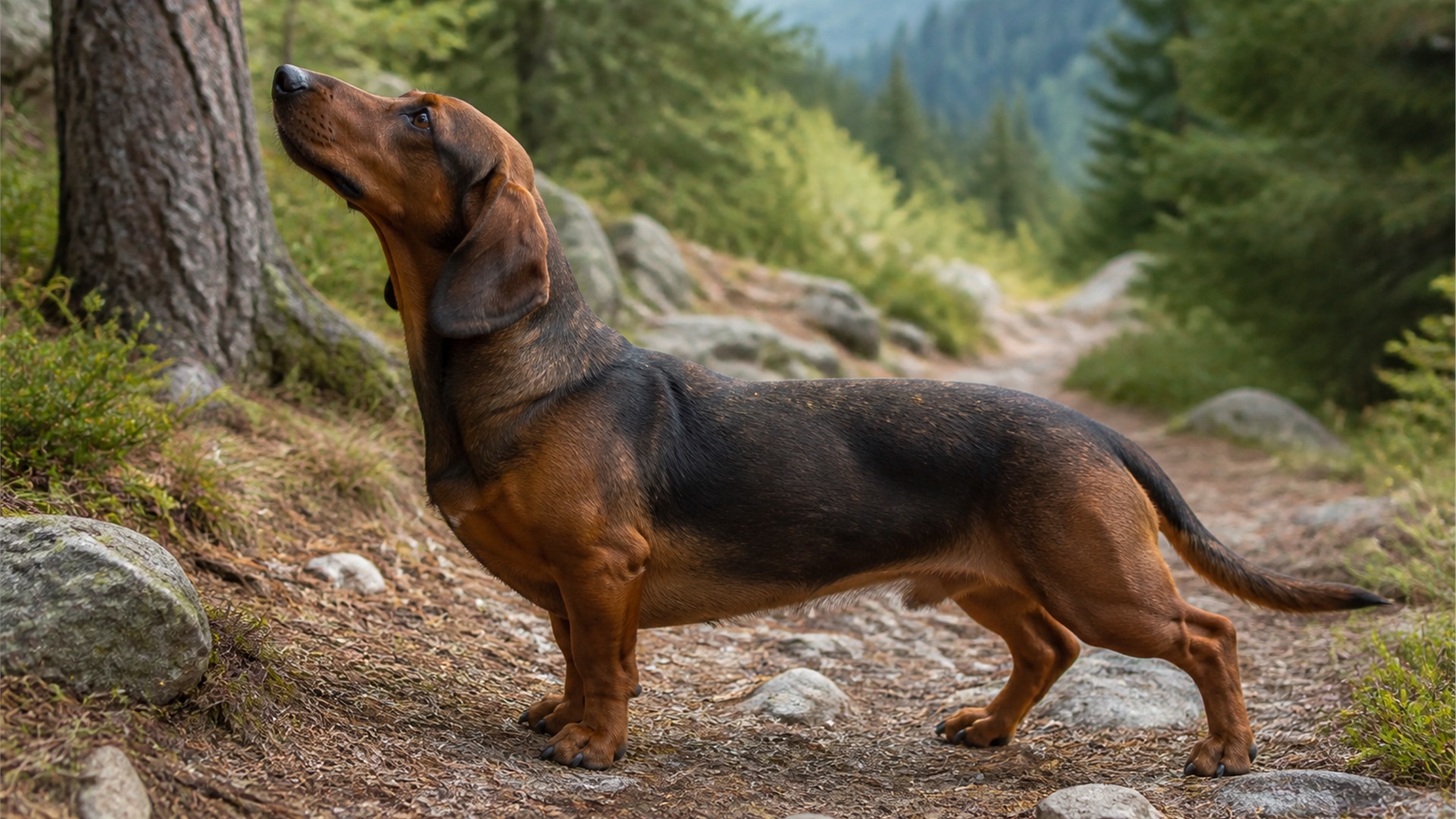
A Working Hound in a Low Frame
The breed’s short legs change how you condition it; they do not turn it into a low-energy dog. Long, steady walks, gentle climbs chosen for the dog’s fitness, and controlled scent games make more sense than repetitive jumping or sudden weekend endurance projects. A Dachsbracke that has no outlet may use its nose in the least convenient ways: following trails at the fence, pulling hard toward every hedge, or becoming difficult to call away from wildlife.
Scent work is not a decorative add-on. Hide food in a safe area, lay simple tracks, or turn part of a walk into a slow sniffing route. The aim is to give the dog a legitimate job while teaching that the owner still controls access to the interesting places. Keep a long line on a properly fitted harness where wildlife or roads are nearby. A pleasant relationship does not cancel a hound’s instinct to continue a trail.
Alpine Dachsbracke Quick Facts
| Trait | What to Expect |
|---|---|
| Type | Low-set Austrian scent hound bred for practical field work |
| Daily routine | Purposeful walks, scent activity, secure exploration, and rest |
| Recall | A management issue around wildlife and interesting trails |
| Coat | Short, weather-resistant coat with straightforward care |
| Family fit | Better with calm, involved families than homes wanting a decorative small dog |
| Main planning concerns | Containment, conditioning, scent drive, noise, and health screening |
The Route Matters More Than the Room Count
An apartment is possible only when the owner can give the dog regular, meaningful outings and handle entrances without chaos. A short walk on pavement before work and another after dinner is unlikely to be enough. Shared corridors also make it harder to create distance from unfamiliar dogs when a hound is already excited by a scent.
A house offers more storage for muddy gear and easier access to outdoor time, but a yard is not an exercise program. A low fence, an open gate, or repeated fence-line wildlife encounters can create a serious safety problem. Check the full boundary, not only the part visible from the kitchen. The right home is one where you can control access to scents and safely schedule the dog’s work, not simply one with the largest garden.
Short Legs Need Sensible Conditioning
People sometimes assume a low-set hound should be protected from all activity. The better approach is measured activity. Maintain lean body condition, avoid allowing a young dog to repeatedly launch off furniture, and build distance gradually. If a dog begins to limp, slows unexpectedly, or resists normal movement, stop guessing and speak with a veterinarian.
The coat is easier than the lifestyle. A weekly brush, checks after field walks, nail care, and drying after wet weather may be enough for ordinary maintenance. The bigger budget items can be secure equipment, training support, parasite prevention, travel arrangements, and a reserve for veterinary care. Before choosing a puppy or adult dog, ask about documented health screening and family history. A list on the internet is not a diagnosis and should not replace a discussion with a veterinarian.
Family Life Needs Boundaries Around Motion
This breed can enjoy a family that spends time outside, but it is not fair to leave children to manage its leash, food, or excitement. Teach children to leave the dog alone while it eats or rests and supervise play around stairs, furniture, and rough handling. A scent hound may become absorbed in moving animals or outdoor activity, so adults need to decide when the game ends.
With other dogs, introductions should be unhurried and based on the individual animals. Hunting heritage does not tell you exactly how any one Dachsbracke will live with cats or small pets. Use barriers, a lead, and gradual management instead of making a quick decision from a first meeting.
Misconceptions That Create a Bad Match
The first mistake is equating short legs with a quiet indoor life. This is a hound that needs a route, a nose job, and reliable containment.
The second is believing affection creates safe off-leash recall. A dog can be attached to its owner and still disappear after a scent. Long lines and fences are not a failure of training; they are responsible management.
The third is treating a rural setting as automatic freedom. Open land can be more dangerous, not less, when wildlife, roads, and unmarked boundaries are involved.
Use the dog cost calculator to include secure fencing, tracking equipment, training, parasite prevention, and an emergency reserve. The dog fit score cards can help compare your access to safe routes, tolerance for a scent-led dog, household activity level, and confidence with long-line handling. For another hound decision, read the Beagle guide and the Dachshund guide when comparing scent management; neither breed’s size removes the need for secure handling.
The Alpine Dachsbracke Decision
Choose this breed when you want an outdoor hound and can make its instincts part of the household routine. It is a poor choice for anyone who wants effortless off-leash freedom, a dog satisfied with brief pavement walks, or a pet that will quietly entertain itself in a yard. The Dachsbracke is at its best when its low frame is treated with care and its serious nose is given a safe job.