
An Airedale Terrier is a large, clever terrier for a household that wants an active project, not a background pet. The breed can be affectionate and funny with its family, yet it also brings strong opinions, a busy mind, prey interest, and enough physical confidence to make poor manners inconvenient. The best match is an owner who enjoys training and can provide varied work every day.
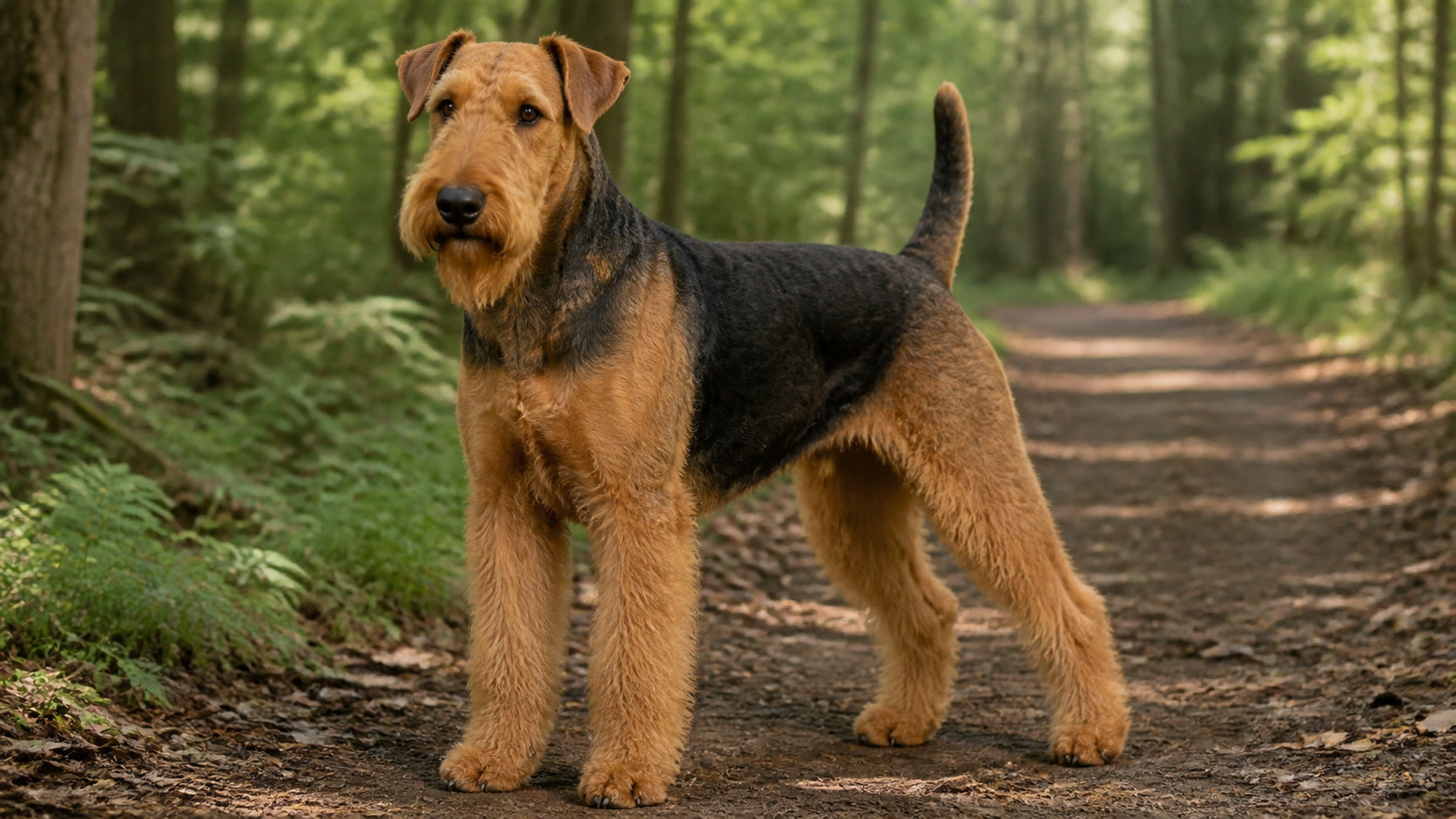
The Airedale Needs a Job With Edges
Airedales often become difficult when their day has no clear beginning, middle, or end. A vague promise of “more exercise” is less useful than a routine: a purposeful walk with sniffing, a short training block, a game with rules, and a practiced settle afterward. Without the settle, the owner may create a fitter dog that still cannot live calmly in the house.
Their size makes the terrier habits more consequential than they look in a small dog. Jumping, grabbing clothing, chasing wildlife, and arguing over a toy are not harmless once a strong adolescent is involved. Start household manners before the dog reaches full strength.
Airedale Terrier Quick Facts
| Trait | What to Expect |
|---|---|
| Type | Large, versatile terrier with a strong independent streak |
| Temperament | Lively, intelligent, confident, playful, and sometimes challenging |
| Daily activity | Long walks, games, training, and mental work |
| Coat | Wiry, moderate-maintenance coat needing brushing and grooming |
| Prey drive | Can be significant around small animals and fast movement |
| Family fit | Better with active adults and children who follow rules |
| Main planning concerns | Adolescence, recall, grooming, impulse control, and joint screening |
Training an Independent Problem Solver
An Airedale can learn quickly and then use that knowledge creatively. Reward the behavior you want, make the environment easy enough for success, and avoid turning every request into a contest. If the dog repeatedly ignores a cue, change the difficulty or reward instead of escalating pressure.
Prioritize four skills: coming away from wildlife, accepting restraint, settling around activity, and giving up objects without conflict. Practice them in ordinary places, not only in a training class. Socialization should include calm observation of dogs, bicycles, children, and visitors rather than a requirement to greet every one of them.
Grooming Is a Skill and a Schedule
The Airedale’s coat is often described as low-shedding, which can make the maintenance sound easier than it is. A rough coat still grows, collects debris, and changes when clipped. Discuss hand-stripping versus clipping with a groomer who understands terrier coats, then budget for the time and appointments required by that choice.
Brush the beard, legs, and furnishings regularly, especially after outdoor work. Food and mud collect around the face, while burrs can hide in the coat. Teach the dog to stand on a grooming surface, accept feet being handled, and remain calm around clippers or a dryer. That preparation is more valuable than buying expensive equipment after a grooming battle has begun.
Three Home Decisions That Matter
Apartment versus house
Apartment life is possible for a genuinely active owner, but shared hallways magnify jumping, barking, and leash frustration. A house offers room but does not replace training; an unfenced yard is not safe for a terrier with prey drive. Secure gates and an indoor settle routine matter in either setting.
First-time versus experienced owner
A first-time owner should have a trainer who understands terriers and should meet adult Airedales before committing. Experience with soft, eager-to-please breeds does not automatically prepare someone for a dog that negotiates. An experienced terrier owner still needs a plan for size, adolescent strength, and public management.
Family life and small pets
Active older children may enjoy an Airedale’s playfulness, but adults should manage games and rest periods. Cats, rabbits, and other small pets require honest assessment, careful introductions, and permanent supervision where necessary. A friendly dog is not the same as a dog without chase instinct.
Airedale Myths to Leave Behind
The first myth is that a smart dog is automatically easy to train. Airedales can understand a lesson and still decide another option is more rewarding. Motivation and consistency are part of the breed’s practical requirement.
The second myth is that a large yard will tire the dog. Unstructured outdoor time may simply rehearse digging, fence-running, and patrol behavior. Interactive work and a taught settle are more useful.
The third myth is that low visible shedding means no grooming budget. The coat still needs professional attention and daily maintenance around the beard and legs.
Use the dog cost calculator to include training, grooming, secure fencing, durable toys, pet sitting, and medical savings. The dog fit score cards help compare activity time, small pets, children, visitor traffic, and your tolerance for a dog that tests household rules. For a smaller terrier perspective, read the Scottish Terrier guide and compare its scale and exercise demands with an Airedale.
Is an Airedale Terrier Right for You?
Choose an Airedale if you want a substantial terrier, enjoy teaching practical manners, and can provide varied daily work. Avoid the breed if your ideal dog is naturally placid, reliably polite without much training, or easy to leave alone with no preparation.
The breed rewards an owner who treats intelligence as a responsibility. Give the dog useful choices, prevent rehearsals of unwanted habits, and keep the rules steady. The result can be a companion with humor, athleticism, and remarkable versatility; without that structure, the same qualities become household chaos.
The Airedale Terrier Decision
An Airedale is best understood as a large terrier with a family side, not a family dog with the terrier removed. Exercise, grooming, recall, and settling all deserve a place in the weekly plan. If you can provide those consistently, the breed offers an unusually engaging partnership. If not, its size and confidence make the mismatch difficult to hide.